
TL;DR
Most agents harvest only the hottest 20% of leads and let the rest drift away. A 30-second opener, segmented nurturing, and message-first follow-up can double appointments and lift ROI without more ads.
The quiet middle of your pipeline is where profit hides

A focused workspace symbolizes the importance of fast, relevant follow-up in real estate lead nurturing.
SEO intro: Real estate lead nurturing works when follow-up is relevant, fast, and visual — not pushy. Here’s a framework agents can use today.
Stop Losing 80% of Leads: The 30‑Second Follow‑Up Framework Every Real Estate Agent Needs
Buyers rarely go cold. They go quiet. Smart, relevant follow-up turns browsers into buyers without burning ad spend.
Real estate marketing is noisy, and follow-up often gets noisy with it. Here’s the thing: if you close 20% of qualified leads, you’re likely leaving the other 80% to competitors. Agents often say they want more conversations, but conversations come from consistent, relevant follow-up. Studies on sales response times suggest contacting a new inquiry within five minutes can be 8–10 times more likely to connect than waiting an hour. In a market where buyers research for months, the long game is the only game.
National Data Insight: Lead generation is up, but conversions stall after the first call

Lead generation grows, but many leads stall; nurturing in appealing spaces improves conversion potential.
Homes are still selling, but many leads stall without nurturing.
Across real estate marketing, lead volume from portals and paid social is healthy, yet conversion bottlenecks appear after the first touch. Teams commonly report that 40–60% of closed deals trace back to leads that needed multiple touches over 30–90 days. That means your ROI is often hiding in the quiet middle, not at the top of the funnel.
Agents often advise that cost-per-lead rises when markets heat up, so squeezing more value from existing inquiries is a safer bet than spending more on ads. Messaging apps tend to outperform email for response rates, with many marketers noting 2–3x faster replies on SMS or WhatsApp. If your nurture plan relies only on “Any update?” emails, you’re not competing — you’re disappearing.
Data visualization idea: a simple funnel showing leads, fast responders, nurtured prospects, and closed buyers. Alt text: “Real estate lead funnel with a large nurtured middle translating into outsized closings.” Caption: “The longest part of the funnel produces the most appointments when nurtured.”
Anecdote
A Phoenix team split leads by Explorer, Planner, and Decider and tailored messages accordingly, lifting appointments by roughly 25% without extra ad spend.
Segment Analysis: Match your pitch to buyer awareness, not your script

Tailor your pitch to the buyer's awareness, reflecting their needs in a thoughtfully designed space.
“When you pitch a level‑4 buyer with a level‑1 script, you lose them in seconds.”
Effective real estate follow-up depends on where the buyer is in their journey. Market analysts suggest that most prospects self-educate long before they want a sales call. That’s why one-size-fits-all scripts backfire. Try segmenting by awareness and intent:
- Explorers (0–3 months out): Early researchers comparing areas and budgets. First sentence of your outreach should offer a useful snapshot: “Here’s a 60‑second price-per-square-foot view of your two preferred neighborhoods, updated this week.” Short-tail keyword: real estate marketing. Long-tail keyword: how to follow up real estate leads.
- Planners (1–6 months): Budgeting, tracking interest rates, and watching inventory. Lead with clarity: “Three homes under your budget that cut commute time by 20%. Want them in WhatsApp?” Short-tail keyword: homebuyers. Long-tail: real estate lead nurturing strategy.
- Active Deciders (0–60 days): Touring and comparing developers or comps. Skip basics and validate their criteria: “I pulled 12‑month appreciation on your target building versus two nearby. Your shortlist holds up.” Short-tail: real estate agents. Long-tail: best opening lines for real estate calls.
- Investors: Care about yield, exit risk, and track record. Speak their language: “Net yield at 5.9% with a 7‑year hold, vacancy stress‑tested at 10%. Want the model?” Short-tail: real estate investing. Long-tail: how to attract real estate investors online.
Mini case study: A Phoenix team split new leads by “Explorer,” “Planner,” and “Decider.” Explorers received neighborhood infographics and virtual tours; Deciders got comp matrices and appointment links. Over one quarter, appointments rose by roughly 25% without increasing ad spend.
Behavior and Psychology: You have 30 seconds to earn trust
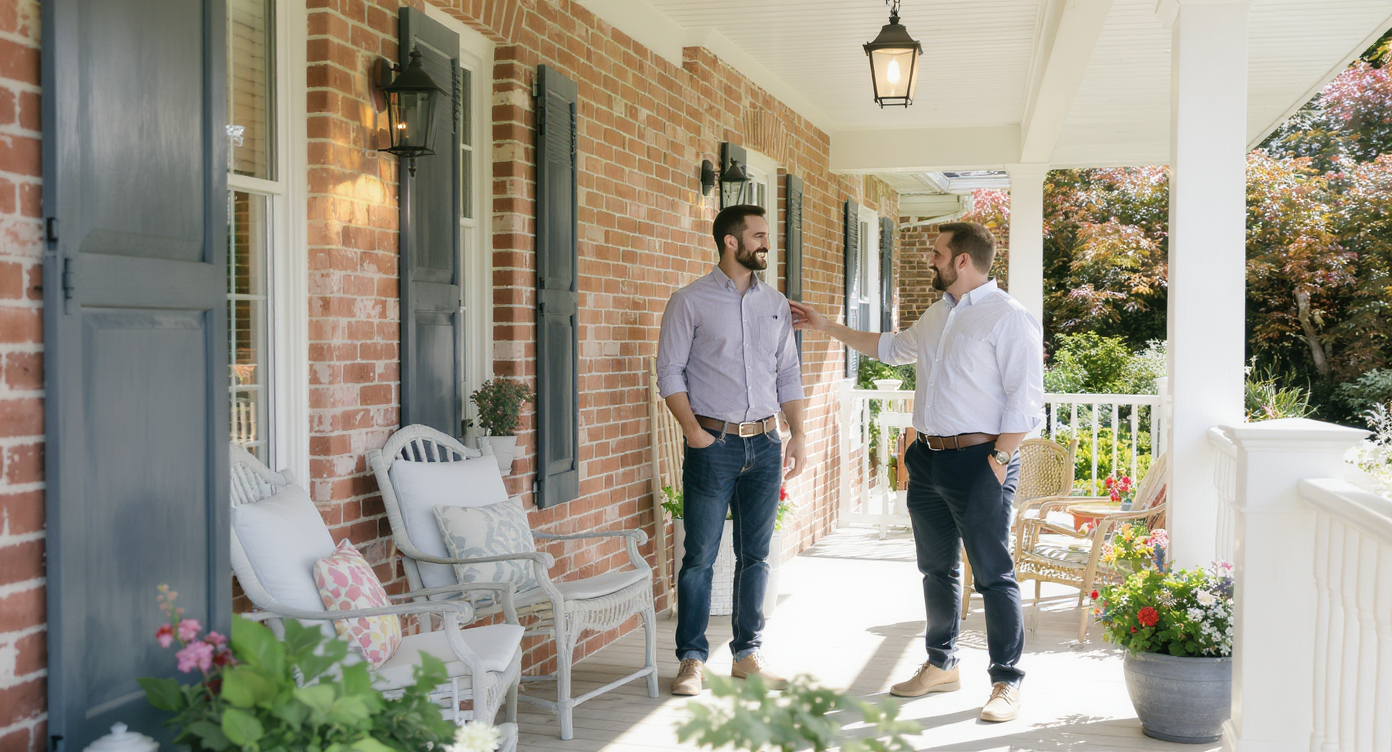
First impressions on a welcoming porch can earn trust quickly; design supports meaningful connection.
“Your opening line decides the next 30 seconds — and the next 30 days.”
I’ve seen this happen repeatedly: buyers aren’t allergic to agents, they’re allergic to generic. Prospects judge whether you are an advisor or a salesperson in a few seconds. Homebuyers today expect clarity and competence immediately, not a warm-up script.
Agents often advise this 30‑second opener for real estate lead follow-up: identify who they are, mirror their goal, give a quick win, then offer a binary choice. Example: “Saw your request on the Maple District townhomes. Two just reduced 3% this week, and one faces the park. Want the 3‑photo comparison here or in WhatsApp?” That single sentence delivers value, proves relevance, and invites a low-friction reply.
Another example for investors: “You’re comparing East Dock vs. Harbor Row. I ran 5‑year rent comps and developer track records. Want the one-page risk summary or a 3‑minute voice note?” When your first line sounds like homework done, high-intent buyers stay on the line.
Secondary Insight: Where follow-up fails — and how to fix it fast
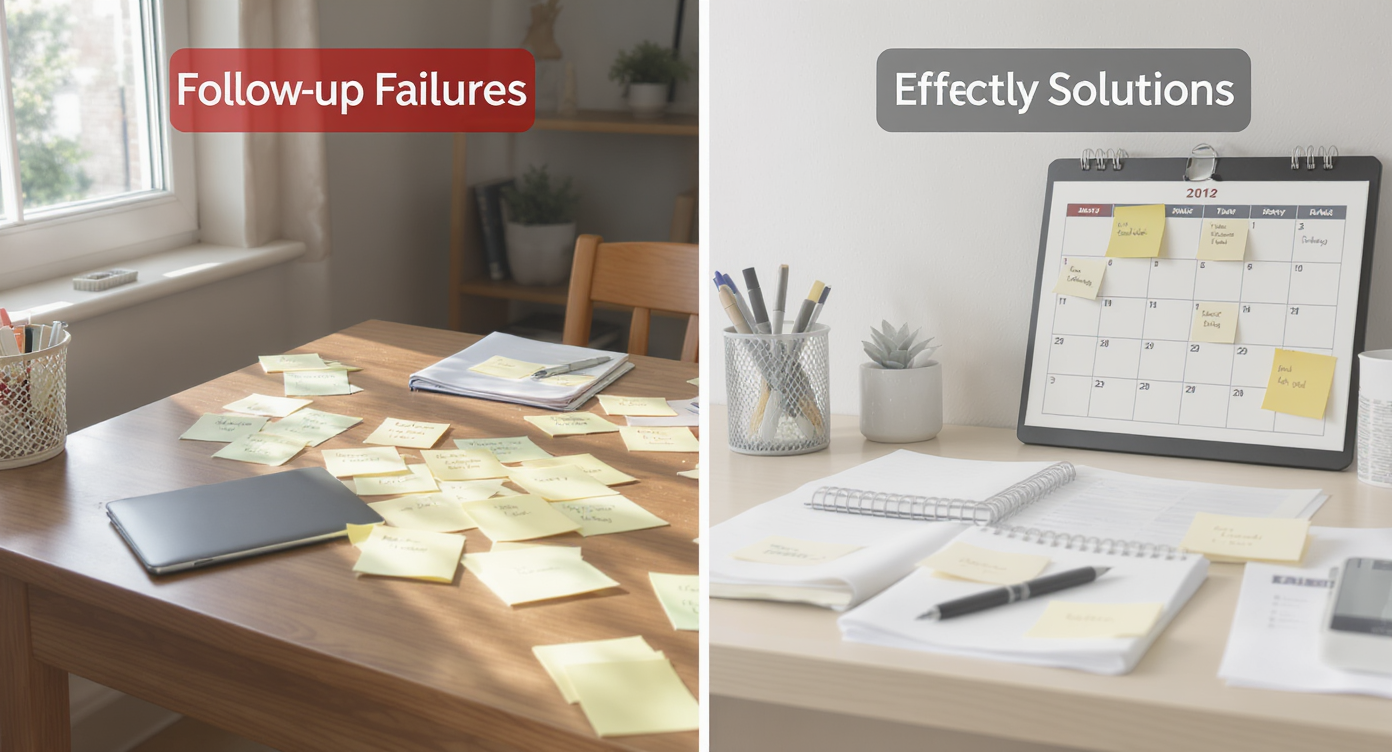
Organized, personalized follow-up spaces foster better client engagement and fix common mistakes fast.
“Most follow-up fails because it’s generic, not because it’s frequent.”
Here’s where deals fall apart: agents confuse persistence with repetition. Five “Any update?” messages don’t count as nurturing. Real follow-up is education plus timing.
Try this fast, message-first cadence that many teams find effective:
- Day 0–1: Channel shift to WhatsApp or SMS with a value-forward opener and a binary choice.
- Day 2–7: Send a micro-survey with tappable options: “Buying for self, investment, or commercial?” Short-tail: lead follow-up. Long-tail: WhatsApp follow-up for real estate agents.
- Week 2: Deliver one asset tied to their choice: a 60‑second pricing map, a rent yield cheat sheet, or a 3‑home side-by-side. Caption idea: “How your budget performs across districts this month.”
- Week 3–4: Share a short tour or a virtually staged before-and-after. Virtual staging for real estate agents keeps interest high without a showing. Alt text idea if you publish a graphic: “Living room virtually staged in modern neutral palette to highlight natural light.”
- Ongoing 30–90 days: Rotate rate updates, new comps, and one “why now” data point. Keep it human, keep it short.
Mini case study: A Brooklyn agent, overwhelmed by portal leads, switched to a simple WhatsApp path with two buttons and weekly visuals. Response rates climbed from sporadic to steady, and she booked 2–3 more tours a week from the same pipeline.
Teams that formalize a 45–60 day nurture often report doubling appointment rates compared with one-and-done outreach. The content matters more than the count. If you consistently deliver micro value, you earn macro trust.
Pro move: Add visuals that clarify decisions. Tools like ReimagineHome can generate quick room refreshes, style options, and listing-ready renderings. Agents often note that sending a before-and-after concept reduces hesitation and speeds up tour requests.
Visualization Scenario
A funnel graphic highlighting the nurtured middle converting into the largest share of appointments, with alt text and a short caption for accessibility.
FAQ
FAQ
How should I structure real estate follow-up for new leads without being pushy?
Use a 30‑second opener with a quick win and a binary choice, then shift to a 45–60 day real estate lead nurturing strategy with short, visual check-ins.
What’s the best way to follow up real estate leads on WhatsApp?
Lead with value and a micro-survey: send two options tied to intent, then follow with a 60‑second asset. WhatsApp follow-up for real estate agents works when messages are short and specific.
How many touches convert in real estate marketing for buyers and investors?
Agents often report 6–12 touches over 30–90 days bring most responses. Real estate marketing works best when each touch adds new information.
What’s a strong opening line for real estate calls that gets replies?
Reference their exact search, add a fresh data point, then offer two delivery choices. Best opening lines for real estate calls prove you did the homework.
Can virtual staging help my real estate lead nurturing convert faster?
Yes. Virtual staging for real estate agents gives buyers clarity, and agents say listing visuals and before‑and‑afters increase tour requests and reduce hesitation.
Market Outlook: Attention is shrinking, but relevance scales
“Attention spans are shrinking, but relevance scales with systems.”
Let’s be real: people don’t have more than 30 seconds when you first reach them. That’s not a problem, it’s a design constraint. Design your real estate lead nurturing around speed, segmentation, and substance. The ad spend you already make can work 10–12x harder when you stop treating the quiet 80% as dead leads.
Deals don’t die from silence; they die from sameness. Show up faster, speak at their level, and send something useful. If your pipeline needs a visual edge, ReimagineHome helps agents and homeowners create on-brand listing visuals and virtual staging that make buyers decide with confidence.
Tags: Real Estate Marketing, Real Estate Agents, Virtual Staging, Home Staging, Buyers, Sellers, Listing, AI in real estate