Evaluating Wall Colors for Basements with Bold Floors and Low Light
TL;DR
Choosing wall color for a basement with bold epoxy floors and limited natural light means navigating contrast, mood, and practicality. Lighter hues can bounce available light and prevent spaces from feeling cavernous, while deeper tones promote coziness when paired with robust lighting. A harmonious palette balances the unique floor pattern, furniture, and overall ambiance—testing colors in real lighting is essential.
Finding Color Harmony in Challenging Basements
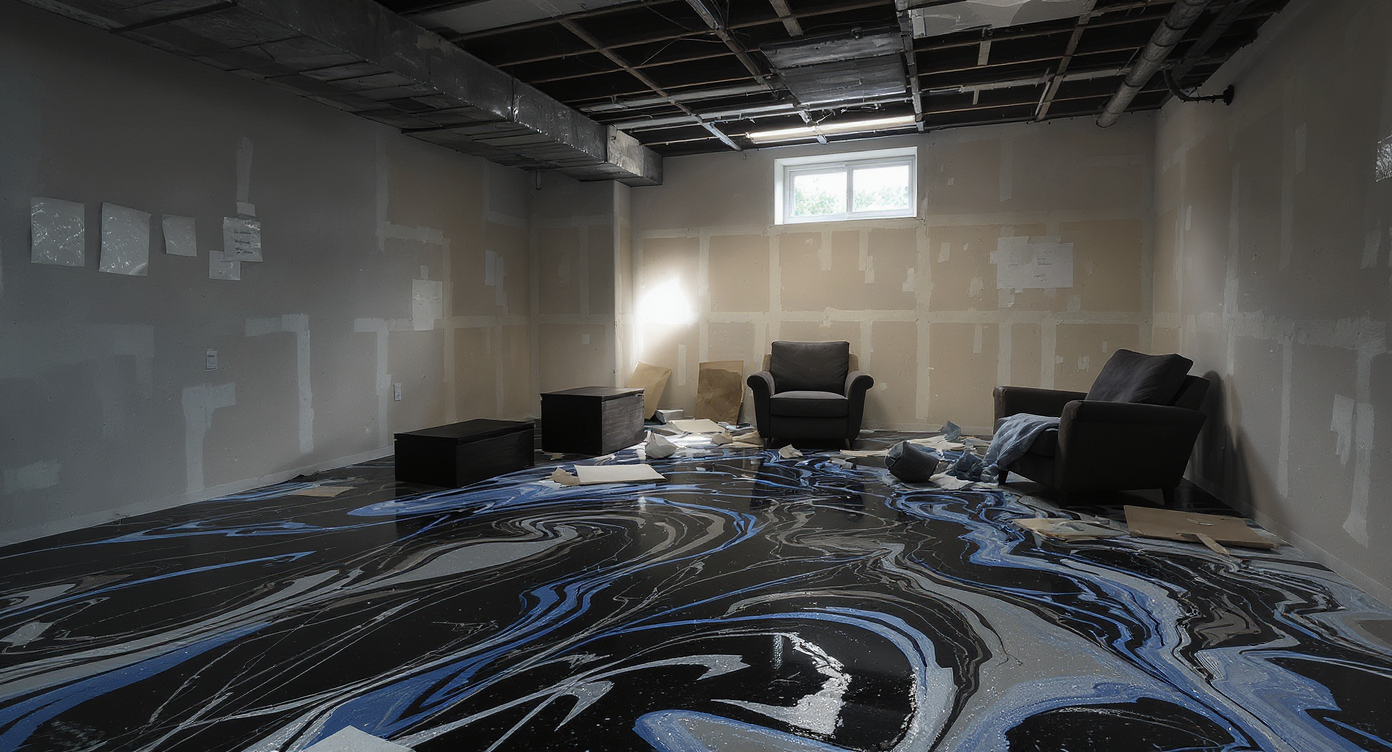
A realistic basement featuring dramatic epoxy floors, low lighting, and test paint swatches, setting the scene for wall color decisions.
For homeowners facing renovation after an unexpected event, the question of wall color often looms large—especially in basements with strong architectural features like an expressive epoxy floor and minimal natural light. When the furniture left after a storm is mostly dark, the stakes of every paint choice feel higher. Should you embrace dark drama, seek lightness, or find a nuanced middle ground? The answer lies in recognizing the interplay between color, lighting, and the character of your space. Today’s design dilemmas are rarely solved by a single trend or tip. Selecting wall color for a basement with unique floors and extant dark furniture requires more than aesthetic taste—it asks for adaptability and a willingness to experiment. Whether you lean modern, minimalist, or eclectic, understanding how paint, light, and texture interact is the first step toward a basement that feels intentional and livable.
-
Understanding Your Space: Floor, Light, and Furniture
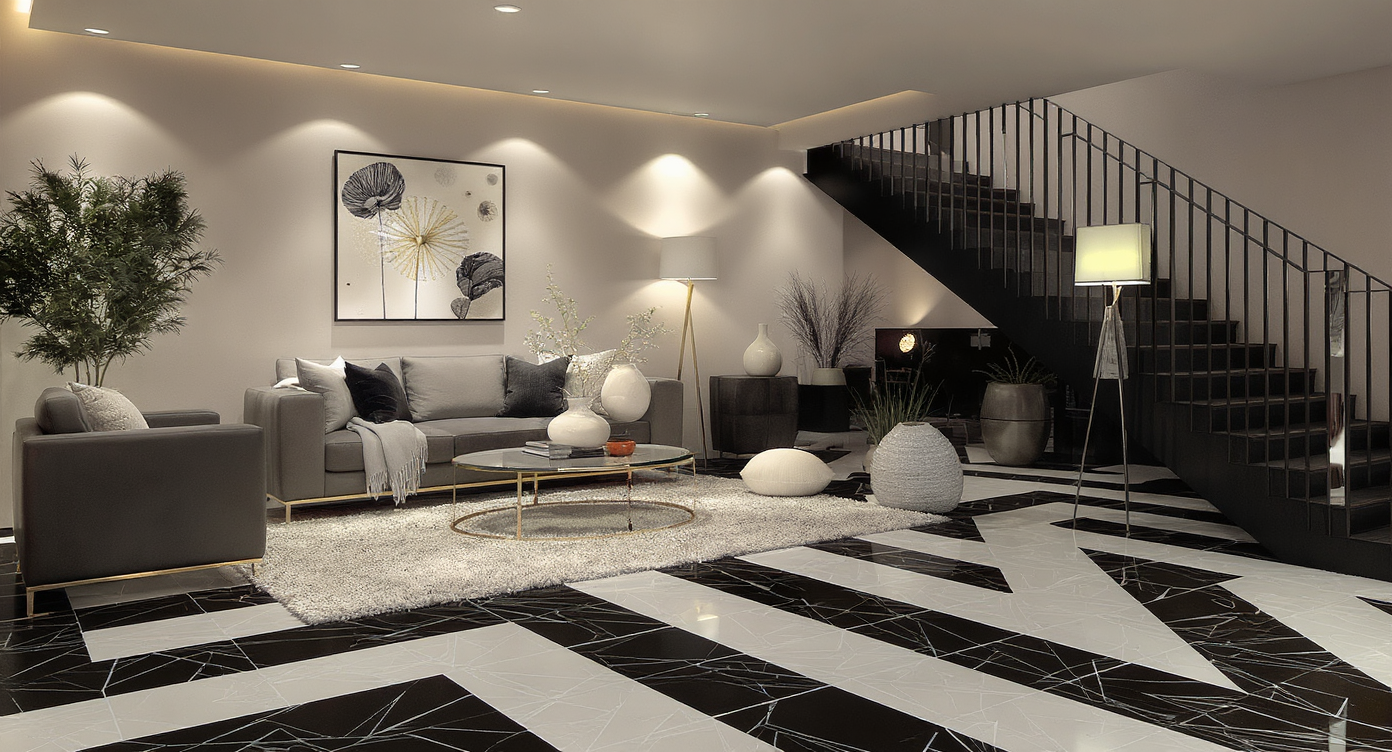
A thoughtfully designed basement highlights the interplay of bold flooring, layered lighting, wall colors, and dark furnishings for a cohesive look.
An unconventional black-and-white epoxy floor becomes both a statement and a constraint in a basement, especially where daylight is limited. In such settings, artificial lighting does the heavy lifting. Designers often encourage maximizing the number and warmth of ceiling lights or potlights to address gloomy corners and prevent shadows from overwhelming a space. The success of any wall color begins with a realistic audit of your light sources and their tones—cool LED can accentuate blue and gray hues, while warm bulbs favor beige or taupe. Equally important is coordinating with what’s already in the room. Dark brown or black furniture has a commanding presence and can easily tip the mood toward heavy or somber unless balanced thoughtfully. Rather than defaulting to matching tones, consider how contrast, layering, and reflective elements—such as metallics, glass, or even a well-placed mirror—add complexity and depth. This kind of evaluation frames every step of your paint selection process, providing clarity amid the sea of available swatches.
Expert Insight
Last spring, a client inherited a basement with a similarly striking black-and-white epoxy floor after a pipe burst necessitated a total renovation. She wrestled with wall color fear, testing stark white, then dove into deep hunter green. Only after layering both—white on the majority and green as an accent wall—did the space start to feel inviting. The key was experimenting with big test swatches and seeing the effect of furniture, art, and area rugs before committing.
-
Wall Color Ideas: Light, Deep, or a Strategic Mix?
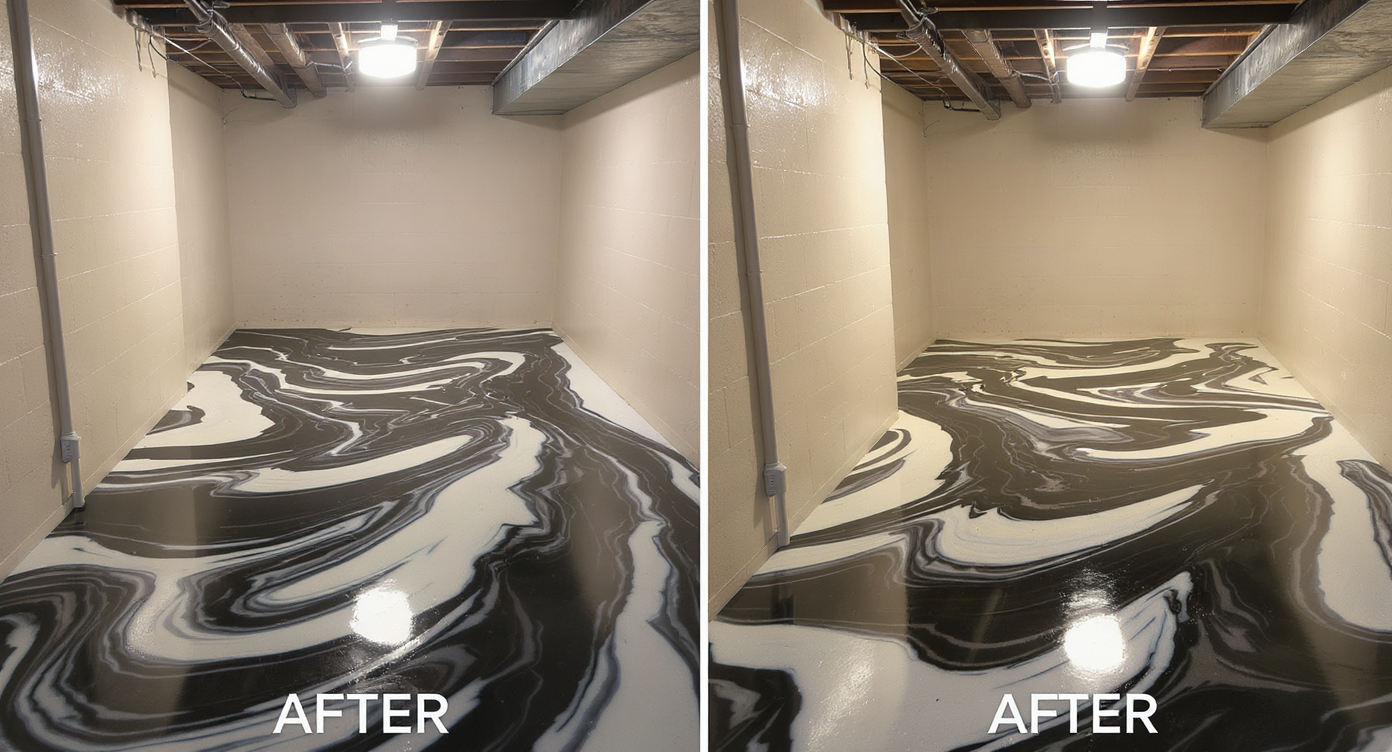
A basement scene compares cool off-white and deep green walls against dramatic floors, illustrating light reflection and color harmony.
The debate between light and dark wall colors for basements is evergreen, and for good reason. Lighter walls, particularly soft grays, crisp whites, and subtle off-whites, can expand tight spaces and make the most of artificial lighting. However, in a room already dominated by a high-contrast floor, not all whites are created equal. Classic off-whites with a hint of cool undertone avoid undesired yellow or creaminess—a pitfall frequently encountered with warm whites, especially under LED lighting. Paints with blue-gray notes are less likely to clash with swirling black or white epoxy patterns, and they offer a neutral backdrop for layering artwork or vibrant accents. For inspiration on creating harmony with trending off-whites, consider recent off-white paint color trends. A more dramatic approach is to lean into the richness of deep colors: forest green, maritime blue, or charcoal. These hues absorb and diffuse light, enveloping the basement in an inviting cocoon when illuminated by thoughtfully placed fixtures. For homeowners drawn to this boldness, layering in lighter rugs and reflective accents helps maintain balance, and testing large swatches in your space—preferably on actual surfaces—is key. As outlined in the 5-step paint color selection process, visualizing big color samples is invaluable in such tricky environments.
-
The Role of Accent Colors and Visual Relief
While wall color sets the mood, it does not exist in isolation. For basements underpinned by striking floors and dark furniture, accent colors offer visual relief and personal flair. Rugs, throw pillows, and curated decor in mid-tone greens, jewel-toned reds, or vibrant aquas introduce energy, softening the boundary between wall, floor, and furnishings. In practical terms, even a monochromatic or minimalist setting benefits from one or two accent walls or features that pick up hints from the flooring—but resist the urge to overmatch the pattern, which can create a sense of clutter or restlessness. Using digital preview tools or visualization apps can make these decisions more confidence-inspiring. According to recent conversations among designers, simulating wall and accent colors digitally before committing can help you see the real impact of lighting, shadow, and furniture placement on your palette. To explore how digital tools streamline the process, review strategies for testing accent colors before you commit.
-
Testing, Timing, and Final Choices
The constraints of a basement—be it low ceilings, limited daylight, or fixed flooring—make it nearly impossible to skip the sampling phase. Professional painters and designers widely recommend painting generous test patches on all four walls, especially near furniture and under the dominant artificial lighting. This step allows you to observe how tones shift throughout the day and alongside your most used lamps or overhead lights. Sometimes, the ideal wall color emerges not as a single shade but as part of a coordinated strategy—combining one or two neutrals with a deeper accent, or juxtaposing soft hues with wood or metallic features. This method turns a potential design challenge into an opportunity for creative expression. For a comprehensive look at curating harmonious, layered rooms in contemporary settings, see editorial explorations into creating cozy minimalism with monochrome rooms.
Visualization Scenario
Picture yourself carrying a new area rug through your unfinished basement, laying it atop the swirling epoxy floor. You tack up temporary light-diffusing curtains and switch on rows of ceiling potlights, watching as your pre-painted wall swatches shift subtly under each bulb. In one corner, a wall painted cool white reflects crisp and clean; in another, a swatch of deep blue absorbs the light, anchoring a reading nook. With each hour and every lighting tweak, you gain more confidence in which direction feels like home.
Frequently Asked Questions
Light cool grays, off-whites with blue undertones, or carefully chosen deep greens and navies balance dramatic floors and accommodate limited light. Avoid warm whites and creams that can clash with the floor's tone.
How do I test paint choices before committing?
Test large swatches on multiple walls at home, under your actual lighting conditions, and alongside your key furniture. Digital tools can also preview a wide range of wall color ideas using real photos of your space.
Is dark paint a good idea for basements?
Dark colors can lend coziness and sophistication when paired with sufficient lighting and thoughtfully coordinated furnishings. Test them carefully—it’s easy for dark walls to absorb more light than desired in small or windowless rooms.
Can accent colors help balance bold floors?
Yes. Rugs, throws, art, and even accent walls in mid-tone or jewel hues can introduce warmth and energy, creating visual relief from busy or dark flooring.
Are digital visualization tools worth trying?
Absolutely. Platforms like ReimagineHome.ai and others allow you to preview paint choices in your actual room, offering clarity and confidence before any painting begins.
From Dilemma to Distinctive Space
A successful basement renovation accounts for the existing floor, available light, and personal style, not simply trends. The best wall color in a visually complex setting is one chosen with awareness—balancing contrast with comfort, and drama with livability. Digital visualization, careful sampling, and a commitment to testing hues in the real space all help reduce risk—and maximize your satisfaction with the end result. For additional support or to experiment virtually with your specific space, ReimagineHome.ai offers a suite of AI-powered visualization tools to guide your color journey.