8 Bedroom Art Placement Rules That Prevent Design Regret

TL;DR
Bedroom art isn’t just decoration—it changes how you feel, how furniture fits, and even how big a room appears. A poorly chosen or placed piece can dominate the space or clash with your layout. These 8 structured rules help you avoid common mistakes and ensure art adds meaning—and comfort—to your bedroom.
Clear Principles for Placing Bedroom Art Without Second-Guessing
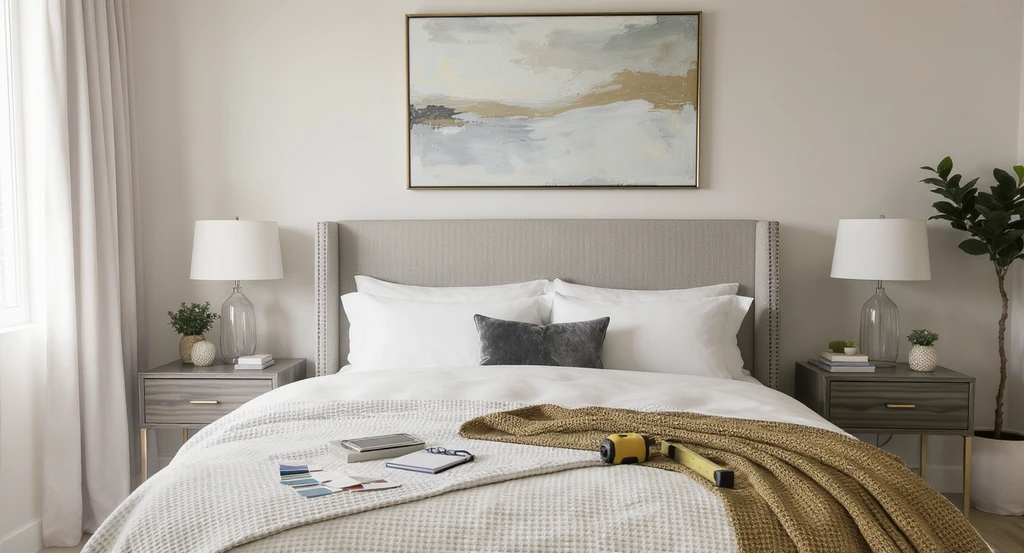
Wondering does bedroom artwork affect furniture choice or will a large painting fit over bed? This setup shows how to choose art for bedroom décor and avoid common mistakes in matching furniture and art, while revealing why colors look different at home.
When someone else—whether a therapist, a designer, or a well-meaning spouse—recommends art for your bedroom, it’s easy to wonder what it means and if it belongs there at all. But the real risk is less about hidden symbolism and more about how artwork shapes perception, comfort, and scale within your most personal space. Too often people ask, “Does bedroom artwork affect furniture choice?” or worry, “Will a large painting fit over my bed?” It helps to start with clear rules and a naming framework you can use, so any art you hang is meaningful for you and fitting for your space.
-
1. The Headboard Horizon Rule: Art Should Not Loom or Lurk
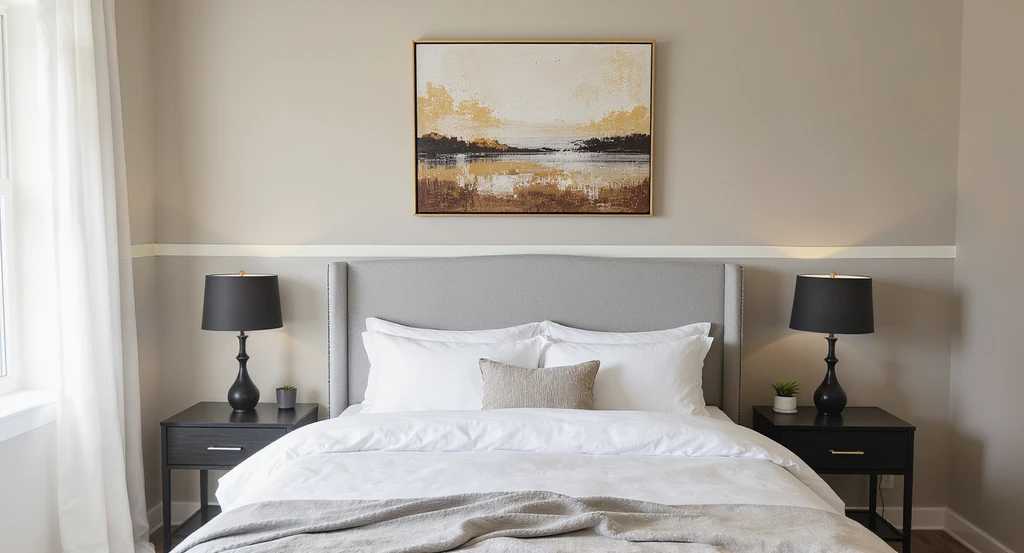
Learn how to choose art for bedroom décor and avoid mistakes in matching furniture and art—painter’s tape helps determine if a large painting will fit perfectly over your bed and why colors may look different at home.
Art hung directly above a bed must relate proportionally, sitting within the visual ‘headboard horizon’—a reference band from the top of the headboard to 12 inches above it. Exceeding this vertical range creates tension; artwork that is too tall or hangs too high disrupts sightlines and psychological comfort. Recent online debates often reveal underlying unease when art is too large or off-center, resulting in the feeling of a ‘presence’ rather than a calming backdrop. Ideally, the art should feel like a natural extension of the headboard, not an ominous observer—a concern echoed by many Reddit commenters. If you’re unsure whether a painting will fit, use painter’s tape to block out the space before committing. Visualization tools like ReimagineHome are especially practical for testing virtual placement without making mistakes.
-
2. The Intentional Impact Principle: Choose Art With Your Experience in Mind
Bedroom art’s meaning is not universal; its impact depends on your emotional response, not just designer trends or what a therapist deems appropriate. Place pieces you’d want to wake up to or that mark your relationship—not ones that provoke confusion or discomfort. This approach guards against perception bias, where unfamiliar or ambiguous art can cause regret over time—especially in private spaces. Remember, your bedroom is for rest and relationships, not unintentional psychological experiments. As explored in our guide on ways to finish your bedroom decor through lighting, color, and scale, the right artwork should reinforce—rather than disrupt—the room’s mood.
-
3. The Proportion Priority: Scale Art to Furniture, Not Empty Wall
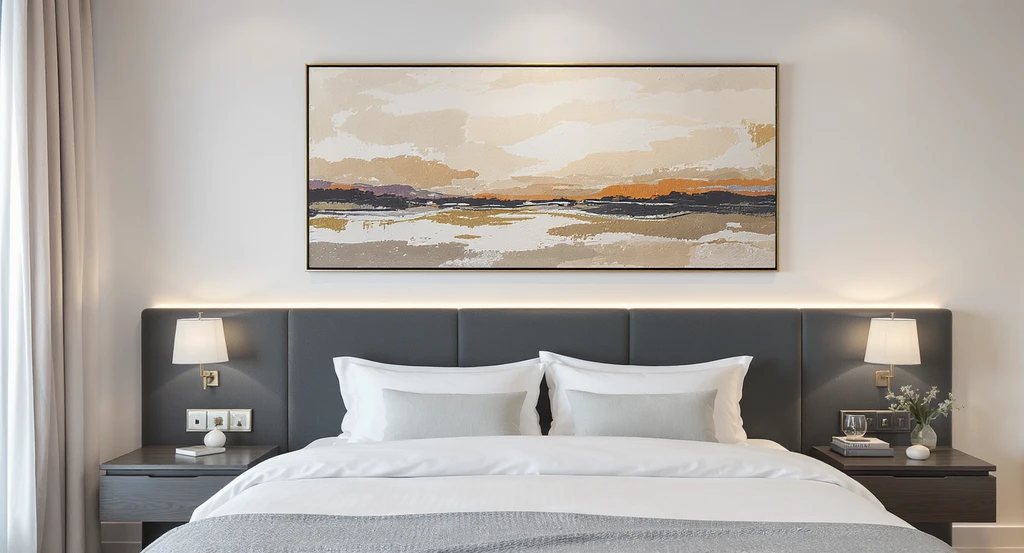
Does bedroom artwork affect furniture choice? This setup shows how to choose art for bedroom décor—placing correctly sized art over a queen bed prevents mistakes in matching furniture and art, ensuring the painting fits and colors appear as intended.
Center artwork in relation to the furniture below, not just the bare wall. A piece that’s too wide will spill visually beyond the bed, while one that’s too small gets lost. For most queen/king beds, ideal art width is 60–80% the width of the headboard, with 4–8 inches of horizontal margin. Measure your headboard before buying. This rule prevents one of the most frequent regrets: choosing a bold piece that ends up half-obscured by the mattress or nightstands, as seen in many hotel-inspired online critiques. Proportional artwork supports comfortable circulation and maintains visual order, reducing subconscious anxiety.
-
4. Ambient Light Factor: How Color and Material Behave Over Time
Colors and finishes behave unpredictably in fluctuating bedroom light. A painting that glows in a showroom may feel harsh under bedside LEDs or disappear altogether in low, warm lighting. Before finalizing placement, view art at different times—morning, afternoon, and night. If possible, use samples to observe how a color’s undertone shifts at home, referencing the principle that 'why colors look different at home' stems from the interaction of pigment, material, and artificial light sources. This step is essential for avoiding remorse and ensures your investment aligns with your daily experience.
-
5. The Anchoring Trio Method: Art, Bed, and Lighting as a System
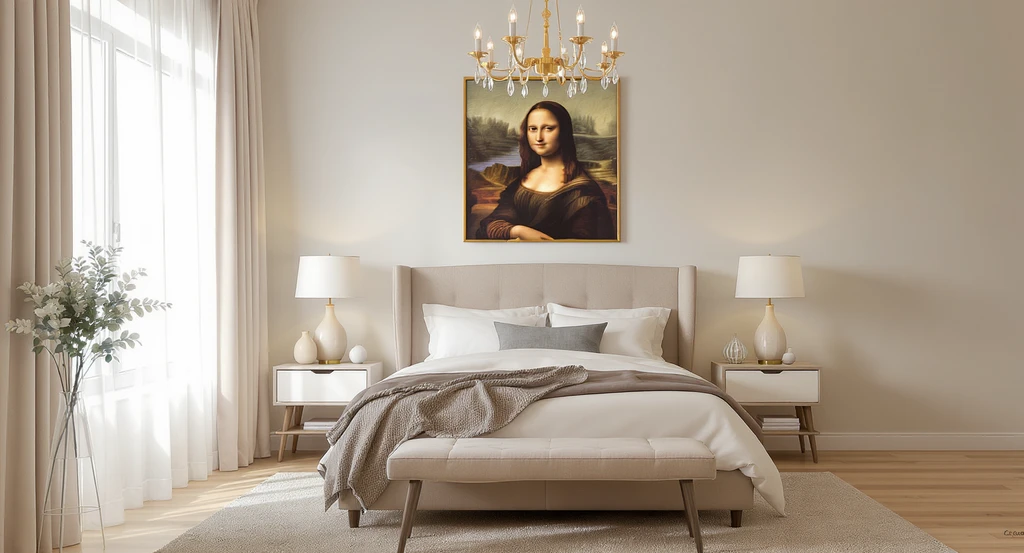
Does bedroom artwork affect furniture choice? This illustrates the anchoring trio method—art, bed, and lighting—showing how to choose art for bedroom décor, avoid mistakes in matching furniture and art, and properly position artwork over a bed for a harmonious space.
Bedroom harmony comes from treating the triad of art, bed, and main lighting as a single spatial system. Avoid placing large artwork that competes with an oversized headboard or a statement chandelier. Instead, let each anchor element have visual breathing room. If you can, align the vertical center of artwork with the midpoint between the headboard top and ceiling-mounted fixture, using symmetry to reinforce calm. This trio method prevents the ‘floating’ or ‘crowded’ effect and ensures art enhances rather than distracts from rest and relational intimacy. According to our framework for art and lighting placement in gathering spaces, the philosophy applies across rooms where balance is the goal.
-
6. Collaboration Over Imposition: Shared Decisions Prevent Regret
The Rule of Participatory Placement states that art should never appear mysteriously, especially in a shared bedroom. Art is both personal and relational—placing it unilaterally invites conflict and undermines a sense of belonging. Always preview new artwork with all bedroom occupants, discussing both symbolism and personal comfort. When in doubt, visualize multiple alternatives using digital planning tools so that every viewpoint is considered. This collaborative approach helps prevent common mistakes in matching furniture and art, promoting mutual acceptance rather than confusion or resentment.
-
7. Mind the Margin: Allow Space Above and Beside
Maintain a margin of at least 4 inches from the sides of the headboard and 6 inches from the ceiling or crown molding. Cramming art to fill every gap, or letting it blend into architectural edges, makes the room feel cramped or unresolved. These buffers give the artwork room to ‘breathe’ and ease the eye, reducing subconscious tension. The scale of margin also affects light diffusion—keeping artwork clear of direct lamp spill prevents glare and uneven color rendering, an often-overlooked spatial mechanism. A properly sized margin increases comfort and prevents the art from becoming a visual irritant over time.
-
8. The Review and Retreat Rule: Art Can and Should Move
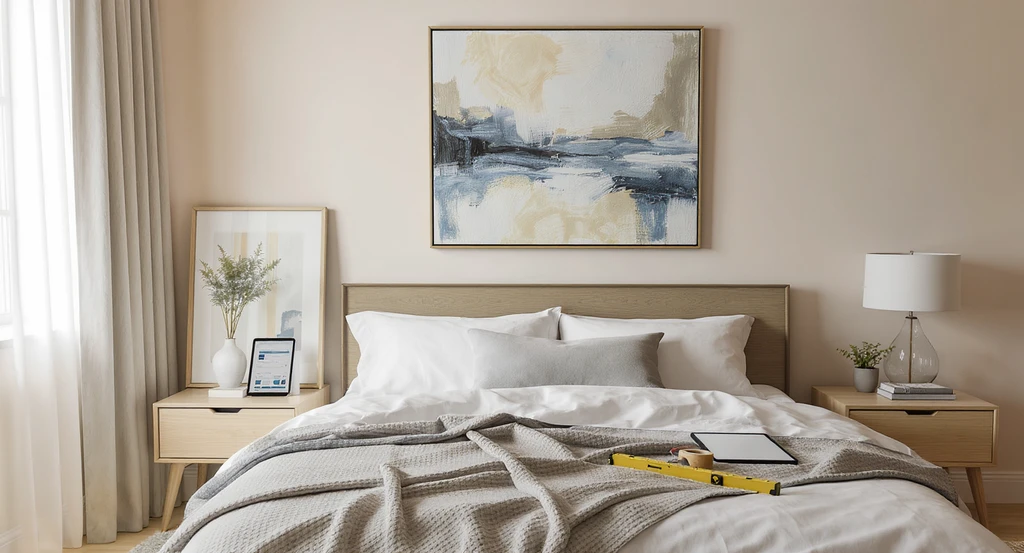
Previewing a large painting above the bed helps avoid mistakes in matching furniture and art, showing how bedroom artwork affects décor choice and why colors might look different at home.
Art placement shouldn’t feel permanent. Try living with new artwork for 7–14 days before fully securing it. If irritation, doubt, or second thoughts arise, move the artwork elsewhere. Repositioning is a sign of a healthy home design process, not a failure of taste or judgment. The ability to retreat or edit is the foundation of what I call the 'Iterative Comfort Principle'—the idea that comfort requires periodic review, just like layout changes in any evolving home. When in doubt, use visualization tools such as ReimagineHome to preview alternate layouts with minimal effort.
Visualization Scenario
Picture a bedroom with a queen-sized bed and a multicolored abstract painting selected by a family member—hung high and wide above the headboard, partially covered by the bedding. In daylight, the painting's colors appear muted, but under warm bedside lights, its undertones shift and the image becomes visually dominant. You and your partner notice different shapes depending on your mood and viewing angle, and soon realize the placement undermines the sense of calm you both want. By applying the Headboard Horizon Rule, lowering and re-centering the art, and upscaling your lamps for better light balance, both the artwork and room feel more intentional and comfortable.
Bedroom Artwork FAQs: Regret-Proof Your Decision
- Does bedroom artwork affect furniture choice?
- Yes—bedroom artwork influences the scale, color, and placement of furniture by acting as a secondary anchor in the room. Mismatched proportions or clashing styles can make both art and furniture feel out of place.
- How do I choose art for bedroom décor without psychological tension?
- Choose art based on personal comfort and consensus, not external pressure or opaque symbolism. Preview placements as a group when possible, and avoid pieces that generate uncertainty or strong ambivalence.
- Will a large painting fit over the bed?
- To determine fit, measure your headboard and select art 60–80% of its width. Ensure there is at least 4 inches of margin at each side. Visually test placement before hanging to avoid overcrowding or regret.
- What mistakes should I avoid in matching furniture and art?
- Avoid art that overpowers or gets lost above the bed, clashes with lighting, or is selected by only one partner. Always consider scale, color interaction, and placement from every angle before deciding.
- Why do art colors look different at home compared to the store?
- Lighting conditions, wall color, and material texture cause colors to appear differently in your home versus a gallery or online image. Always preview artwork in actual room lighting before committing to final placement.
Summary: Confident Bedroom Art Decisions Require Structure, Not Guesswork
Choosing bedroom art should be a deliberate process, grounded in proportion, intent, and shared experience—not arbitrary suggestions or trends. Follow these eight structured rules to ensure artwork fits comfortably with your bed, lighting, and the scale of your room, all while avoiding common psychological pitfalls. When you anchor art intentionally, it adds meaning and tranquility, not confusion or regret.