Best Waterproof Wall Panels for Bathrooms: A 2026 Design-Backed Guide
TL;DR
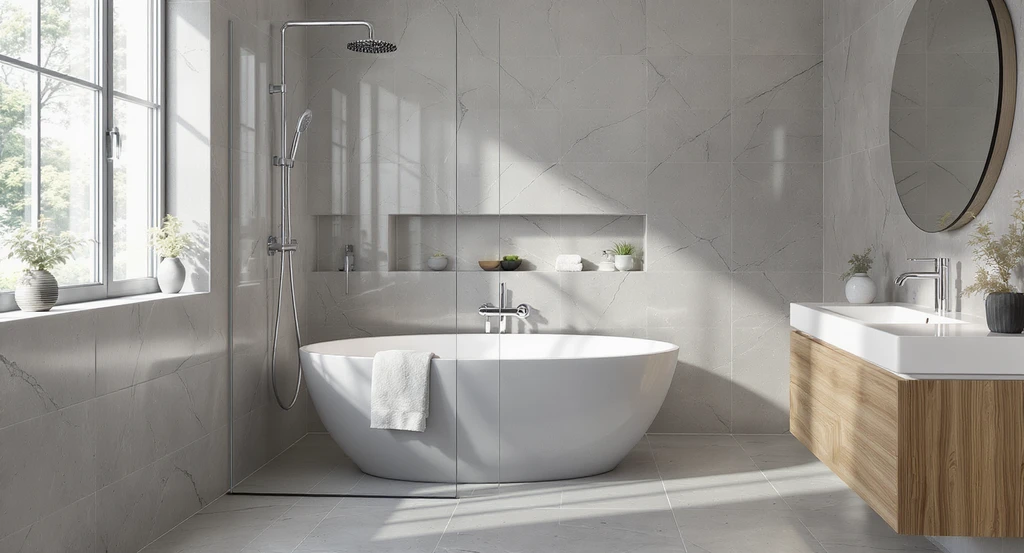
For modern, durable, and easy-to-clean bathroom walls, large-format waterproof PVC or SPC panels offer seamless looks and superior sanitation. Fluted WPC panels deliver warmth and modern appeal as accents. Always weigh cleanability, proportion, and layout together before committing. Previewing combinations with REimagineHome AI can help align visual intent with daily function.
Why Panel Selection Matters for Bathroom Walls
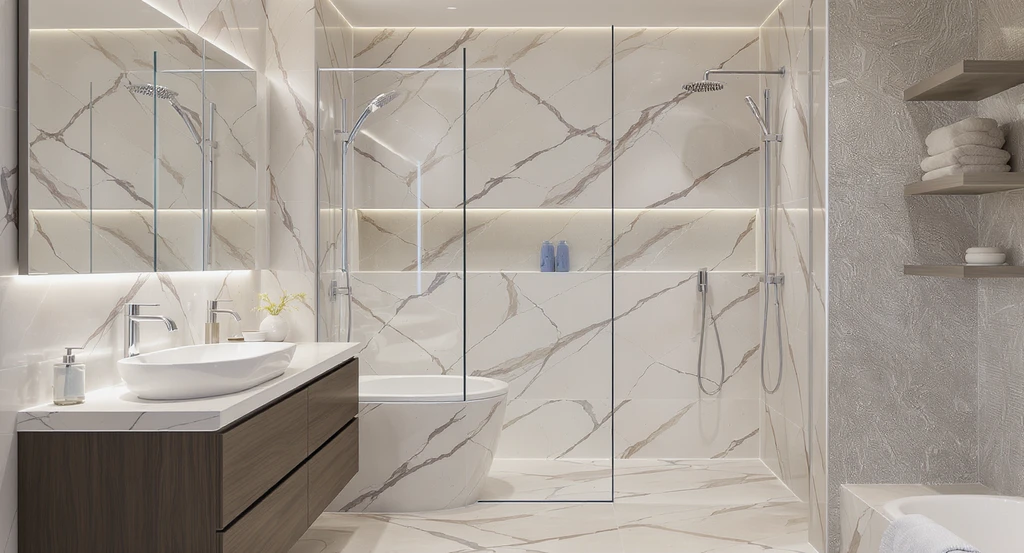
Explore the best waterproof wall panels for bathrooms—modern bathroom panel design ideas and stylish accent wall panel options for 2026, combining easy maintenance with high-end style.
With 2026 bathroom design shifting toward durability, cleaner lines, and easy maintenance, the choice of wall panels is more critical than ever. The right panels can balance hotel-inspired style and real-life hygiene, offering a strong foundation for any washroom transformation. Choosing waterproof wall panels is about more than following trends; it’s about building a space that can withstand daily wear without sacrificing comfort or visual balance. This guide explains, practically, how to pick, place, and combine the best waterproof wall panels so your bathroom looks sharp and stays clean for years.
-
Core Issue: Why Most Bathroom Panel Pairings Fail
Core Issue: Why Most Bathroom Panel Pairings Fail Image
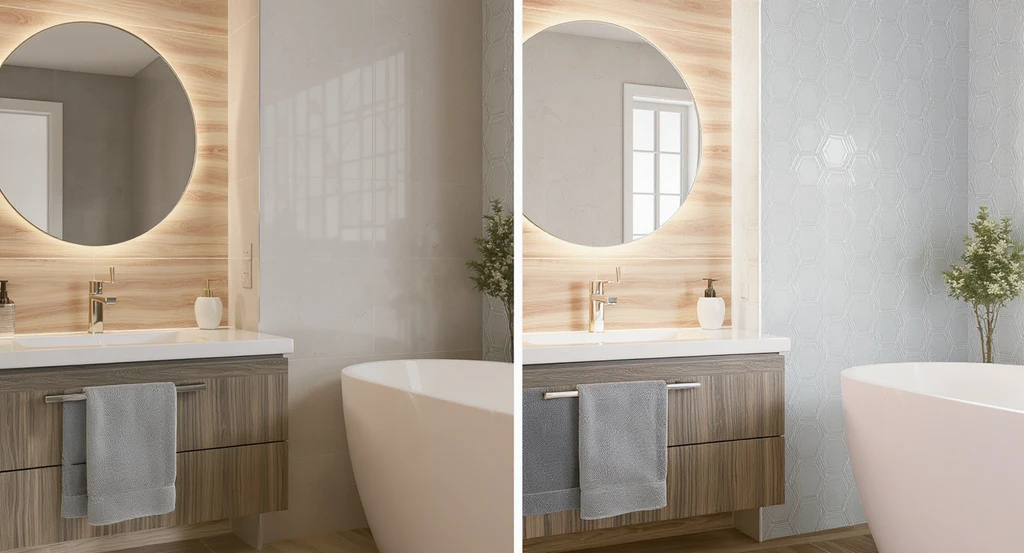
The most common mistake in bathroom wall paneling is mixing too many materials, textures, or panel types in one small area. This often results in cluttered, hard-to-clean, or visually disjointed spaces, which many homeowners realize only after installation. Reddit discussions reveal how wood paneling behind toilets or ill-matched color combos can quickly look dated, feel sterile, or become a hygiene hassle.
Too many seams, excessive grooves, and high-contrast transitions disrupt both cleaning routines and the sense of visual calm. In small spaces, every decision related to proportion, reflection, and adjacency is magnified.
Expert Insight
A recent client wanted to use fluted wood paneling across all bathroom walls. After mapping cleaning zones and combining digital previews, they saw how difficult it would be to maintain in moisture-heavy spots. Reworking to use SPC marble-effect panels in wet zones and keeping fluted accents just behind the vanity delivered a much more balanced and manageable space.
-
Why It Happens: Scale, Cleanability, and the 3-Material Rule
Why It Happens: Scale, Cleanability, and the 3-Material Rule Image
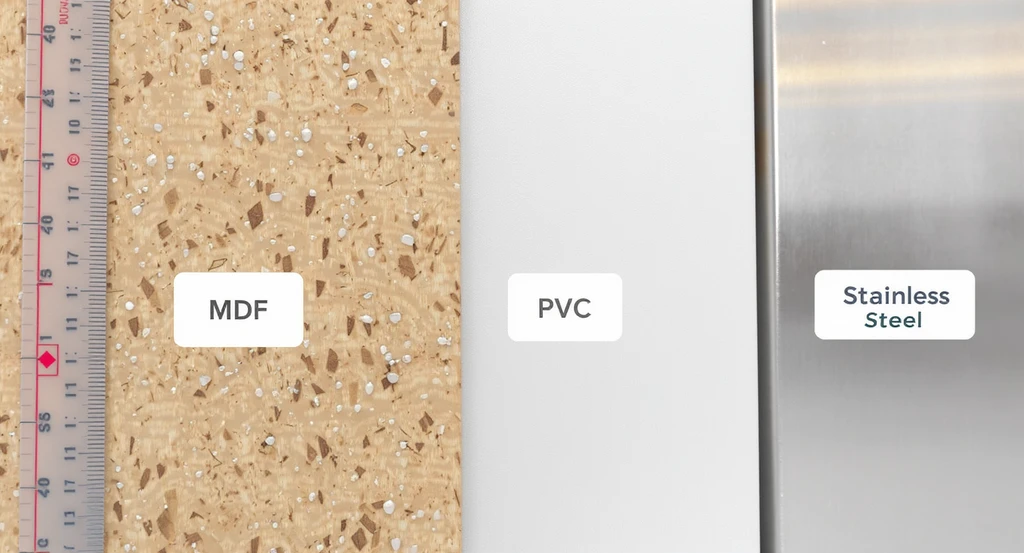
Bathrooms feature more frequent water, cleaning, and humidity exposure than any other room. When material combinations aren't coordinated for these conditions, surfaces either trap grime (textured wood slats), show water spots (dark marble/glass), or create awkward lines at corners and fixtures.
Good bathroom design usually limits the main finishes to two or three. This keeps sightlines simple and focus clear. Too many panel transitions or complex layouts overwhelm the eye and complicate cleaning, especially where walls meet floors, vanities, or toilets.
-
Principle: The 3-Material Layout Framework
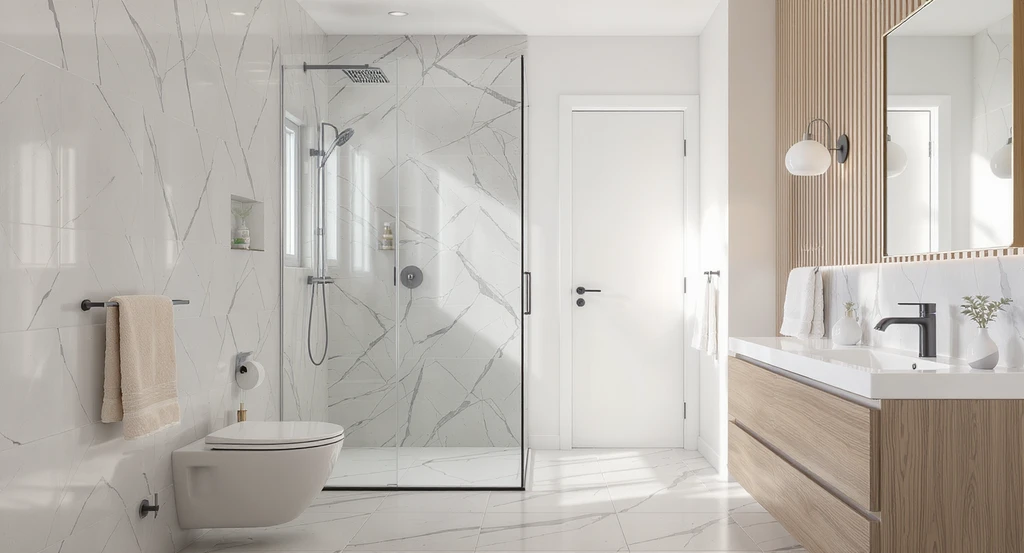
Best waterproof wall panels for bathrooms: This precise modern layout uses PVC panels in wet areas, a fluted WPC accent wall, and painted transitions, showcasing smart bathroom accent wall panel options and on-trend panel design ideas.
Use a maximum of three wall materials (including paint) in any bathroom zone for visual order and easier upkeep. Position the most functional, waterproof panels where splashes, steam, or cleaning tasks are highest, typically the shower area and behind toilets. Accent materials (like fluted WPC) should be reserved for dry, low-touch walls such as behind a vanity or out of the main spray zone.
- Main wall (wettest): Large-format SPC/PVC or back-painted glass
- Accent wall (dry zone): Fluted WPC or decorative laminate
- Painted or simple panel (transitions): For areas with little exposure to moisture
-
Correction: Step-By-Step Panel Selection and Placement
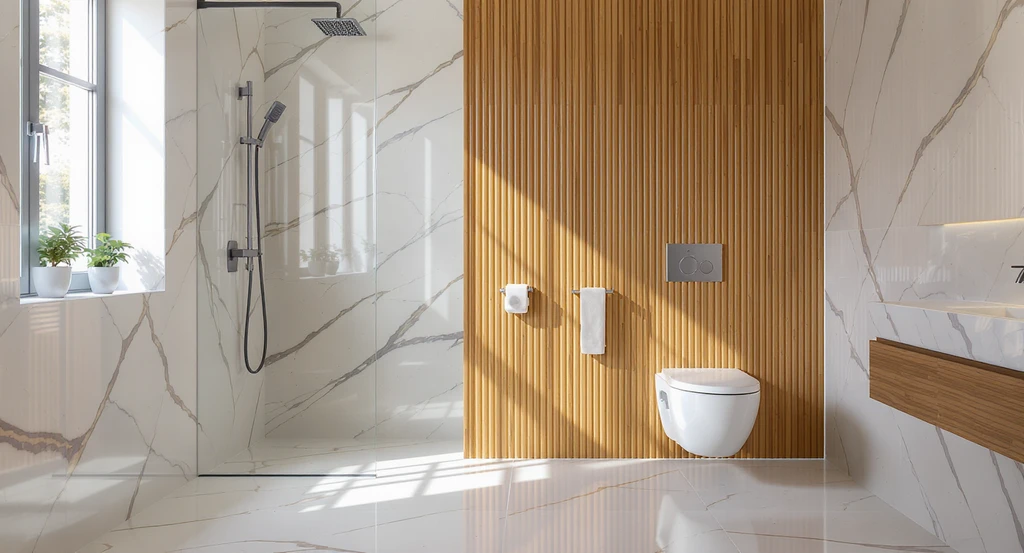
Explore the best waterproof wall panels for bathrooms—see seamless marble SPC panels in wet zones and stylish fluted WPC accents for effective, modern bathroom panel design ideas. This realistic example demonstrates smart bathroom accent wall panel options for optimal style and hygiene.
- Identify wet and dry zones: Map out where direct water, steam, and cleaning products will hit most (shower walls, toilet backdrop).
- Pick your dominant panel: For shower and toilet zones, choose seamless, 100% waterproof panels (PVC/SPC). Large-format marble or concrete-effect SPC panels offer a groutless, luxurious look that’s also easy to sanitize.
- Add texture intentionally: Fluted or ribbed WPC panels should only be used on dry, splash-free walls. They add character but require more dusting and can be impractical behind toilets or sinks due to cleaning concerns.
- Choose finishes by scale and light: Gloss panels and back-painted glass can bounce light, making small baths feel bigger, but gloss also shows water spots more easily. Matte finishes bring a contemporary, slip-resistant, and subtle vibe, especially on lower walls and floors.
- Limit transitions and seams: Panels should run floor-to-ceiling with the fewest joints possible. Avoid placing panel seams at awkward visual points (like directly behind fixtures).
-
Top Waterproof Bathroom Wall Panel Options: Ranked
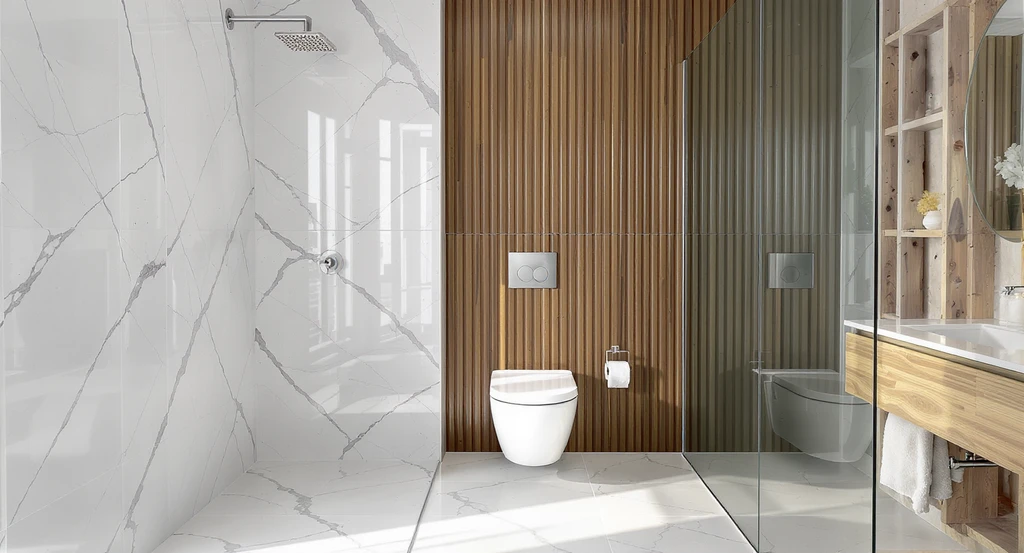
Discover the best waterproof wall panels for bathrooms with these modern bathroom panel design ideas, including large-format SPC/PVC, fluted WPC, back-painted glass, and easy DIY click-system accent wall panel options.
- Large-Format SPC/PVC (Marble or Concrete Look): Seamless, grout-free, and fully waterproof, ideal for shower and toilet areas. The seamless design makes cleaning much faster and prevents mold growth.
- Fluted WPC Panels: These bring warmth and depth without wood’s vulnerability, best for vanity accent walls or low-splash areas. Use vertically for height or to match any Japandi or sophisticated modern scheme.
- Back-Painted Glass Panels: High-gloss, highly reflective, and effortless to wipe down. Especially useful in compact or windowless bathrooms to amplify light and create a sleek backdrop.
- DIY Click-System Panels: Useful for refreshing existing bathrooms without major demo. Tongue-and-groove designs reduce installation time and mess, suitable for most wall types.
For more on how trending materials impact bathroom design, see our 2025 interior design trends guide.
-
Visual Reasoning: How Layout, Proportion, and Lighting Affect Your Result
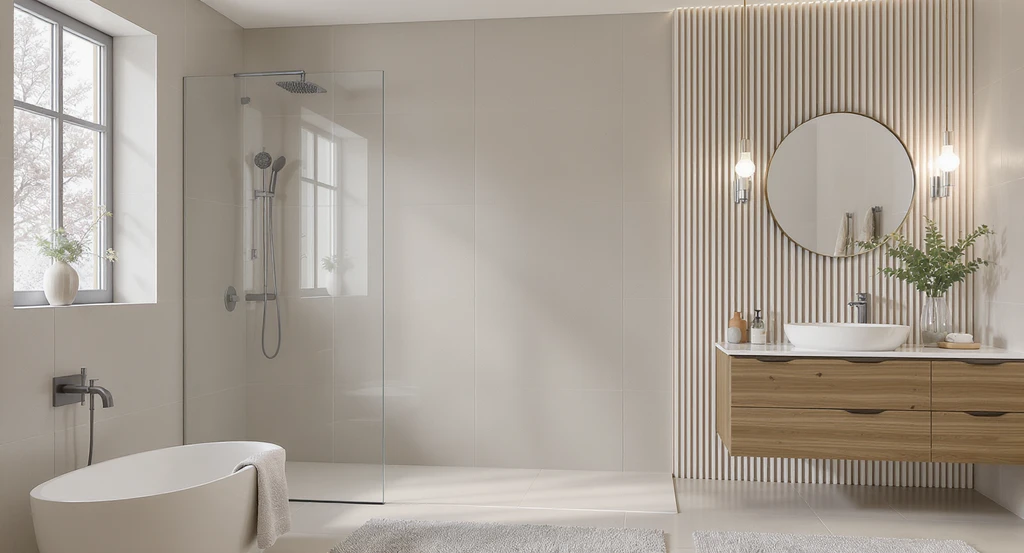
Discover how best waterproof wall panels for bathrooms, including fluted features and glossy accents, optimize layout and lighting in modern bathroom panel design ideas. Clean transitions and thoughtful panel placement highlight practical bathroom accent wall panel options.
Proportion is essential. Large-format panels reduce visual chaos and make small bathrooms feel as spacious as possible by minimizing grout and lines. Fluted panels, if used, should not be crowded into tight corners or placed near splash-prone areas, they are best on open, visible, and dry zones. Glossy glass panels work best when placed to catch natural or installed light, but should be checked for glare against mirrors.
The transition between materials should always follow clean vertical or horizontal lines, never create a patchwork at eye level. Sample panel sizes using tape or digitally before purchase to confirm the sense of flow. Aim for maximum surface smoothness where frequent cleaning is needed (toilet backs, lower walls), and reserve texture or pattern for secondary views.
-
Key Maintenance and Longevity Tips
Key Maintenance and Longevity Tips Image
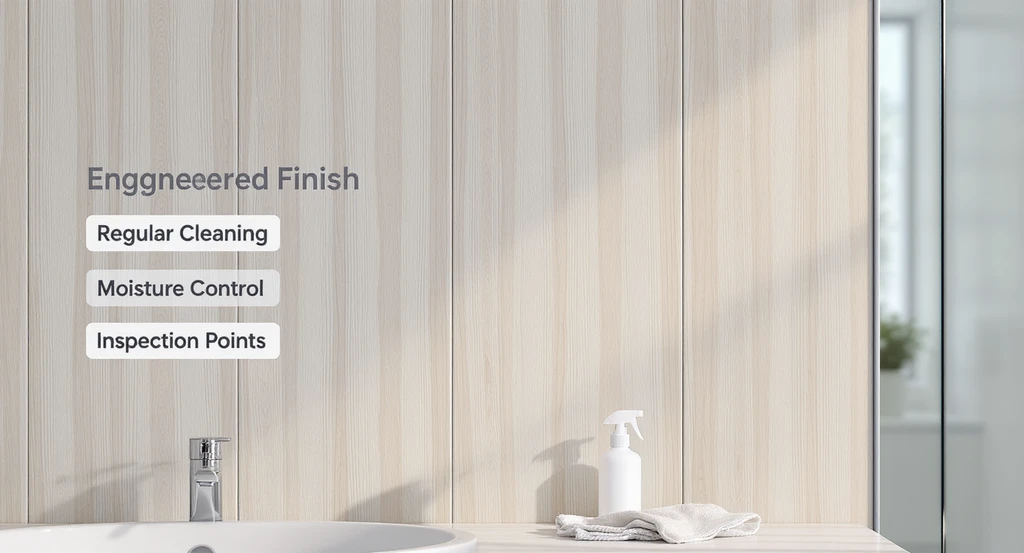
- Select smooth, non-porous panels for all high-traffic or moisture-laden zones to simplify cleaning.
- Never use real wood or deeply grooved panels behind toilets or sinks—these areas are most likely to develop stains and odors, as echoed by user feedback in design forums.
- Matte finishes hide fingerprints and smudges; gloss reflects more light but may show water marks.
- Check for sealing and edge finishing details, especially at the floor and around fixtures. Water intrusion can compromise even the most durable material if not properly installed.
For staging and cleaning tricks, read our practical bathroom staging guide.
-
Modern Style, Cohesion, and 2026 Trend Alignment
Modern Style, Cohesion, and 2026 Trend Alignment Image
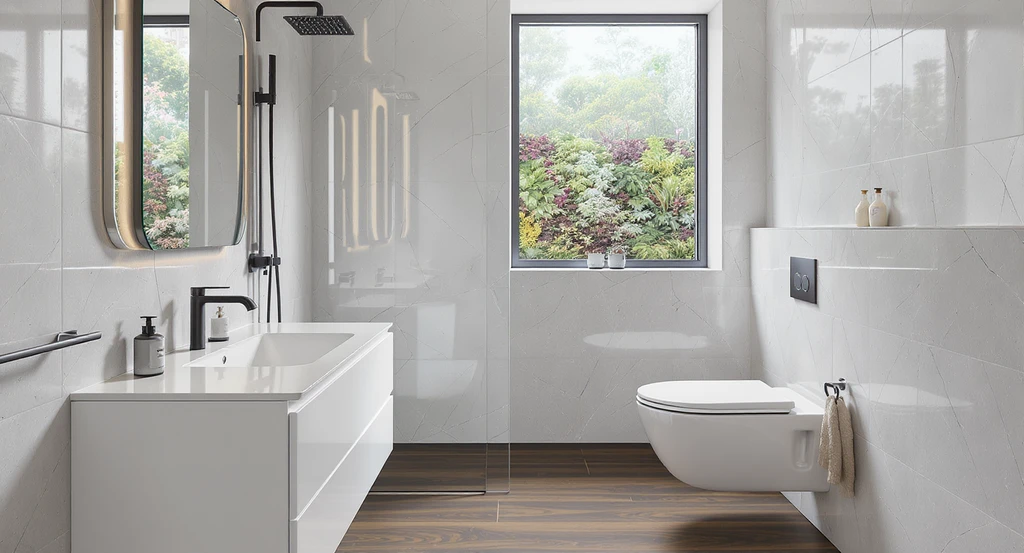
In line with 2026 interior design trends, bathrooms now lean toward warm neutrals, tactile surfaces, and calm, spa-like simplicity rather than sterile minimalism. Marble-effect SPC panels and carefully chosen accent walls are part of this shift. Combining a seamless waterproof panel in your main wet area and a single accent wall (such as vertical WPC behind a vanity) creates both character and coherence, without crossing into the commercial or cluttered look seen in overbuilt bathrooms.
Ensure that your chosen panels and finishes feel unified in color tone (all warm or all cool) to avoid clashing and to achieve that “high-end hotel” atmosphere at home. For trend alignment and more on sustainable finishes, reference our blog on wellness and sustainable upgrades.
-
How Visualization Helps You Avoid Common Paneling Mistakes
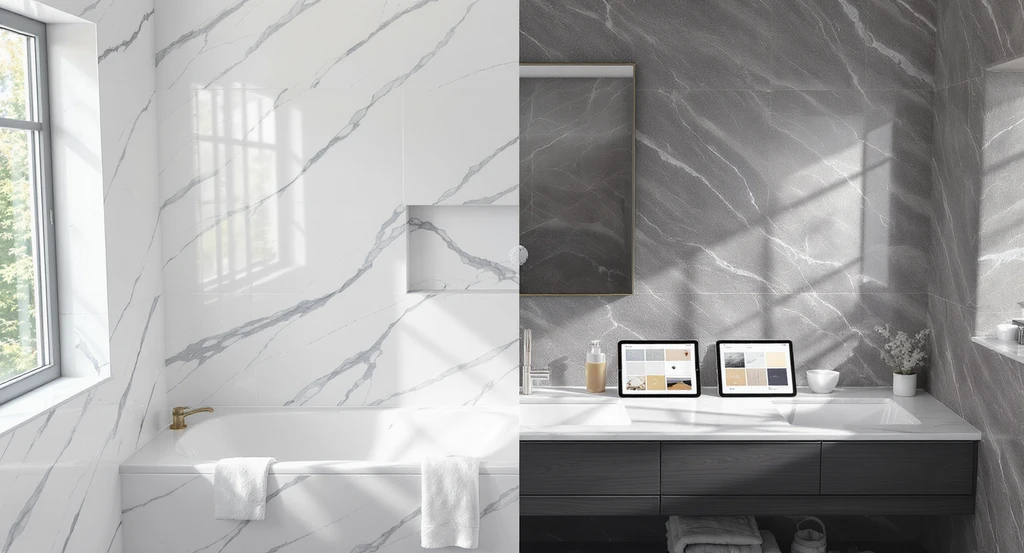
Previewing the best waterproof wall panels for bathrooms with digital visualization tools helps you compare modern bathroom panel design ideas and avoid common layout mistakes.
Bathroom decisions often go wrong because the scale or material combinations are hard to judge in advance. Visualizing your proposed panel choices, especially with a tool like REimagineHome AI, lets you preview different panel types, color combinations, and transitions before you buy. This ensures that transitions, reflections, and textures work together, and helps you avoid costly errors caused by misjudged proportions or maintenance blind spots. Try different layouts and view lighting at different times of day for full confidence.
Visualization Scenario
Imagine uploading your bathroom layout to REimagineHome AI and rotating between full marble SPC panels, fluted accents, or glossy glass behind the sink. You notice that in different lighting, fluted textures cast extra shadows, while large-format panels visually 'open up' the room and reduce cleaning stress points, letting you commit with total clarity.
FAQ: Bathroom Wall Panel Design Decisions
- What’s the most hygienic bathroom wall panel for behind a toilet?
- Large-format SPC or PVC panels are fully waterproof, non-porous, and groutless, making them the most hygienic and easiest to clean for areas behind toilets or in showers.
- Are fluted or ribbed panels practical in a full bathroom?
- Fluted panels provide visual warmth but are best for zones with minimal splash and little contact. Avoid using them behind toilets or sinks, as grooves can trap dust and make cleaning difficult.
- Should I use matte or gloss finish panels?
- Matte finishes are on trend for a subtle, slip-resistant appearance and hide fingerprints well. Gloss panels reflect more light, which can help small baths feel larger, but show water spots faster. Consider your room’s lighting and cleaning habits.
- Can I install waterproof panels myself?
- Click-system panels are specifically designed for DIY, allowing easy installation over existing tiles. Ensure you follow manufacturer mounting and sealing guidelines for durability.
- What’s the best way to preview panels before committing?
- Use digital visualization platforms like REimagineHome AI to test different patterns, colors, and joint placements. This reduces the risk of mismatched materials or scale issues that only become obvious after installation.
Key Takeaways: Choosing Bathroom Wall Panels that Last
Stick to a maximum of three surface materials in any bathroom zone, prioritize smooth, waterproof panels behind toilets and inside showers, and reserve textured or bold accent panels for clean, dry areas. Always preview your full design layout using visualization tools before installing to ensure the combination looks, and functions, right. Balance trending looks with timeless functionality for a space that feels personal and performs for years.