
TL;DR
Short answer: In a living room with strong straight lines or a sectional, a round coffee table with visible legs often looks best because it softens angles and adds air; if you entertain or need maximum reach, a low, rectangular table sized to about two-thirds the sofa length is most practical. Use an AI interior design from photo workflow in ReimagineHome.ai to compare sizes, shapes, clearances, and tones before spending a dollar. Try your own layout, furniture style, or DIY idea on a photo of your room in ReimagineHome.ai.
Why Furniture & DIY Decisions Feel So High‑Stakes
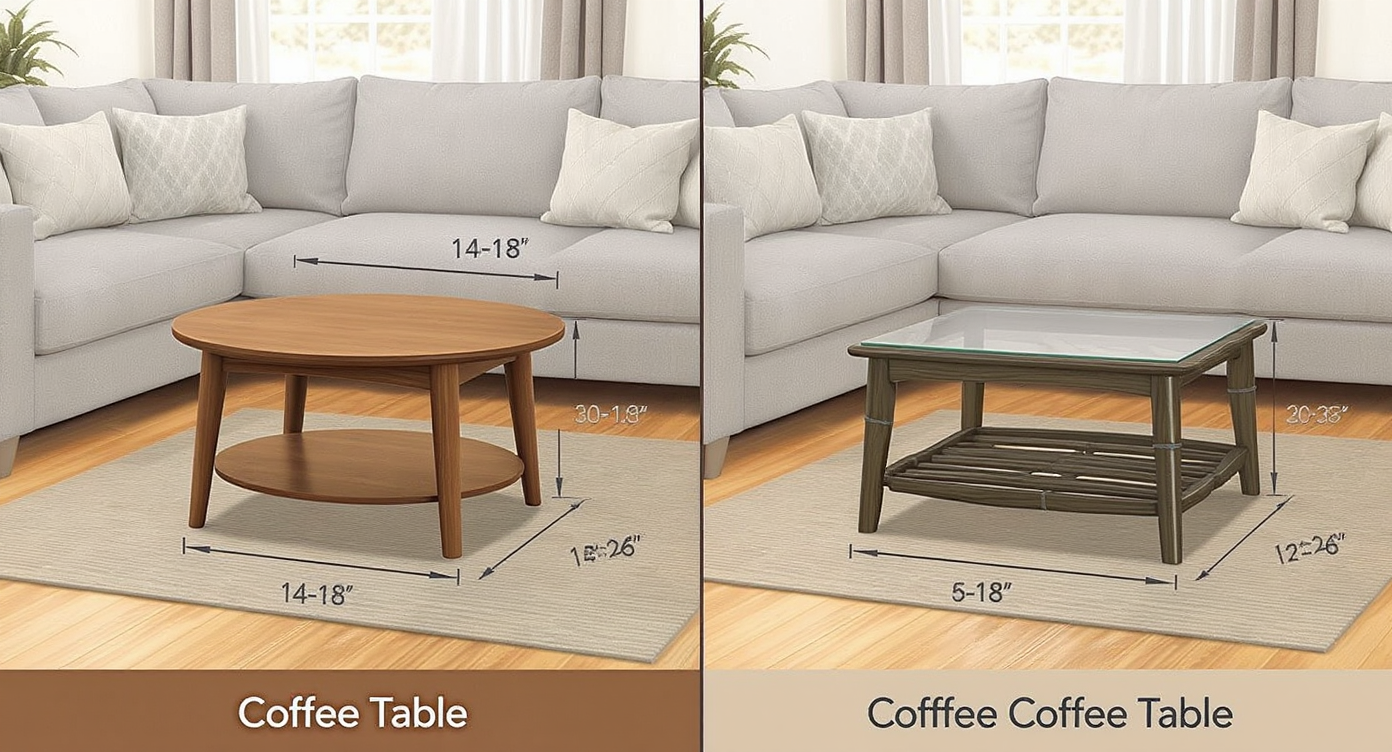
Choosing the right coffee table shape and size improves both flow and function in your space.
In most modern living rooms, a round table with legs is the easiest visual win for a sectional: it breaks up the angles, keeps the room breathing, and reduces bruised shins. If you routinely set out snacks or want every seat to reach a surface, a rectangular coffee table about two‑thirds the sofa length offers the best function.
- Shape choice: round for flow and safety; rectangle for reach and serving.
- Size and clearances: 14–18 inches between sofa and table; 30–36 inches for main walkways.
- Legs vs plinth base: legs add lightness and vacuum access; solid bases feel heavier.
- Material/contrast: warm wood calms; glass/black adds punch but can jar if it’s the only dark note.
- How to preview: room layout AI that restyles from one photo in minutes.
Before you move a single sofa or pick up a paint roller, upload a photo to ReimagineHome.ai and test a few ideas safely.
If you’re weighing small space trade‑offs, skim a detailed guide to small living room layouts — it expands on traffic flow, sofa size, and where a coffee table earns its keep.
Why Interior Design Dilemmas Are Usually About Layout, Scale, and One Wrong Piece

Poor scale and layout disrupt flow and function; clearance matters for comfort and usability.
Most designers recommend 30–36 inches of clear walking space through a living room’s main path; when you steal from that, the whole room feels tight.
That’s why coffee table dilemmas so often trace back to scale and circulation, not “style.” A table that’s too large chokes the walkway; too small looks like an afterthought. Strong rectangular architecture and sectionals stack up hard lines; a round table brings relief and softens the geometry. Meanwhile, one misfit item (think: a too‑dark, heavy rectangle in an otherwise light scheme) can dominate the mood all by itself.
Ask yourself three quick questions before falling for a pretty option:
- Can I keep 14–18 inches between the sofa front and table edge so it’s reachable without leaning uncomfortably?
- Do I still have 30–36 inches where people walk most?
- Does the table’s start height and visual weight balance my sofa? (Plinth‑base sofas often pair best with legged tables; if the sofa has legs, a chunkier table can ground things.)
For long, narrow rooms or open plans, these trade‑offs get sharper. If that’s you, see this playbook for long, narrow living room layouts — it shows how a round vs. rectangular table shifts the main path and seating reach.
Anecdote
That corner where the armchair never quite fits, the sofa that looked perfect online but suddenly feels bulky, and the coffee table that keeps bruising your shin — they’re all the same story about scale and paths. Change one piece, and the whole room exhales.
Furniture Rules That Quietly Solve Most Room Problems
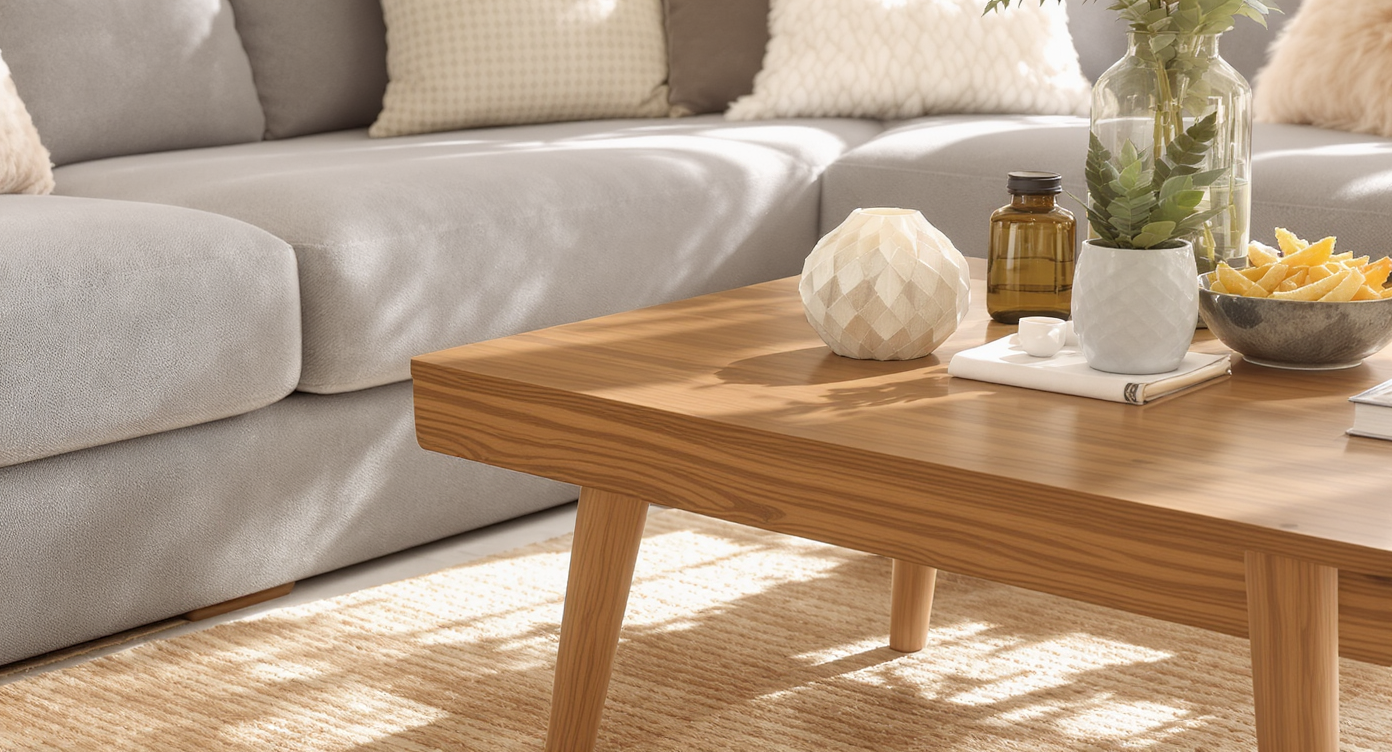
Furniture rules like coffee table height enhance comfort and maintain visual balance in rooms.
Coffee tables typically work best when they’re 1–2 inches lower than your sofa’s seat height, with a 14–18‑inch reach zone to the cushion.
- Size vs sofa: For rectangles, aim for about two‑thirds the sofa length; for rounds, choose the largest diameter that preserves walkways (often 32–40 inches in small to mid rooms).
- Clearance: Keep 16–24 inches around the table on non‑sofa sides; protect a 30–36‑inch highway where feet actually travel.
- Corners vs curves: Round or oval = safer with kids and friendlier to chaises; rectangles = best reach for entertaining trays and laptops.
- Legs vs box: Visible legs lighten the look and let robot vacuums pass; boxy bases feel substantial but can read heavy on top of a rug.
- Material and contrast: Warm wood adds softness; black/metal/glass adds crisp contrast but can feel stark if it’s the only dark element in the room.
It’s much easier to apply these rules over a photo of your actual room. Drop one picture into ReimagineHome’s AI room planner and toggle between a round leggy wood, a drum base, and a low black rectangle to watch how lightness, reach, and mood change. If you want a deeper sizing checklist, explore our coffee table size guide by sofa type.
How ReimagineHome.ai Helps You Test Layouts, Styles, and DIY Ideas

AI tools like ReimagineHome.ai let you preview furniture layout and style changes before buying.
AI tools can visualize multiple layout and style options in minutes, reducing returns and heavy lifting before you commit.
With ReimagineHome.ai, you can:
- Use AI interior design from photo to restyle the room without measurements — ideal for testing round vs. rectangular tables with your real sofa and rug.
- Try room layout AI variations that shift the walkway and show 14–18‑inch reach zones in practice around a chaise or sectional.
- Preview finishes: warm white oak vs. mid‑tone walnut vs. black metal/glass to calibrate contrast with cabinets, floors, and pillows.
- Experiment with global styles (Scandi, Japandi, Contemporary, Boho) to see how the same table form reads in different palettes.
- Save and compare: line up three renderings side‑by‑side and pick the one that balances function and vibe.
For a broader overview of virtual room design and the best room design AI for beginners, see this breakdown of AI interior design tools.
Step‑by‑Step: Fixing This Room Using AI and Simple DIY Changes
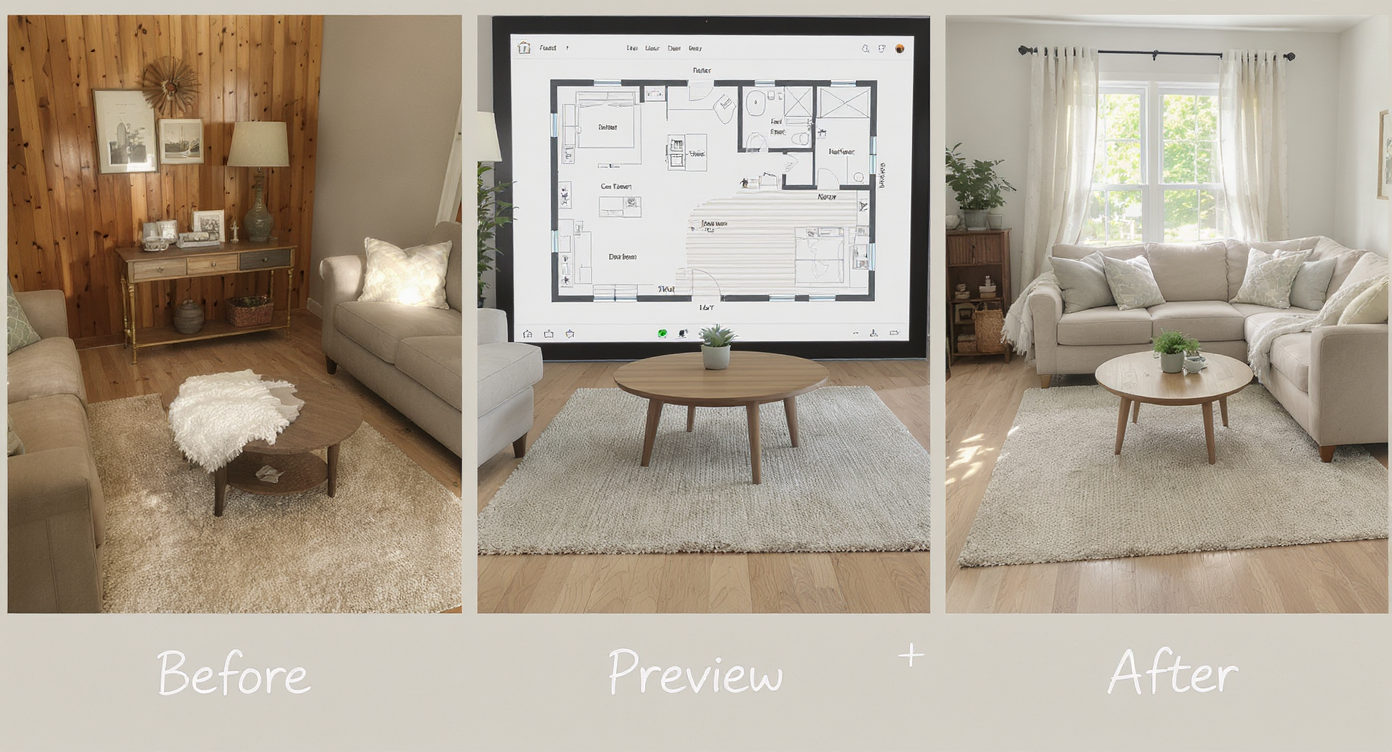
AI and simple DIY can transform room flow and function with the right coffee table choices.
Aim for 30–36 inches of uninterrupted clearance through your main path; if you don’t have it, downsize the table or re‑angle the rug.
- Step 1 — Photograph the room: Stand where you enter most; capture sofa, rug, walkway, and the nearest obstacle. Upload to ReimagineHome.ai.
- Step 2 — Generate three baselines: a leggy round (wood), a drum round (wood/plaster look), and a low rectangular (wood or black frame/glass). Keep sofa‑to‑table at 14–18 inches.
- Step 3 — Compare reach: If your primary use is drinks/snacks for gatherings, note how many seats can reach the rectangle without leaning. If daily life is lounging with a chaise, check how the round improves shin clearance.
- Step 4 — Check weight and light: If your sofa has a plinth base that hugs the floor, choose a table with legs for air. If your sofa is leggy, a slightly chunkier table can ground the setting.
- Step 5 — Adjust contrast: If the room is all pale wood, try one rendering with a medium or black accent to anchor it; if black feels jarring, switch to bronze or a deeper wood tone.
- Step 6 — DIY tune‑ups: Rotate the rug to align with your traffic path; add a slim sofa table for extra surface if the round wins on looks but not reach. Swap in a tray (18–20 inches) to organize remotes and drinks.
- Step 7 — Decide with confidence: Save your favorite rendering, measure twice, and order once.
When you’re juggling a compact footprint, our small living room layout guide shows additional micro‑moves — like wall‑mounting lighting — that free up table surface.
Visualization Scenario
Upload a wide shot of your living room to ReimagineHome.ai, generate three versions — round leggy wood, drum round, and low black rectangle — then compare how each affects reach from the chaise, walkway clarity to the kitchen, and overall warmth next to your floors and cabinets.
FAQ
How do I fix an awkward living room layout without buying all new furniture?
Re‑establish 30–36 inches for the main path, keep 14–18 inches from sofa to coffee table, and rotate the rug to align with traffic. Use ReimagineHome.ai to test round vs. rectangular tables and small shifts before moving anything heavy.
Which AI interior design tool is best for small apartments?
Look for room design AI that restyles from a single photo, like ReimagineHome.ai, so you can see scale and circulation instantly. For a wider comparison, read this breakdown of AI interior design tools.
How can I see if a new sofa or rug will fit my room before I buy it?
Render your current room with proposed sizes — aim for a coffee table two‑thirds the sofa length (rectangle) or the largest round that preserves walkways. ReimagineHome’s AI room planner lets you visualize fit and reach.
Can I use AI tools to plan DIY furniture or paint projects?
Yes. Upload a photo, swap paint colors, preview wood tones, and test table finishes to avoid mismatches. Then follow through with measured, light‑touch DIY upgrades.
What’s the easiest way to mix different furniture styles in one room?
Use a 70/30 rule: keep one dominant style, then repeat one material or color from the secondary style at least three times. Preview combinations in ReimagineHome.ai before purchasing.
Visualize Your Room’s Next Chapter
Most people try to fix style first, but it’s the clearances, heights, and one wrong piece that make a room feel “off.” The right center table quietly solves flow, reach, and mood — round with legs for softness and air; rectangular for all‑seat reach. When you can see the trade‑offs in your own photo, the choice becomes obvious.
When you can see the possibilities, it’s easier to move with confidence. Start by uploading one honest photo to ReimagineHome.ai and let your next version of the room come into focus.