
TL;DR
Short answer: decorate before Thanksgiving if you want a longer cozy season or you’re hosting and want the house festive; decorate after if you prefer to savor fall or you use a real tree and want it fresh through New Year’s. A low‑risk approach is to layer winter‑neutral decor in November, then add Christmas color and the tree in early December. You can preview layouts, tree placement, and color palettes with ReimagineHome.ai—an easy way to reduce returns and rearranging. This balances tradition, rental constraints, budget, and the real need for calm in dark winter months.
Why Furniture & DIY Holiday Decisions Feel So High‑Stakes
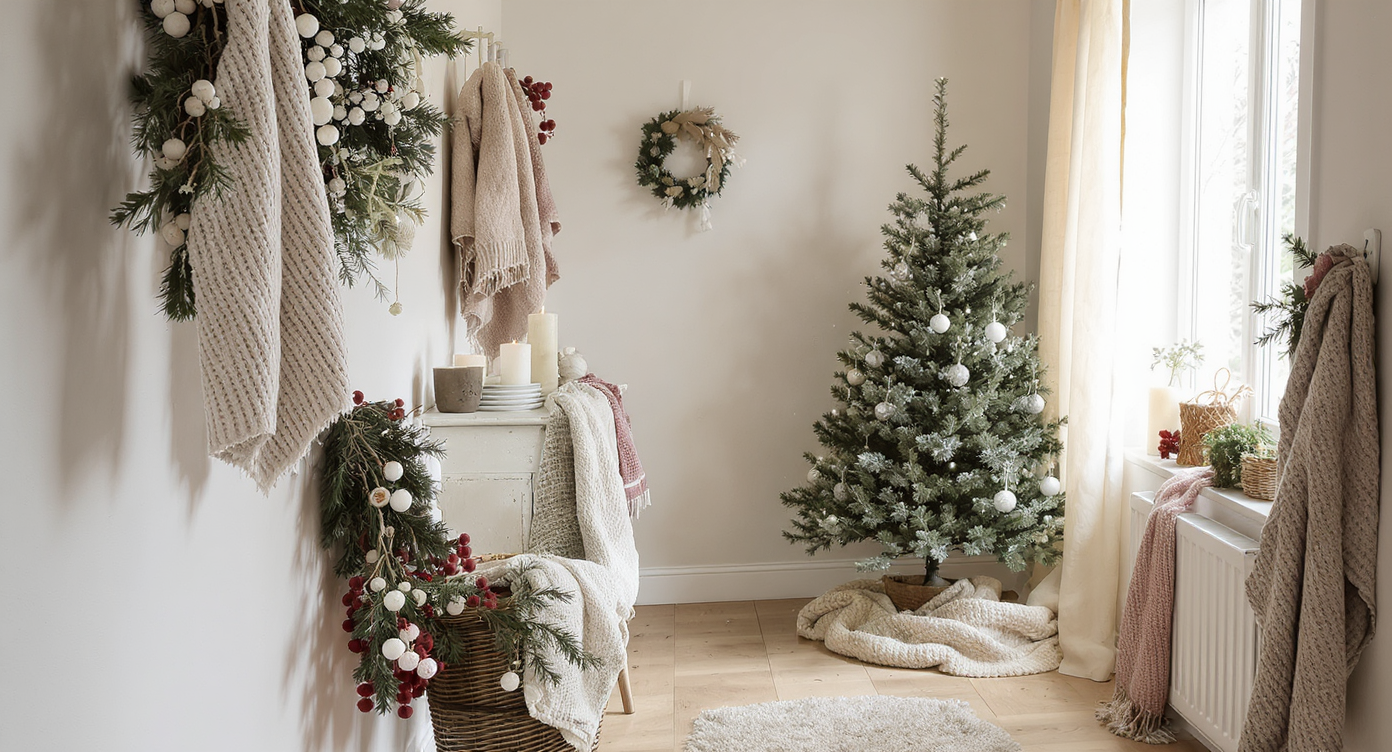
Winter-neutral layers with Christmas accents create a flexible, welcoming holiday ambiance.
Decorate whenever it best fits your life: earlier for maximum cozy time or hosting, later for a fresher real tree and a clear reset after fall. The smartest compromise is winter‑neutral layers in November and Christmas‑specific accents in December, guided by your room’s layout.
- When to start: tradition vs. practicality (Advent, Dec 1, or the weekend after Thanksgiving).
- Real vs. artificial trees: freshness windows, needle drop, and safe clearance.
- Layout first: walking paths (30–36 inches), tree size vs. ceilings, dining flow for guests.
- Rental‑friendly installs: Command hooks, banister safety, and no‑drill wreaths.
- Style pacing: winter neutrals now, Christmas color later to avoid burnout.
- AI help: use room design AI to test tree placement, garlands, and palettes from one photo.
- Post‑holiday strategy: transition to winter decor so your home doesn’t feel bare outside and in.
Before you move a single sofa or pick up a paint roller, upload a photo to ReimagineHome.ai and test a few ideas safely.
If you’re working with a tight living room, this overview pairs well with a detailed guide to small living room layouts, especially useful when a tree or extra dining table squeezes circulation.
Why Interior Design Dilemmas Are Usually About Layout, Scale, and One Wrong Piece
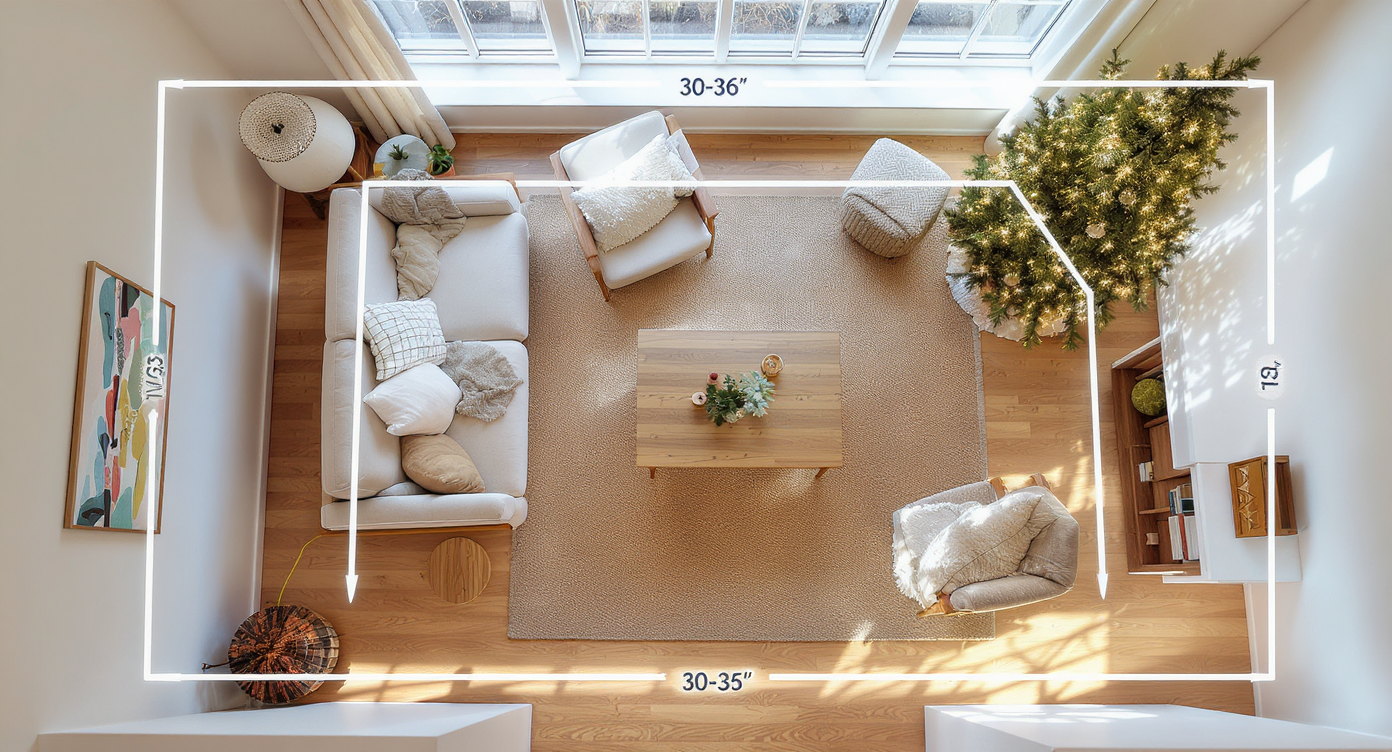
Optimal walking space and scale keep rooms functional and festive without clutter.
Most designers recommend keeping 30–36 inches of clear walking space through main paths; a typical 6.5–7.5‑foot tree can occupy 30–48 inches in diameter once fluffed. That’s why holiday dilemmas—"Do I decorate before or after Thanksgiving?"—usually aren’t about dates; they’re about flow, scale, and one piece (often the tree) throwing off the room.
In small apartments or long, narrow living rooms, the tree competes with your primary circulation: sofa to kitchen, door to sofa, or stairs to bath. If that path drops under 30 inches, everything starts to feel cramped—especially when guests arrive with plates and coats. The fix is rarely buying all new furniture; it’s choosing a slimmer tree profile, shifting a side table to another wall, or rotating the rug to re‑center the seating group.
Lighting is the other sleeper issue. Winter demands layered light—ambient, task, and twinkle—with cords secured and dimmers set. If the banister is your only stair support, avoid wrapping garlands over the handrail; mount garlands to the side with clips so the grip stays usable. When hosting Thanksgiving, clear sightlines to the dining area and kitchen help everyone settle, even if the tree waits until December.
For tight rooms, preview how a slim tree or a corner layout impacts circulation using a detailed guide to small living room layouts and visualize the arrangement on your actual photo before committing.
Anecdote
That corner where the armchair almost fits until the tree arrives? Most people live with the squeeze all December. A 2‑inch sofa shift and a slim tree often give you your walkway—and your sanity—back.
Furniture Rules That Quietly Solve Most Room Problems

Choosing right-sized furniture & tree ensures harmony and easier movement in festive setups.
Leave at least 6–12 inches between the tree top and the ceiling (including a topper); undersizing by one foot below the ceiling often looks best. A few more rules that quietly solve most problems:
- Walkways: Keep 30–36 inches through main paths; 24 inches minimum in low‑traffic zones.
- Sofa + coffee table: Aim for 14–18 inches between them so you can still pass when gifts gather.
- Dining clearances: Allow 36 inches behind chairs for pull‑back during holiday meals.
- Rug sizing: Front legs of major seating on the rug; size up to visually absorb the tree.
- Tree profile: If your room is under 11 feet wide, choose slim (40–48 inch diameter) over full.
- Safety: Keep trees and stockings at least 36 inches from heat sources; tape down cords and use timers.
- Stairs: Mount garlands to the side of handrails so grips remain fully functional.
These guidelines apply whether you decorate pre‑ or post‑Thanksgiving, but seeing them in context is everything. Upload one photo to ReimagineHome.ai to check sightlines, test tree sizes, and audition a winter palette before the red and green arrive. If you’re weighing different digital tools, skim this breakdown of AI interior design tools to understand photo‑to‑room restyles vs. full planners.
How ReimagineHome.ai Helps You Test Layouts, Styles, and DIY Ideas

AI tools help visualize various decor styles fast, guiding confident holiday design choices.
AI tools can show multiple layout and style options in minutes, so you can make decisions before moving anything heavy. Here’s how ReimagineHome.ai helps during the holidays:
- AI room restyle from one photo: Try a neutral "winter" look now, then a full Christmas version for December—no measurements needed.
- Small‑space layouts: Test tree placement by sofa or in a dining corner and see how walking space changes.
- Paint and finishes from a photo: Sample deep evergreen walls, a cocoa‑brown accent, or just keep your existing color and amplify with warm lights.
- Global styles on demand: Try Scandi minimal, Japandi calm, or classic American traditional to match your ornaments and heirlooms.
- Virtual staging for gatherings: Preview an extra leaf in the table, a bar cart location, or a temporary reading chair swap while the tree is up.
If you’re curious about workflow specifics, this overview pairs well with this deep‑dive on AI room makeovers, which shows how to iterate fast and compare options side by side.
Step‑by‑Step: Fixing This Room Using AI and Simple DIY Changes
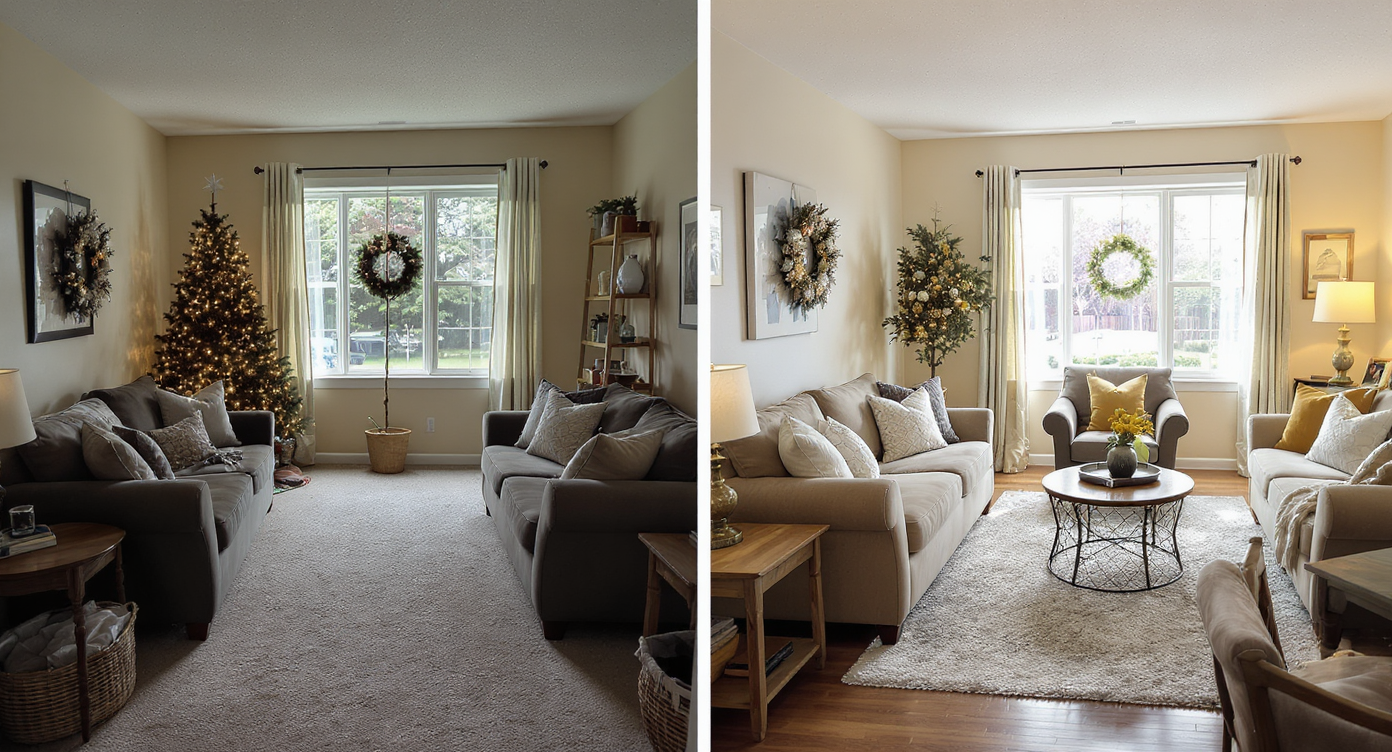
Simple DIY changes guided by AI create spacious, stylish rooms ready for holiday hosting.
Aim for 30–36 inches of clearance in your main path; if you don’t have it, choose a slimmer tree, slide the sofa back 2–3 inches, or move a side table to another wall. Then follow this practical sequence:
- Step 1: Measure and map. Note ceiling height, the narrowest walkway, and likely tree spots (corners near outlets are ideal). Leave 6–12 inches for your topper.
- Step 2: Upload a photo to ReimagineHome.ai. Generate a winter‑neutral version (greens, woods, creams). Save a second version with your preferred Christmas palette to compare.
- Step 3: Decide your timeline. Hosting Thanksgiving? Keep fall tablescapes and add only neutral winter lights. Tree goes up Thanksgiving weekend or first week of December.
- Step 4: Furniture nudge. If a tree steals 8–12 inches of walkway, return it with a rug rotate, sofa shift (2–4 inches), or swapping a bulky side table for a slim floor lamp.
- Step 5: Rental‑friendly installs. Use removable hooks for garlands and stockings; attach stair garlands to the side of the rail to preserve grip. Add plug‑in dimmers and timers.
- Step 6: Real tree logistics. Buy 2–3 weeks before your last gathering; water daily and keep 3 feet from heat sources. If you want it fresh on New Year’s Day, wait until early December.
- Step 7: After‑holiday transition. On January 1–6, remove red/metallics but keep evergreens, wood, and warm lamps so the house doesn’t feel bare.
Visualization Scenario
Upload your living room photo to ReimagineHome.ai, test a 7‑foot slim tree by the window vs. a 6‑foot full tree near the fireplace, toggle a winter‑neutral palette vs. classic red/green, and compare how much walking space remains in each layout.
FAQ
How do I decide whether to decorate for Christmas before or after Thanksgiving?
Choose earlier if you want a longer cozy season or you’re hosting; choose later if you use a real tree or prefer to savor fall. Layer winter‑neutral decor first, then add Christmas color in December.
When should I put up a real Christmas tree so it lasts?
For peak freshness through New Year’s, buy and set up in early December, keep it 3 feet from heat sources, and water daily.
Which AI interior design tool is best for small apartments?
ReimagineHome.ai is excellent for AI interior design from a photo—ideal for testing tree placement and furniture nudges in tight rooms; see this breakdown of AI interior design tools for context.
How can I see if a new tree or rug will fit my living room before I buy?
Measure ceiling height and walkways, then use ReimagineHome.ai to visualize tree size, rug scale, and circulation. For tricky rooms, consult a detailed guide to small living room layouts.
Can I use AI to plan DIY holiday and winter decor?
Yes—upload a room photo and test garlands, wreaths, lighting warmth, and color palettes, then follow steps from this deep‑dive on AI room makeovers to refine.
Visualize Your Room’s Next Chapter
Good holiday decorating isn’t about a single date on the calendar—it’s about honoring flow, safety, and mood so your home tells the story you need this season. Some years you’ll crave the glow on November 1; other years, December 8 feels just right. When you can see the possibilities, it’s easier to move with confidence. Start by uploading one honest photo to ReimagineHome.ai and let your next version of the room come into focus.