
TL;DR
The fastest way to make holiday decor feel intentional (not cluttered) in a small living room is to protect 30–36 inches of clear walking space, right-size your tree, repeat 2–3 materials, and layer warm lighting. Upload a photo to ReimagineHome.ai to try an AI room decorator preview and see layouts, color changes, and garlands before you commit. This approach works for renters, pet owners, and anyone doing a DIY room makeover on a budget. It lowers returns, arguments, and post-holiday regret.
Why Seasonal Decorating Feels So High-Stakes
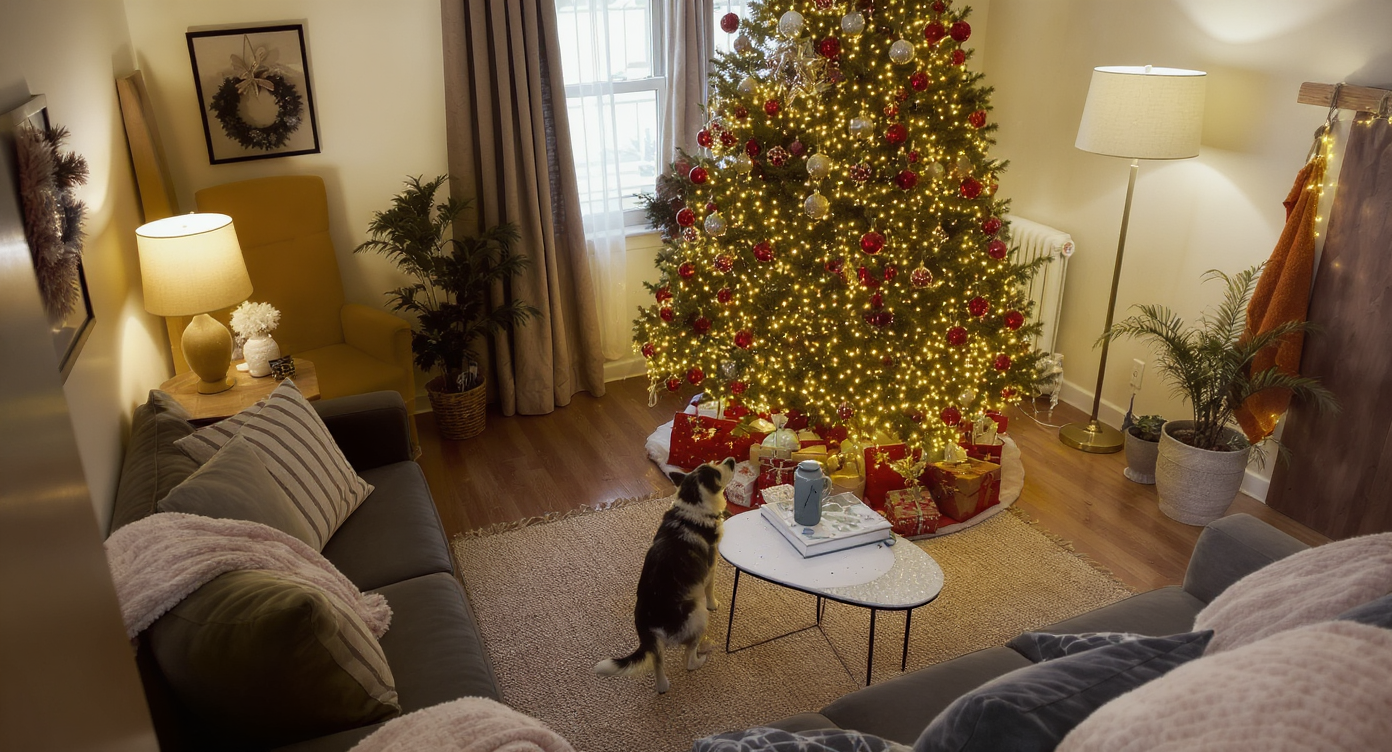
Smart holiday decorating in small spaces focuses on circulation, lighting, and renter-friendly options.
Most living rooms feel instantly calmer when you preserve 30–36 inches of clear walking space and choose a tree that leaves 6–12 inches of clearance below the ceiling. If you’re debating when to decorate, the better question is how to make it look cohesive — and an AI interior design preview can show you the answer in minutes.
- Small-space holiday layout: where to put the tree without blocking circulation.
- Scale and proportion: what size tree, rug, and coffee table actually fit.
- Rental-friendly hanging tricks (no drilling) and pet-aware tweaks.
- Lighting layers that make rooms look cozy, not cluttered.
- How to use room design AI to test styles and color in your own photo.
- Quick DIY swaps that stretch a budget and store easily in January.
Before you move a single sofa or pick up a paint roller, upload a photo to ReimagineHome.ai and test a few ideas safely.
If you’re wrestling with a tight footprint, this overview pairs well with a detailed guide to small living room layouts so you can avoid the classic tree-in-the-walkway problem.
Why Interior Design Dilemmas Are Usually About Layout, Scale, and One Wrong Piece
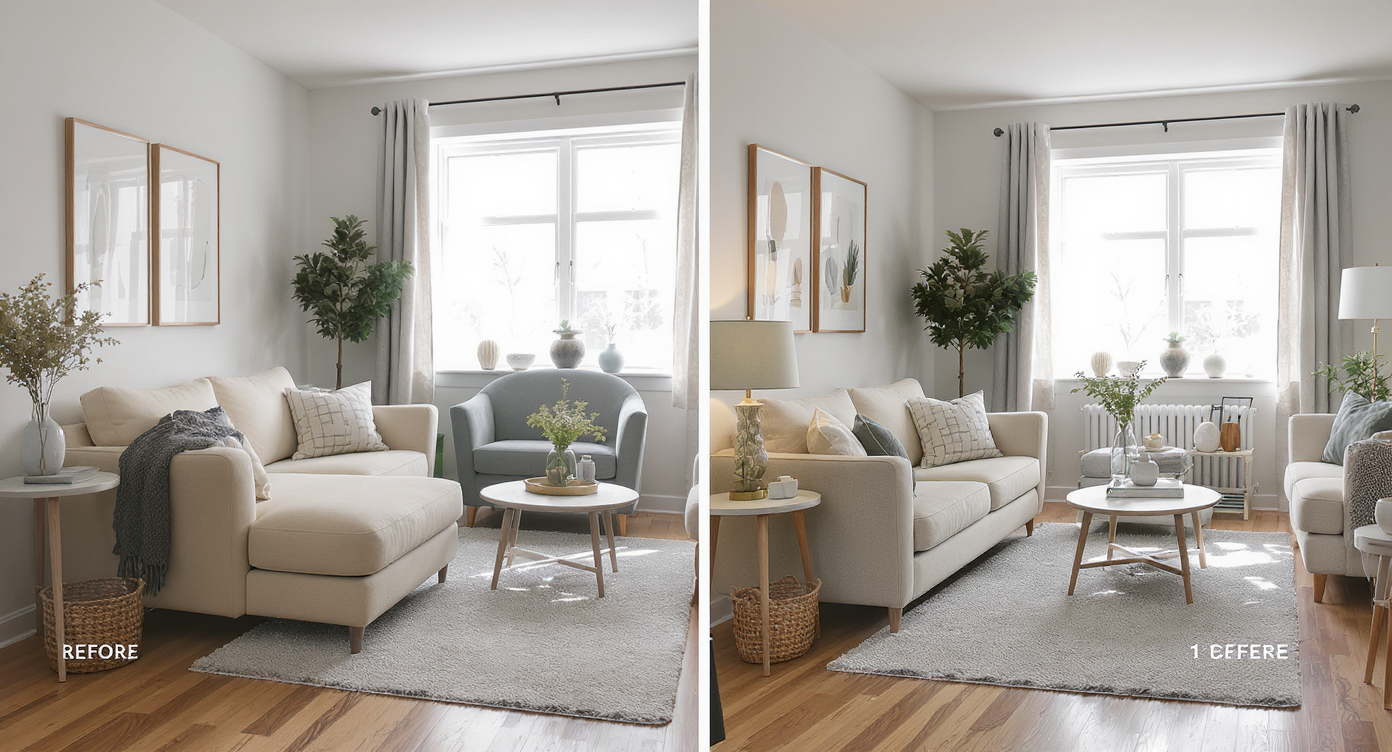
Correct layout and scale prevent common design dilemmas caused by one wrong furniture piece.
Most designers recommend keeping 30–36 inches of clear walking space through main paths in a living room. That single rule explains why holiday decor goes sideways: we bring in a bulky tree, a second side table, or a giant wreath stand, and circulation collapses.
Scale and light do the heavy lifting. A slim 6–7-foot pencil tree may beat a wide 7.5-footer in a small apartment; it visually lifts the room and keeps corners breathable. Place the tree where it can borrow light from a window or lamp and where the cord can reach an outlet without creating a trip line. If your coffee table is already hefty, swapping to a round, leggy option lightens the footprint and reduces bruised shins when gifts are underfoot.
Often it’s one wrong piece. The oversized sectional that seemed perfect online can dominate the room, forcing the tree into the only open corner — which also happens to be the only path to the hallway. Editing one item (like trading a bulky side chair for a slim accent chair) unlocks space for seasonal layers that don’t feel wedged in. For more on reading a room’s constraints, see a detailed guide to small living room layouts.
Anecdote
That corner where the armchair never quite fits? Around the holidays, it’s where most trees try to live. Trade the bulky chair for a slimmer accent piece, tuck a pencil tree by a window, and suddenly the room breathes — and the garland feels intentional, not wedged in.
Furniture Rules That Quietly Solve Most Room Problems
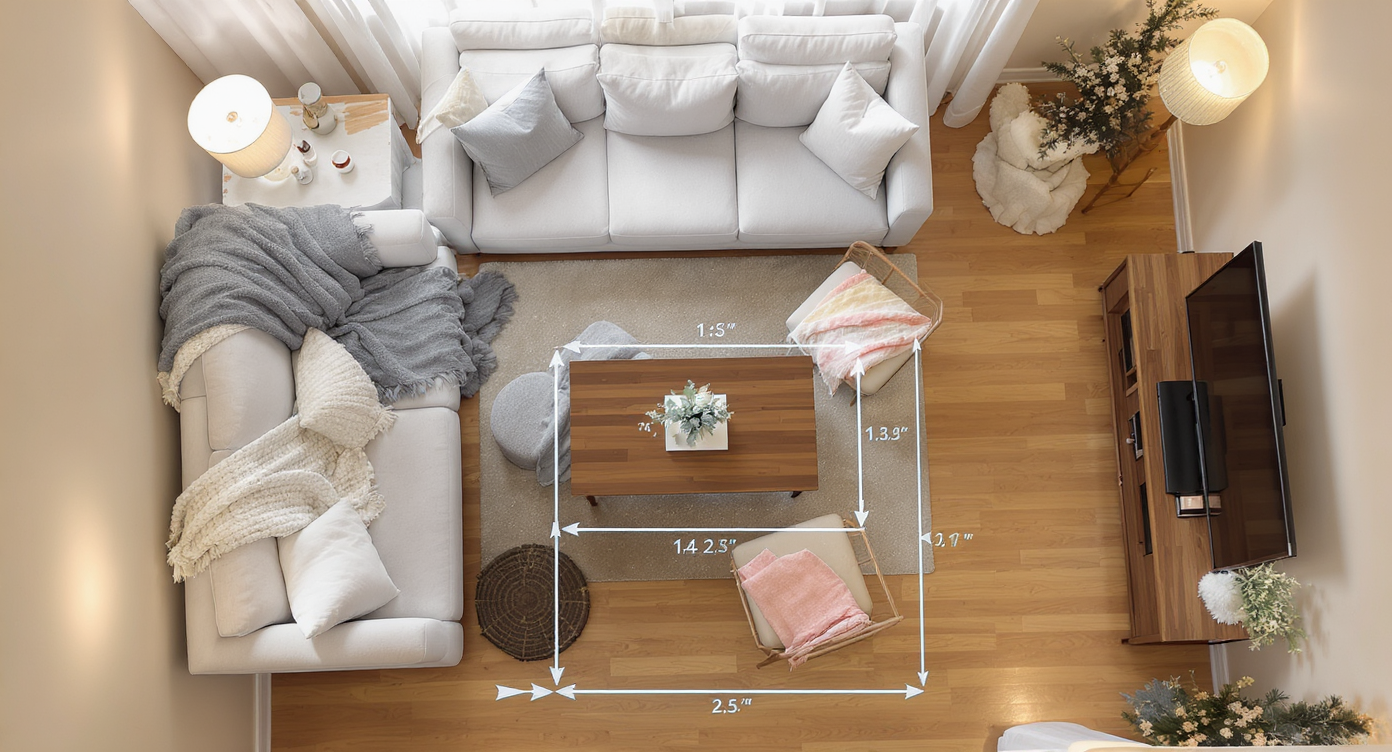
Furniture placement and scale rules quietly solve most small room problems with measured precision.
Coffee tables usually sit best 14–18 inches from the sofa front edge for comfortable reach. Use that measurement like a guardrail as you place decor, gifts, and extra seating.
- Walkways: 30–36 inches through main paths; 24 inches is a workable minimum for occasional pinch points.
- Sofa + coffee table: 14–18 inches apart; choose a round or oval table in tight rooms to ease flow.
- Dining clearances: Aim for 36–44 inches behind pulled-out chairs if you’re hosting; in micro-spaces, float the table and bench one side.
- Tree height: Leave 6–12 inches between the topper and the ceiling; pencil trees (under 30 inches diameter) save precious floor area.
- Rugs: In living rooms, at least the front legs of seating should be on the rug; an 8×10 often beats a 5×7 so the room reads unified, not choppy.
- Lighting: Use three layers — ambient (overhead or tall floor lamp), task (table lamps), and sparkle (string lights) — on dimmers or smart plugs.
Not sure which sizes make sense? Generate a quick visual in your own room photo with ReimagineHome’s room layout AI, then compare versions with different rug sizes or a slimmer tree. If you’re choosing a new rug, this pairs well with a practical rug size guide so you don’t downsize out of fear.
How ReimagineHome.ai Helps You Test Layouts, Styles, and DIY Ideas
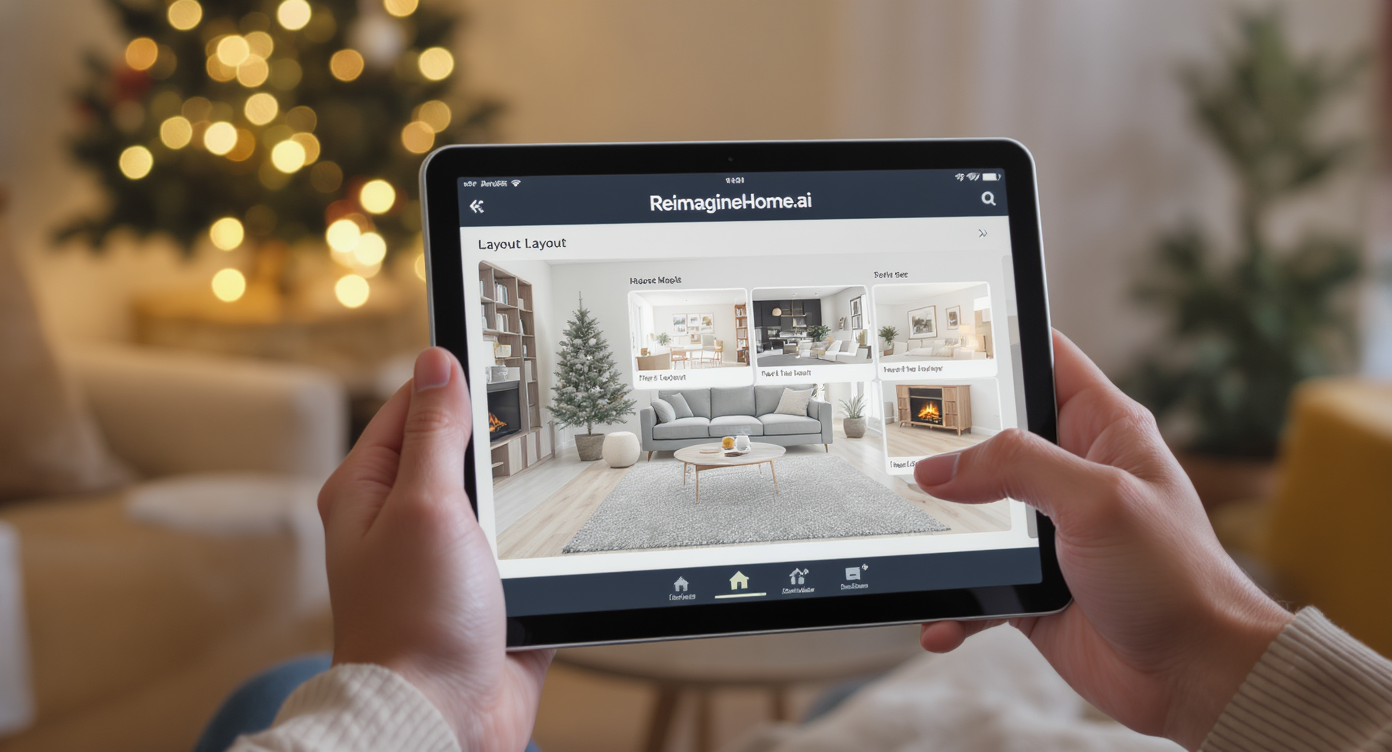
ReimagineHome.ai helps test layouts and DIY ideas before rearranging or decorating any furniture.
AI tools can show multiple layout and style options in minutes, before you move a single piece or buy decor. ReimagineHome.ai is a room design AI that works from one photo — no measurements needed — and it’s ideal for small apartments and rentals.
Here’s how to use it like a pro:
- AI restyle from one photo: Upload your living room, choose Scandi, Japandi, Boho, or Classic Holiday, and let the AI room decorator stage garlands, wreaths, and a right-sized tree without altering your real walls.
- Furniture and layout tests: Try the tree in three corners, preview a slimmer sofa or a round coffee table, and compare side-by-side. The AI room planner makes misfit pieces obvious.
- Color and finish previews: Sample warm white vs. color string lights, natural wood vs. brass accents, and soft paint ideas to see how they play with your existing palette.
- Virtual staging for hosting: If you’re rearranging for guests, visualize a foldable dining set, extra bench, or a bar cart path that keeps the kitchen clear.
There are many AI interior design tools out there; if you’re comparing options, start with this breakdown of AI interior design tools to understand free vs. paid features and which platforms are friendliest for beginners.
Step-by-Step: Fixing This Room Using AI and Simple DIY Changes
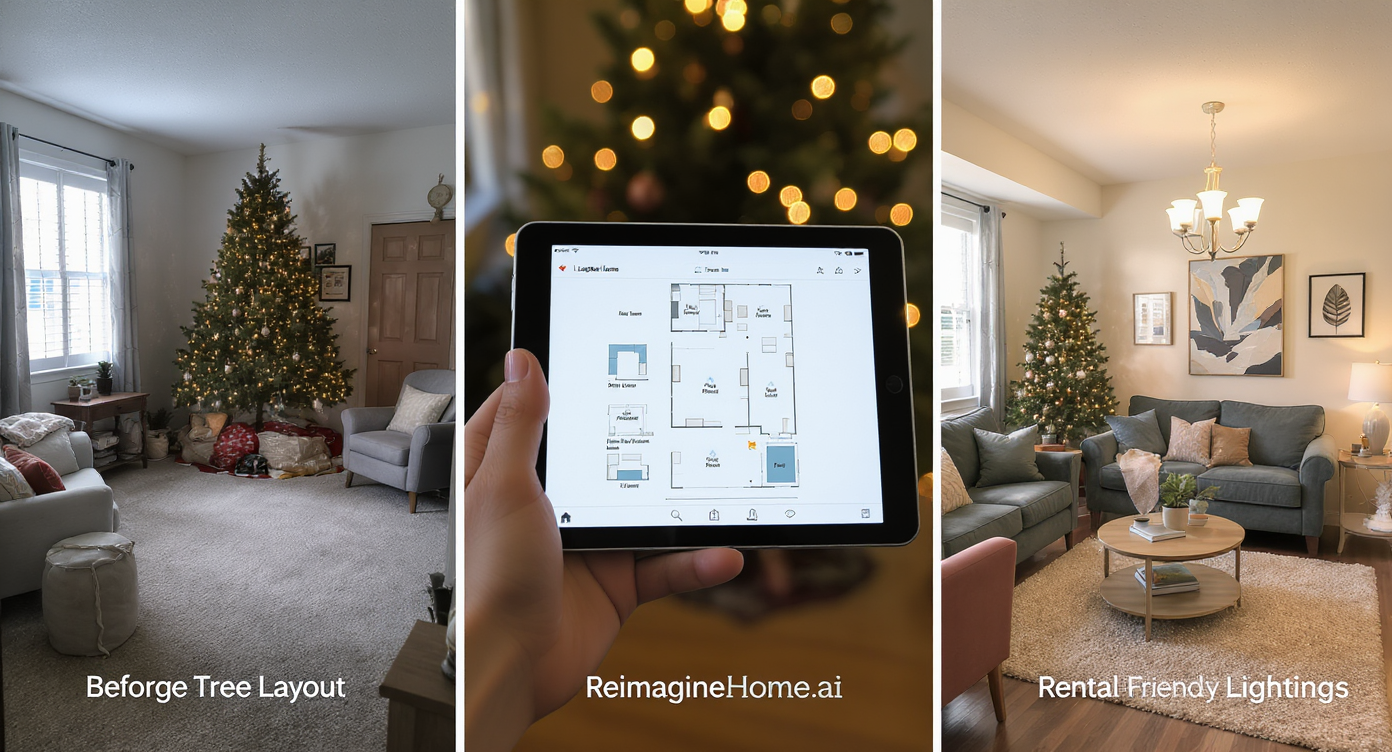
Fixing small rooms step-by-step with AI guidance and easy DIY changes improves holiday comfort and flow.
TV viewing distance typically feels good at roughly 1.5–2.5 times the screen diagonal; use that to decide whether the tree or a lamp sits beside the TV without crowding sightlines.
- Photograph your room in honest daylight. Upload it to ReimagineHome.ai and generate 3–5 variations: pencil tree vs. standard, round vs. rectangular coffee table, neutral vs. jewel-tone palette.
- Check circulation. In each render, confirm 30–36 inches in your main paths. If you don’t have it, swap to a slimmer tree or shift the sofa a few inches and retest.
- Lock a palette. Pick 1 metal (brass or black), 1 wood tone, and 2–3 colors repeated across ornaments, ribbons, pillows, and throws. Repetition is what makes DIY decor look designed.
- Hang the high-traffic decor smartly. Use removable adhesive hooks rated for the weight; place garlands above pet reach and avoid blocking door swings (2–4 inches clearance).
- Light in layers. Add a smart plug for the tree, dim bulbs in table lamps, and one sparkle moment (mantel, bookcase, or window). Keep cords off walkways with low-profile cable clips.
- Edit one bulky piece. If a side chair or plant competes with the tree, store it temporarily. The visual calm you gain is worth the closet Tetris.
- Style the surfaces. Corral remotes and matches on a tray, swap busy patterns for a solid throw, and keep coffee-table decor under 6 inches tall so conversations stay clear.
- Save the setup. Download your favorite AI render as your reference, then mirror it in real life. Pack a labeled “first-out box” for January with lights, extension cords, and top-layer items.
Need more rental-friendly tactics? Pair this plan with rental-friendly decor ideas so your security deposit stays safe.
Visualization Scenario
Upload your current living room photo to ReimagineHome.ai and generate three versions: (1) a 6.5-foot pencil tree beside the media unit with warm white lights, (2) the tree flanking the sofa with a round coffee table, and (3) a “no tree” vignette with a lit branch arrangement and layered candles on the mantel. Compare how each affects walking paths and seating.
FAQ
How do I decorate early for Christmas without cluttering a small living room?
Protect 30–36 inches of walking space, use a slim (pencil) tree that leaves 6–12 inches below the ceiling, and repeat 2–3 materials across decor. Preview placements with a room layout AI so you don’t block doors or TV sightlines.
Which AI interior design tool is best for small apartments?
For beginners, ReimagineHome.ai offers AI interior design from a photo with fast layout and style tests; compare features with this overview of AI interior design tools.
How can I see if a new tree or rug will fit before I buy?
Upload a photo to ReimagineHome.ai to visualize scale and circulation, then cross-check with simple rules: tree diameter under 30 inches for tight corners; rugs large enough for front sofa legs.
Can I use AI tools to plan DIY holiday decor or paint projects?
Yes. Use an AI room planner to test garlands, wreaths, and color ideas first, then buy confidently. It’s a low-risk way to stage a DIY room makeover on a budget.
What’s the easiest way to mix different furniture styles with holiday decor?
Follow a 70/30 rule: let one style lead and a second support, keep a limited palette, and repeat one metal and one wood tone throughout for cohesion.
Visualize Your Room’s Next Chapter
Most rooms don’t need more ornaments; they need a little space to breathe, the right scale, and a story that repeats across materials and color. When you can see two or three versions of that story side by side, decision fatigue loosens its grip.
When you can see the possibilities, it’s easier to move with confidence. Start by uploading one honest photo to ReimagineHome.ai and let your next version of the room come into focus.