
TL;DR
To take a formal living room over the top, add full-height window treatments, right-size and lower the chandelier, pull the seating closer (coffee table 14–18 inches from the sofa), and switch to a single, larger rug for cohesion. If the fireplace is the focal point, anchor it with one statement piece and layered lighting. Test every change from one photo in ReimagineHome.ai—an AI room designer—from drapery color to chandelier scale—to avoid returns and decision fatigue. Try your own layout in ReimagineHome.ai and see how to fix an awkward living room layout before you lift a finger.
Why This Room Feels “Almost There” (and How to Cross the Finish Line)
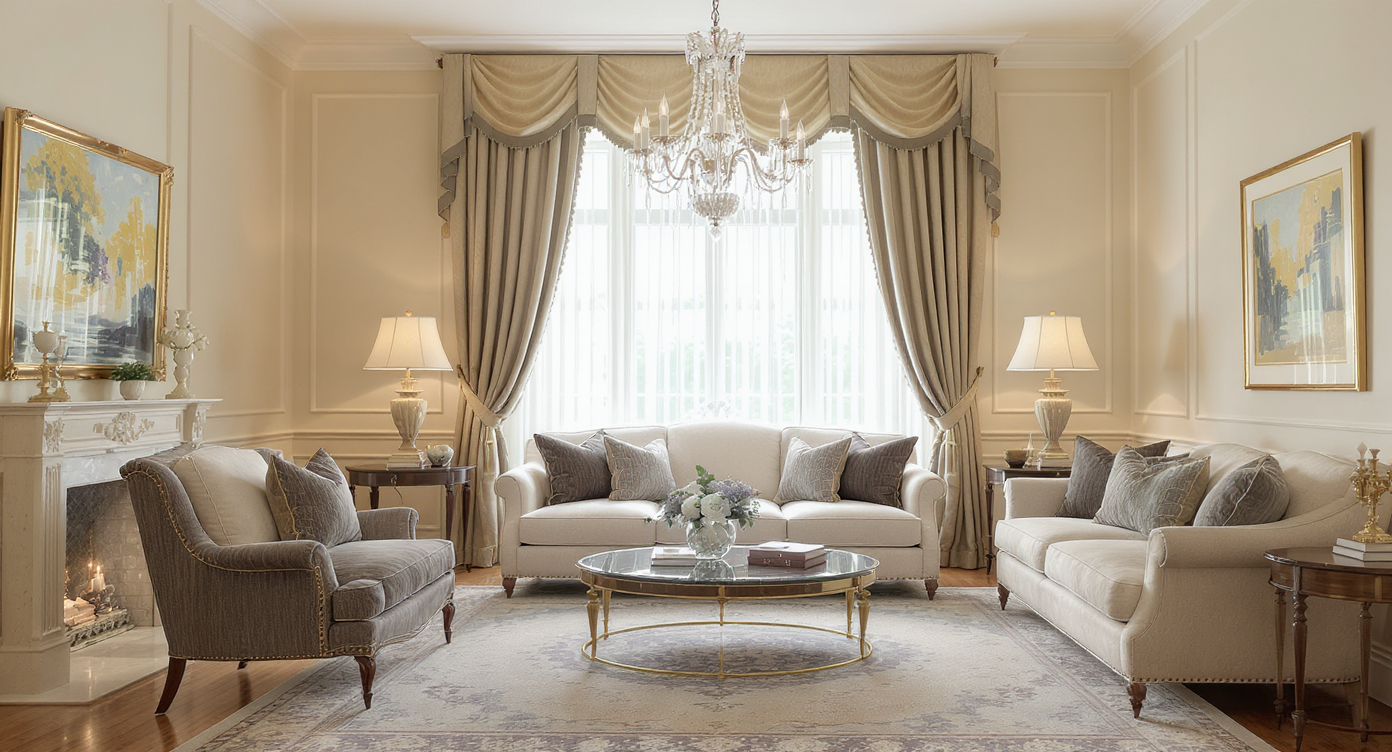
Introducing key fixes to soften and unify a formal parlor space.
A quick, high-impact fix for a formal parlor that feels stiff: add full-height drapery for softness, right-size and lower the chandelier, and tighten your seating circle so the coffee table sits 14–18 inches from the sofa. One larger rug that gathers every seat’s front legs will unify the room instantly.
- Window treatments that reach the floor (mounted 6–12 inches above and beyond the trim)
- Conversation-distance layout (seats 6–8 feet apart max; coffee table 14–18 inches from the sofa)
- A chandelier with presence (sized to the room; bottom at 84–90 inches if people walk under it)
- One generous rug instead of rug-on-rug (front legs of all seating on it)
- Balanced color and art on both sides of the room
- Layered lighting: table/floor lamps at 2700K–3000K, dimmable overhead
- Fireplace as a clear focal point: one statement art/mirror and varied mantle heights
- Optional ceiling drama: deeper paint or faux beams to echo the mantle tone
Before you move a single sofa or pick up a paint roller, upload a photo to ReimagineHome.ai and test a few ideas safely.
If you want more layout math (clearances, sofa depths, traffic paths), this overview pairs well with a detailed guide to small living room layouts—the same rules make larger rooms feel intimate rather than echoey.
Why Most Interior Dilemmas Are Really About Layout, Scale, and One Wrong Piece

Common layout and scale mistakes can disrupt a room’s harmony and flow.
Most designers recommend keeping 30–36 inches of clear walking space through the main path in a living room. When a parlor still feels “off,” it’s usually because scale and circulation aren’t supporting how people sit, talk, and set a drink down. The fix is rarely a total re-do—more often it’s one too-small (or too-far) coffee table, seating spread like a debate stage, and windows that need fabric to soften acoustics and bounce light.
Start with the conversation zone. Ideal seat-to-seat distance is roughly 6–8 feet; much wider and the room reads formal, not friendly. A glass coffee table that disappears can make the center feel empty; the eye wants a visual anchor that relates to the fireplace. If your chandelier looks dainty in a vaulted space, sizing up by diameter and lowering to a safe clearance (84–90 inches from the floor) will ground the volume.
Two more culprits: unbalanced color and goalpost art. If one side skews grayscale and the other bursts with color, the room will feel split. Repeat each accent (green from the chairs, blush from the art) at least three times around the room so both halves have a conversation too. And on the fireplace—one large piece (about two-thirds to three-quarters the mantle width) hung 4–6 inches above the mantle is cleaner than many small items.
For a deeper walkthrough on common room traps and how to visualize alternatives, see this breakdown of AI interior design tools and where photo-based previews beat floor-plan-only apps.
Anecdote
That corner where the armchairs always look perfect in photos but no one ever sits there? That’s a spacing issue, not a chair issue—angle them in a touch, give them a lamp, and suddenly they’re the most popular seats in the house.
Furniture Rules That Quietly Fix Rooms Like This
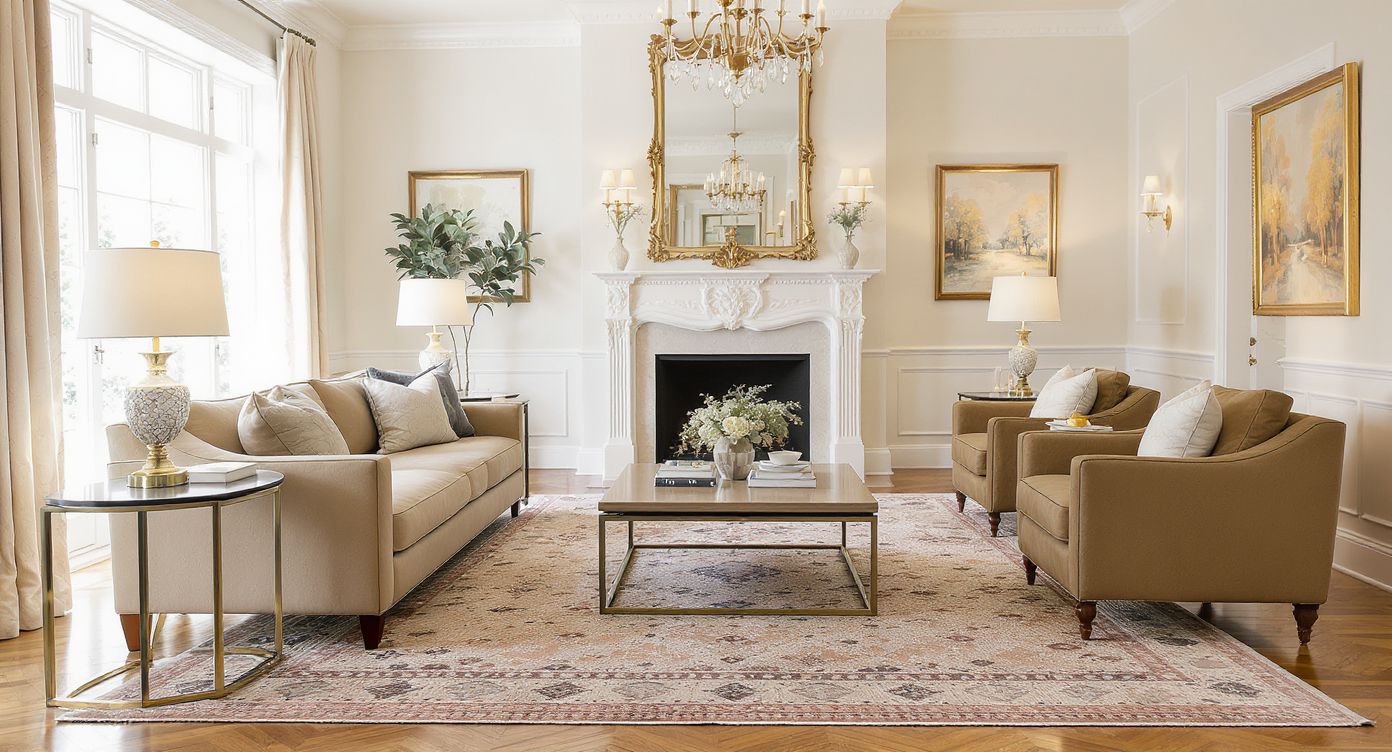
Quiet furniture rules like coffee table placement quietly enhance room comfort and style.
Coffee tables usually work best 14–18 inches from the sofa front edge. Use these quiet, dimension-first rules to correct the vibe fast:
- Walkways: 30–36 inches through the main path; 24 inches minimum in secondary paths.
- Seat spacing: 6–8 feet across for easy conversation; angle accent chairs slightly inward.
- Chandelier scale: a quick estimate is room length + width (in feet) ≈ fixture diameter (in inches). Keep 84–90 inches of head clearance if people walk under it.
- Rugs: choose one rug large enough that all front legs sit on it. Leave 8–12 inches of bare floor between rug edge and walls.
- Lighting: mix at least three sources—overhead on dimmer, one table lamp per end of the sofa, and a floor lamp near chairs. Use 2700K–3000K bulbs for warmth.
- Window treatments: mount rods 6–12 inches above the window and 8–12 inches past each side; drapery should just kiss the floor.
Not sure how big “big enough” looks in your exact room? Drop a photo into ReimagineHome.ai and toggle between a 36-inch square table, a 48×28-inch rectangle, and a large upholstered ottoman. The AI interior design from photo flow helps you see scale in seconds. For rug specifics, bookmark our living-room rug sizing guide.
How ReimagineHome.ai Helps You Test Layouts, Styles, and DIY Ideas
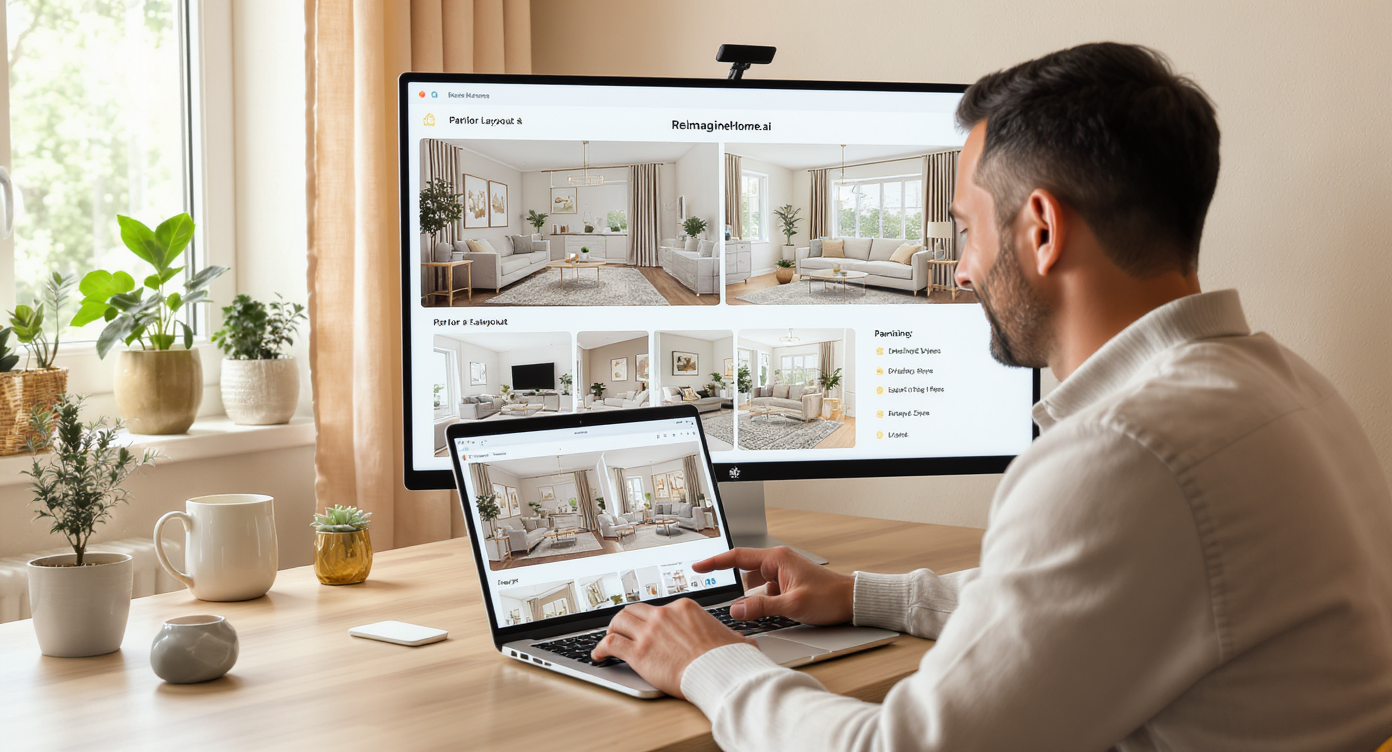
AI tools help test interior layouts and styles before any physical changes.
AI tools can show multiple layout and style options in minutes, before you move a single piece. With ReimagineHome.ai, you get room design AI that works from one photo—no measurements required—to test the exact finishing touches people struggle with most.
- AI room restyle from one photo: Try emerald velvet drapes vs. sheer linen, black vs. moody-green ceiling, or wood-clad faux beams that echo the mantle.
- AI room planner for small or formal spaces: Pull the sofa and chairs closer, preview angles, and compare coffee table sizes with instant before/afters.
- Lighting and color: Swap the chandelier for a larger silhouette, change bulb warmth, and preview color-drenched walls/ceilings or a single dramatic fireplace wall.
- Style mixing: Test MCM lighting over classic brick, or balance a light-maximalist gallery with one large statement piece. The AI room designer helps you calibrate 70/30 style ratios without guesswork.
If you’re new to virtual room design, this piece pairs well with our guide to AI room makeover workflows—including when to use photo-to-style vs. mood boards.
Step-by-Step: Take This Parlor From Polished to Cozy (With AI + Simple DIY)
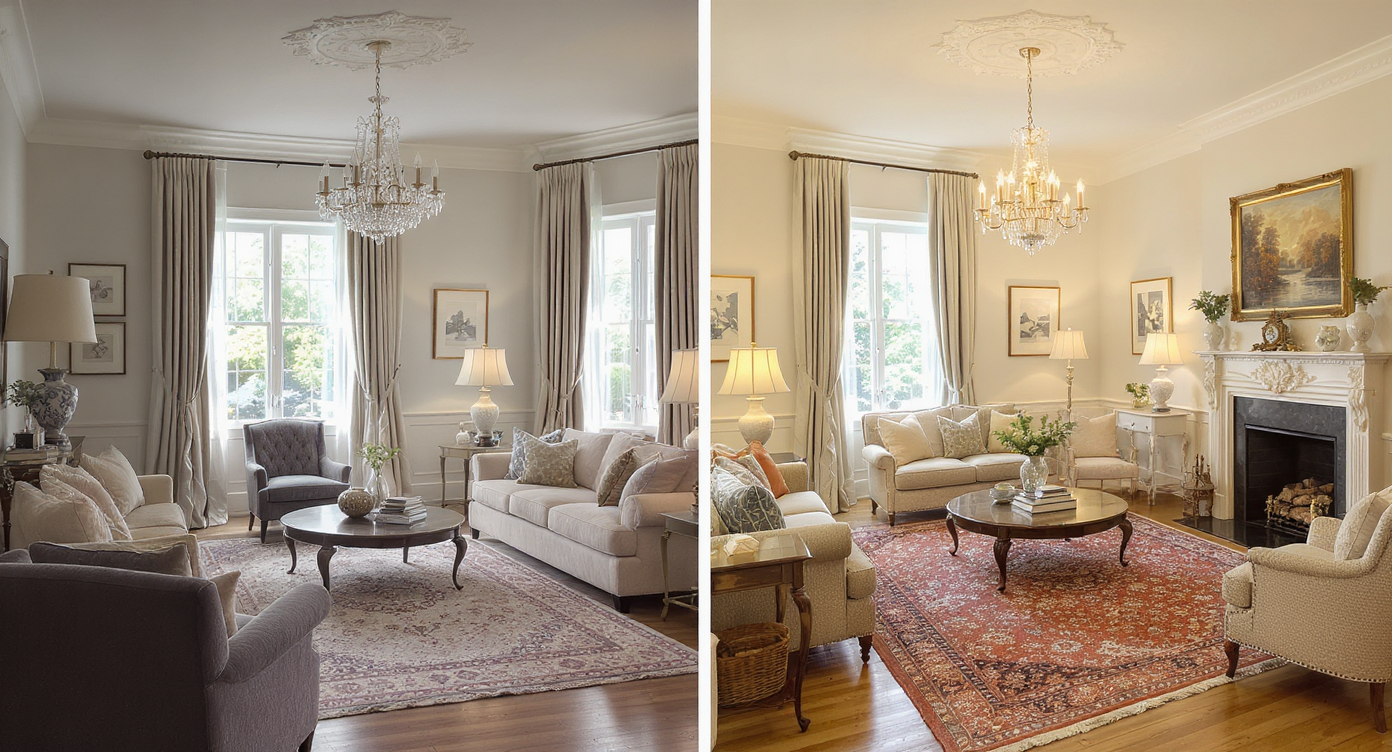
Stepwise enhancements transform a formal parlor into a cozy, inviting retreat.
Most designers aim for 30–36 inches of clear walkway; if your seating breaks that, bring it in. Here’s a pragmatic plan you can do in a weekend—with AI first, then DIY.
- Generate options: Upload one honest photo to ReimagineHome.ai. Ask it to: add full-height drapery, enlarge and lower the chandelier to 84–90 inches, replace the coffee table with a larger piece, and test a single large rug. Save 3–5 variations.
- Set the conversation circle: Move the sofa and chairs so seat fronts sit 14–18 inches from the coffee table. Aim for 6–8 feet between opposing seats; angle chairs slightly inward.
- Unify the floor: Remove “rug on rug.” Use one substantial rug so the front legs of all seating land on it; leave 8–12 inches to the walls.
- Dress the windows: Mount rods 6–12 inches above and 8–12 inches wider than the windows; let drapes just kiss the floor. Velvet adds drama; sheer linen keeps the view.
- Right-size the light: Choose a chandelier whose diameter roughly equals room length + width (feet) in inches. If there’s no table under it, keep 84–90 inches of clearance.
- Layer lamps and warmth: Add 2–3 lamps, ideally one per seating cluster. Use 2700K–3000K bulbs and dimmers to banish the “waiting room” feel.
- Claim the fireplace: Hang one statement piece two-thirds to three-quarters the mantle width, 4–6 inches above. Style a few objects in odd numbers with varied heights.
- Balance color: Repeat each accent (green, blush, brass) in at least three places. Throw pillows are the fastest bridge between the gray sofa and green chairs.
- Consider the ceiling: If you have a center beam, wrapping it in wood or painting it darker can visually lower the height and cozy the volume.
- Reality check: Recreate your favorite ReimagineHome.ai render in real life, then snap a fresh photo and compare. Tweak distances by an inch or two until it feels natural.
Visualization Scenario
Upload a photo of your parlor to ReimagineHome.ai and generate three versions: 1) emerald velvet drapes + larger brass chandelier, 2) sheer linen panels + moody green ceiling, 3) faux wood beam + square upholstered ottoman. Compare how each changes scale, warmth, and flow.
FAQ
How do I fix a formal living room that feels like a waiting room?
Pull seating closer so the coffee table is 14–18 inches from the sofa, add full-height drapes, and introduce 2–3 lamps with warm bulbs. One larger rug that gathers the seating will make the room feel intentional.
Which AI interior design tool is best for testing drapes, rugs, and chandelier size?
ReimagineHome.ai is a photo-based AI room designer that lets you preview layout, lighting, and finishes in minutes—ideal for small spaces and formal parlors alike.
How can I see if a new sofa, rug, or coffee table will fit before I buy?
Use a room layout AI to visualize scale. Rules of thumb: front legs on the rug, and coffee tables 14–18 inches from the sofa. For more, see our rug sizing guide.
Can I use AI tools to plan DIY paint and window treatment projects?
Yes—preview color-drenched walls, dark ceilings, or curtain styles from a single photo with ReimagineHome.ai, then replicate the look with exact mounting heights.
What’s the easiest way to mix MCM with light maximalism?
Lead with a 70/30 split: one dominant style, one accent. Repeat materials (brass, walnut), echo colors at least three times, and let one statement piece anchor the fireplace wall.
Visualize Your Room’s Next Chapter
Rooms tell better stories when scale, softness, and light agree. Drapes frame the view, a confident chandelier grounds the height, and tighter seating turns polite into cozy. When you can see the options side by side, it’s easier to choose boldly and avoid costly missteps.
Upload one photo to ReimagineHome.ai, try a few rugs and drapery colors, and watch your parlor’s next chapter come into focus—before you buy or drill a thing.