Maximalist Interior Design: How to Master More-Than-More Without Chaos
TL;DR
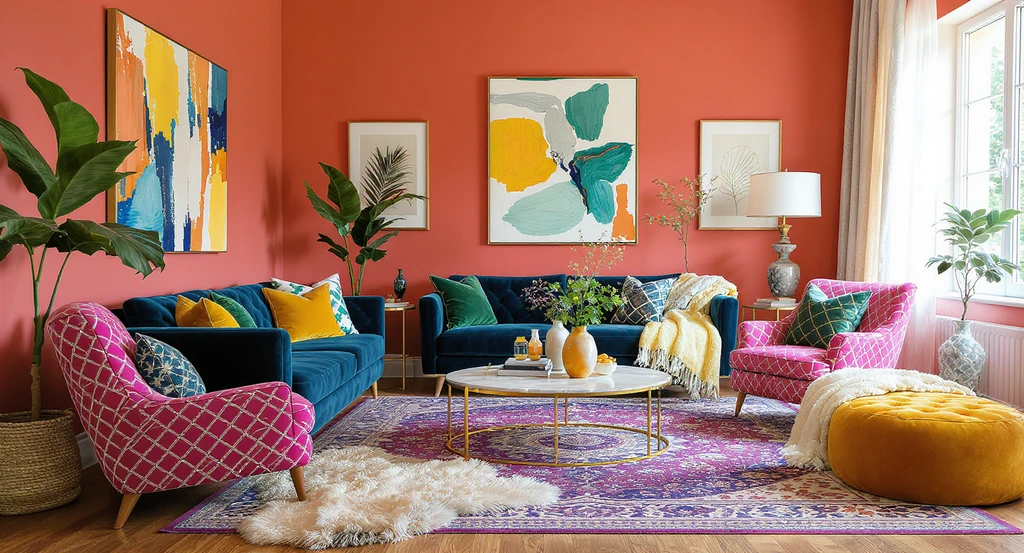
Maximalist interior design is not about clutter or random excess, but the intentional, layered expression of personality, mood, and memory. This guide explores how and why maximalism works, how to choose bold colors, mix patterns in small spaces, create rental-friendly layers, and select color palettes that impact mood—all with spatial and psychological clarity.
What Defines Maximalist Interior Design?
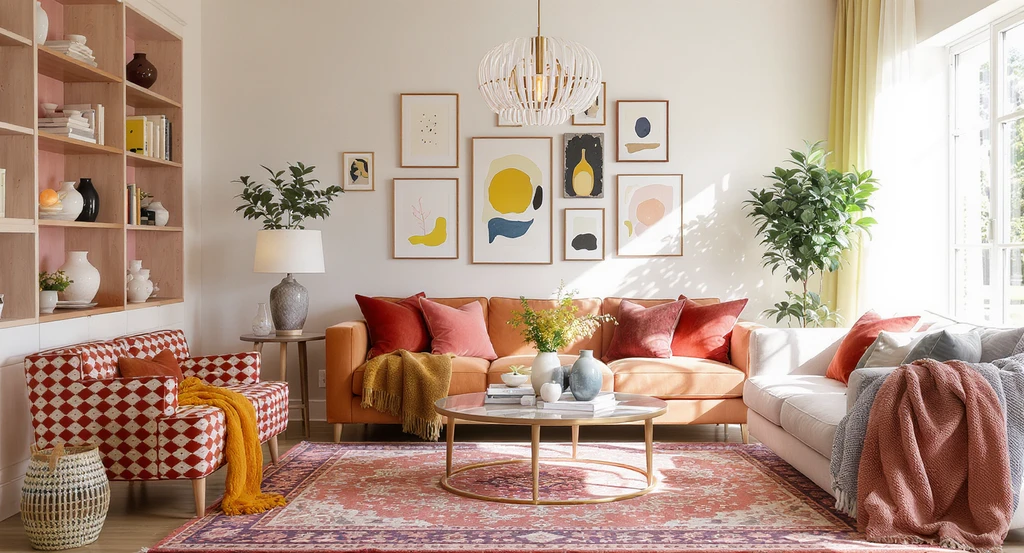
Maximalist interior design ideas for living rooms come alive with intentional layering of color, mixed patterns, and curated artifacts, creating a cohesive yet expressive space.
Maximalist interior design ideas for living rooms are defined by deliberate layering of color, pattern, and personal artifacts to create a space that is expressive and cohesive, rather than cluttered or overwhelming. The core mechanism of maximalism is not excess, but the careful curation and repetition of visual elements to build comfort, energy, and identity within a room.
Unlike minimalism, maximalism uses more: more texture, more color, more stories. Yet the most successful maximalist interiors reflect strong underlying structure. Elements such as a unified color palette, considered focal points, and intentional placement bring order to the visual abundance—ensuring a room energizes rather than exhausts. According to our guide to collected maximalism, the magic comes from editing with care and allowing your space to evolve, never quite "finished" yet always harmonious.
-
Core Principle: Intentional Layering Anchors Maximalism
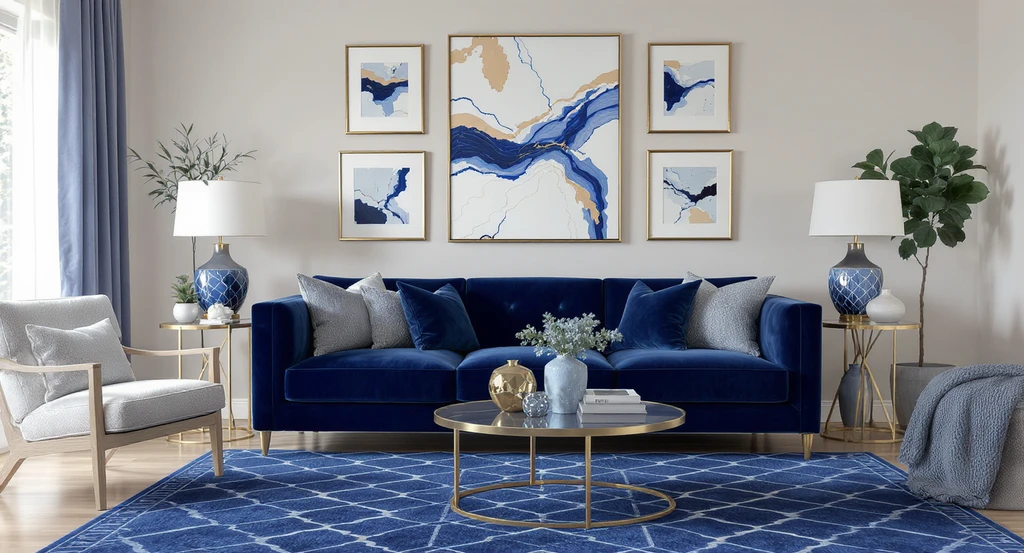
Maximalist interior design ideas for living rooms balance layered colors, repeated motifs, and negative space, ensuring boldness feels curated, not chaotic.
The primary differentiator in maximalist interior design is intentionality. Simply adding more items or color does not ensure success; the mechanism behind this style’s appeal is the repeat use of core motifs, hues, and structures to anchor a seemingly eclectic mix. This principle can be applied to all room types, from bold living rooms to bedrooms.
Cohesion often comes through a restricted color palette, repetition of materials or shapes, and the strategic use of negative space. For example, carrying a dominant color—such as cobalt blue—throughout multiple zones ensures the final effect reads curated, not chaotic. As explored in our trends analysis for 2025, layering material and texture within a unified color story is foundational to this discipline.
Personal expression remains at the core, but is filtered through frameworks that support both function and aesthetics. Focal points, symmetry (even in small doses), and scale-aware positioning prevent the saturated look from devolving into visual noise.
-
The Mechanism: Why Bold Colors and Patterns Work
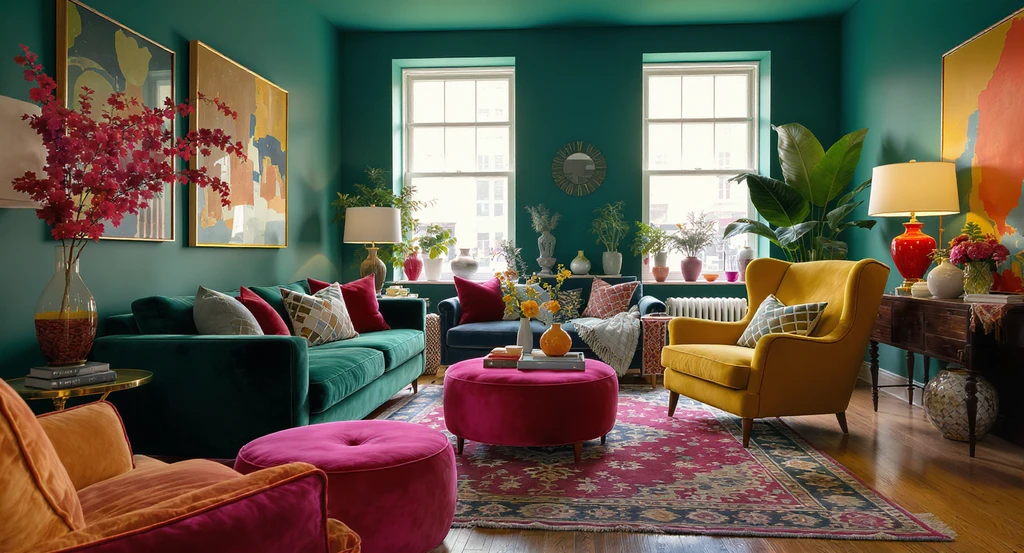
Maximalist interior design ideas for living rooms: Expertly layered bold colors and patterns, as seen in this color-drenched, rental-friendly small apartment, create cohesive, mood-enhancing spaces.
Bold colors in maximalism serve as both anchor and energy source. The psychological mechanism at play is the establishment of mood, confidence, and sense of place. When saturation and hue are chosen intentionally—whether for living rooms or in how to choose bold colors for bedrooms—they create focal zones that stimulate emotion or foster calm, depending on palette choices.
The interplay of color and pattern can trick the eye into perceiving more space when used with strategic repetition. For instance, color-drenching (painting walls and ceilings the same hue) creates seamlessness that reads as enveloping rather than confining, especially in small apartments. As detailed in our maximalism in small spaces feature, consistent scale, and a repeated color thread can help complex patterns coexist harmoniously.
The benefit is not merely visual—a coherent maximalist scheme delivers psychological uplift, fosters a sense of sanctuary, and reduces decision regret by creating a narrative logic for the accumulation of objects and motifs.
-
Applying Maximalist Strategies: Room by Room
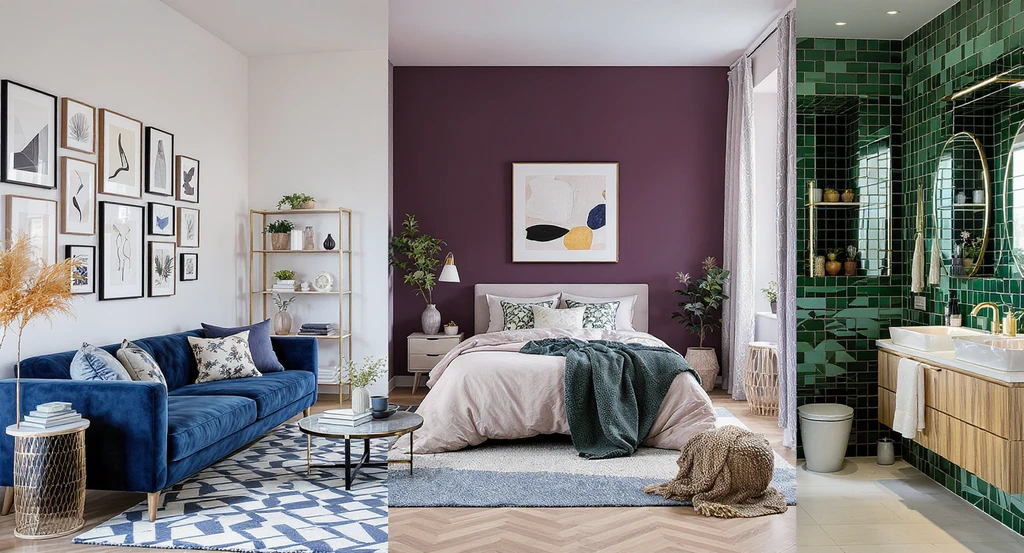
Maximalist interior design ideas for living rooms, bedrooms, and bathrooms: mix patterns, use bold color, and apply rental-friendly decor strategies for visual impact.
In living rooms, start by choosing an anchor element, a large artwork, statement rug, or boldly colored sofa—that sets the tone. Build layers around this with echoes in textile, pattern, or accessory hues. Gallery walls, layered rugs, and grouped collections structure visual abundance, offering the eye places to rest amidst detail.
To mix patterns in a small apartment without chaos, combine prints of different scales but harmonize them through a shared color palette. Match large geometrics with small botanicals, or stripes with florals, ensuring at least one recurring color ties each pattern together. If rental-friendly maximalist decor tips are needed, prioritize removable wallpaper, bold throws, and freestanding shelving, high-impact, low-commitment additions that can move with you.
For bedrooms, how to choose bold colors revolves around context, natural light, and function. Saturated tones can create restful serenity rather than stimulation if they are used in draped or matte finishes; lean into the room’s light direction and scale to determine where to go deep or bright. As for the best bathroom color palettes for mood, opt for enveloping shades paired with reflective surfaces, deep greens or blues with crisp white accents provide both personality and brightness, as established in recent color psychology research and our analysis of mood-driven palettes.
-
Spatial and Psychological Reasoning: Scale, Light, and Regret Avoidance
Spatial logic is central to maximalism’s success. In compact environments, use verticality—wall-mounted storage, tall shelving, and ceiling-high gallery walls—to preserve floor space while adding dimension. Mirrors, strategically placed across from windows or light sources, expand perceived volume and prevent saturated colors from making a room feel oppressive.
Psychological comfort arises from harmony: repeating select colors and materials mitigates decision fatigue and anchors self-expression. When the space tells a cohesive story, inhabitants feel confident rather than anxious about their choices. This mechanism reduces the risk of buyer’s remorse often associated with bold moves or frequent updates, as each piece or color has a deliberate “why.”
Symmetry, or the repetition of forms in pairs, is a non-obvious insight that can introduce calm into even the wildest maximalist arrangements, providing visual touchpoints for rest amid exuberance. This logic is especially potent in living rooms or open-plan zones prone to visual clutter.
-
Constraints and Trade-Offs: Balance, Budget, and Longevity
One commonly overlooked constraint of maximalism is the line between abundance and clutter. Successful maximalist interiors require continual editing; not every beloved item warrants display at all times. Storage that conceals as well as reveals becomes essential for achieving lived-in joy without visual fatigue.
Budget is both constraint and engine: mixing high and low—combining investment pieces with flea market finds, yields a look less about price and more about meaning. The trade-off comes in the need for patience; maximalist spaces are built up over time, often evolving as needs and preferences shift. Rushing can result in incoherence or impulse regret.
Finally, maximalism thrives on adaptability. Rental-friendly solutions, such as stick-on wallpaper and portable decor, allow maximalists to navigate the limits of temporary homes while still expressing creativity. The safest way to evaluate any maximalist intervention is to ask: does it add to the room’s story and support both comfort and function?
For instant previewing of color and pattern combinations, digital tools like REimagineHome AI are increasingly helpful—especially for renters and style experimenters who wish to visualize change before committing.
Frequently Asked Questions About Maximalist Interior Design
- Is maximalism just about filling rooms with lots of stuff?
No; successful maximalism is anchored by structure and repetition, not clutter. Every piece and color must earn its place and support the room's narrative. - How do you prevent a maximalist room from feeling overwhelming?
Repeat key colors, limit the number of patterns, and use symmetry or focal points to give the eye places to rest. Proper lighting and negative space are also essential. - Can maximalism work in a rental or small apartment?
Yes; focus on rental-friendly decor like art, removable wallpaper, and bold textiles. Use vertical space to layer interest while keeping floors clear. - What are common mistakes to avoid?
Mistakes include lack of cohesion, impulse buying without a plan, poor lighting, and ignoring scale. Always refer decisions back to your core color and style story. - How do maximalist bathrooms differ from other styles?
They rely on mood-driven color palettes and tactile contrasts, balancing saturated hues with reflective materials and efficient use of space for both personality and practicality.
Key Takeaways: Maximalism Done Right Is Controlled, Personal Joy
Maximalist interior design, when anchored in intentional repetition, spatial logic, and personal meaning, avoids both chaos and impersonality. By understanding the psychological and practical mechanisms behind bold choices, and using trade-offs and constraints as fuel rather than friction, anyone can build a home that tells a deeply individual story without veering into disorder.
For lasting success, begin with a framework—cohesion of color, edited collections, and an eye for balance—and let your style evolve over time. Maximalism is permission to design outside the lines, provided you return to your anchor points often.
Explore further real-world approaches and strategies in our 2025 trends guide and see how to visualize your unique style before making bold moves.