
TL;DR
One-material kitchens and bathrooms are an emerging interior design trend for 2025, wrapping floors, walls, counters, and built-ins in a single surface for architectural clarity and calm. The look works in small spaces and large ones alike when you balance tone, texture, and light. ReimagineHome.ai lets you visualize these design trends instantly, compare finishes side by side, and test material continuity without lifting a tile. Try your own design ideas instantly on ReimagineHome.ai.
Why One-Material Kitchens and Bathrooms Matter Right Now
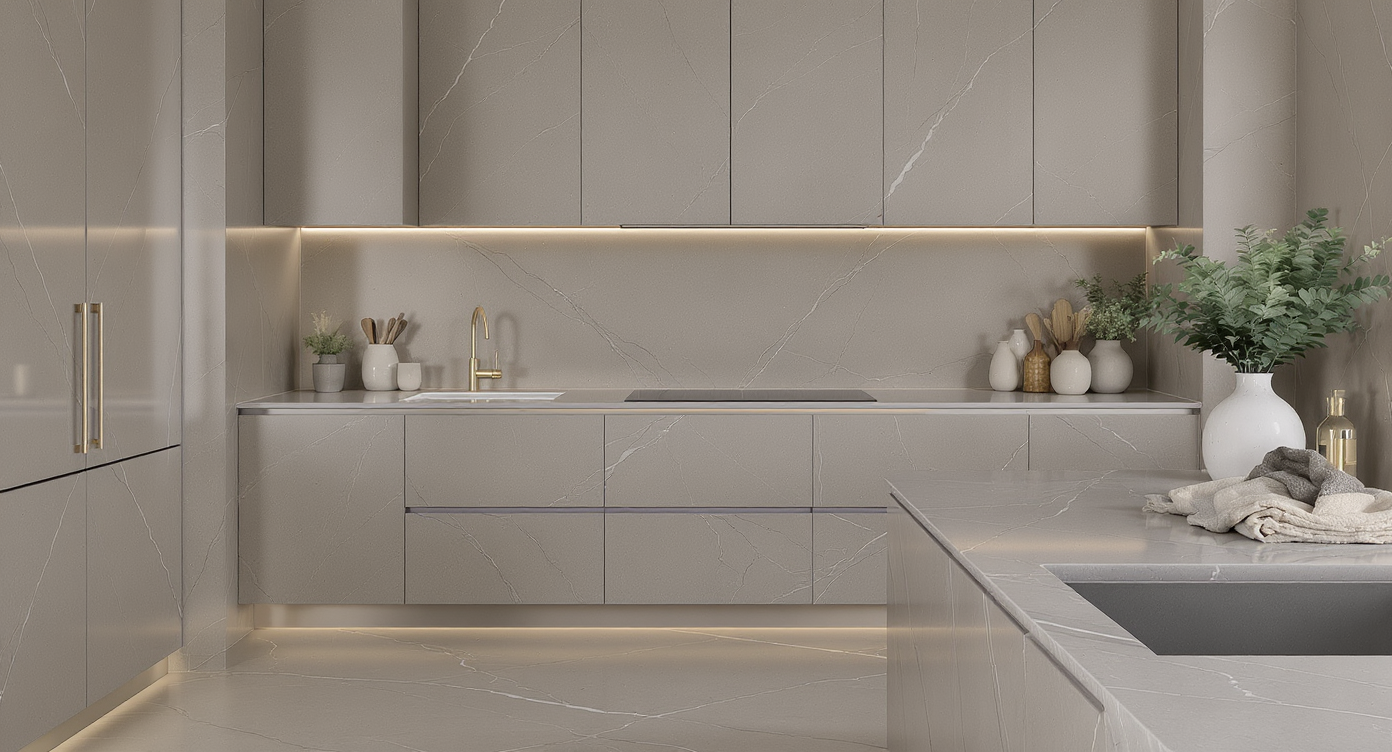
One-material rooms reduce clutter and highlight architecture with bold, continuous surfaces.
A one-material kitchen or bathroom is a smart way to create unity, reduce visual clutter, and highlight architecture in high-traffic spaces. When you control color, sheen, and scale across surfaces, the room feels larger, calmer, and more durable, while still leaving space for expressive fixtures and decor. At a glance - Small vs large spaces: strong pattern in compact rooms, tonal texture in expansive ones. - Color strategy: monochrome is powerful when warmed with lighting and gentle contrast. - Light and sheen: test matte vs polished to avoid glare and flatness. - Pattern mapping: plan slab seams, vein flow, and tile repetition for continuity. - Comfort factor: add textiles, wood, and soft edges to balance hard surfaces. Early CTA: Try your own design ideas instantly on ReimagineHome.ai: https://www.reimaginehome.ai/?utm_source=blog
The Rise of One-Material Rooms — What’s Driving It
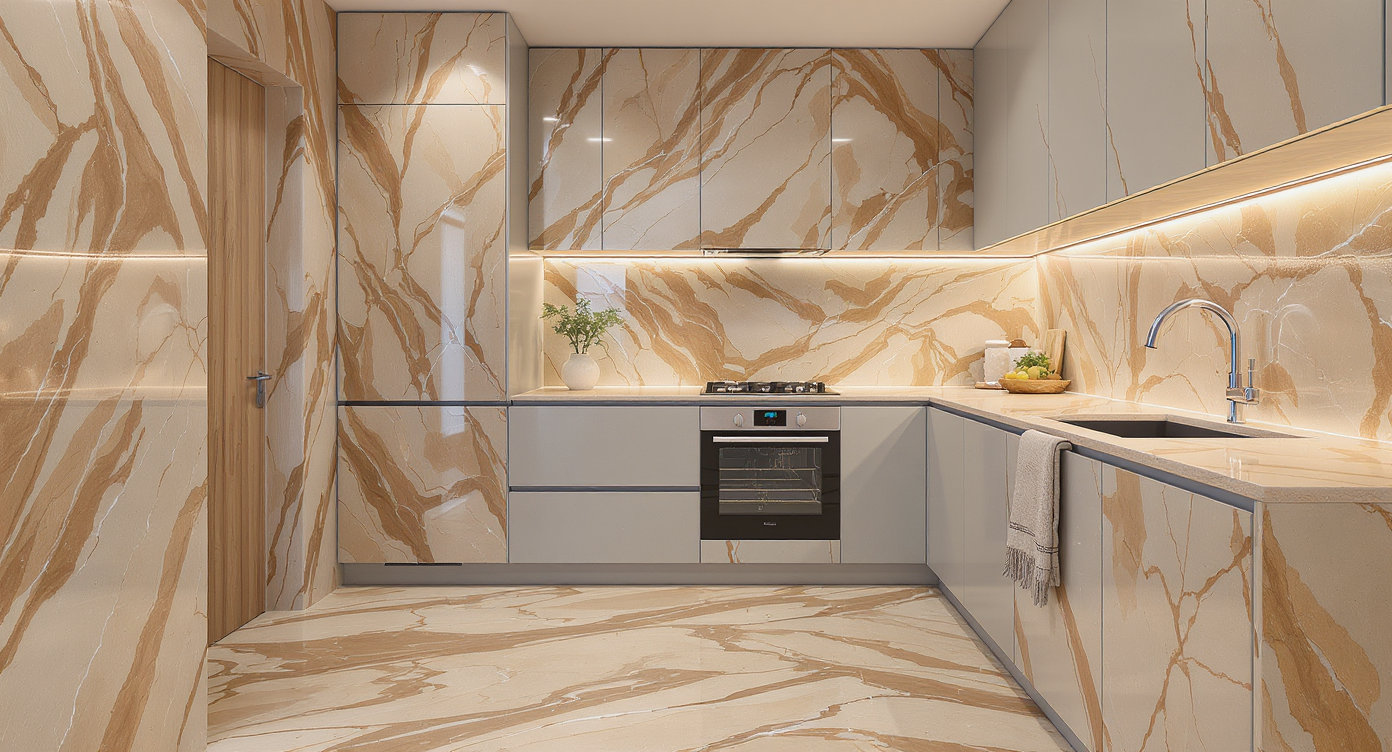
Large-format slabs enable seamless wraparound surfaces, driving the one-material room trend.
Large-format slab sizes commonly reach 118–126 by 55–63 inches, which makes a continuous, wraparound surface achievable without heavy seam lines. The rise of durable porcelain, sintered stone, terrazzo composites, and sealed natural stone means kitchens and baths can carry one material across floor, wall, backsplash, counters, and even integrated shelves. What’s driving it now is a desire for architectural clarity and low-maintenance living. In warm climates, hard surfaces help regulate temperature and feel cool underfoot. In compact urban layouts, extending the same finish from counter to splash to wall eliminates visual breaks, so a galley kitchen reads broader. And in luxury renovations, a single, honed stone or porcelain skin channels that spa-level simplicity audiences crave in 2025 trends. It is both an aesthetic and a practical decision: fewer grout lines, less pattern noise, more visual focus on proportion and light. Audience priorities point to three core motivators. First, scale: a material that moves as one plane makes a small powder room feel expansive. Second, light: matte and velvet finishes soften daylight and downlight, while polished reflects drama at night. Third, longevity: materials rated for high-traffic wet zones simplify cleaning and keep home aesthetics cohesive for years.
Anecdote
Three micro-stories: 1) A powder room with a lively, small-scale mosaic in one deep teal reads larger because corners dissolve into pattern. 2) A Mexico weekend home wrapped in a single honed limestone stays cool and cleans fast after beach days. 3) A rental galley kitchen uses removable, stone-look panels on the backsplash and a color-matched rug to mimic continuity until a full renovation is possible.
Key Elements That Define One-Material Kitchens and Baths
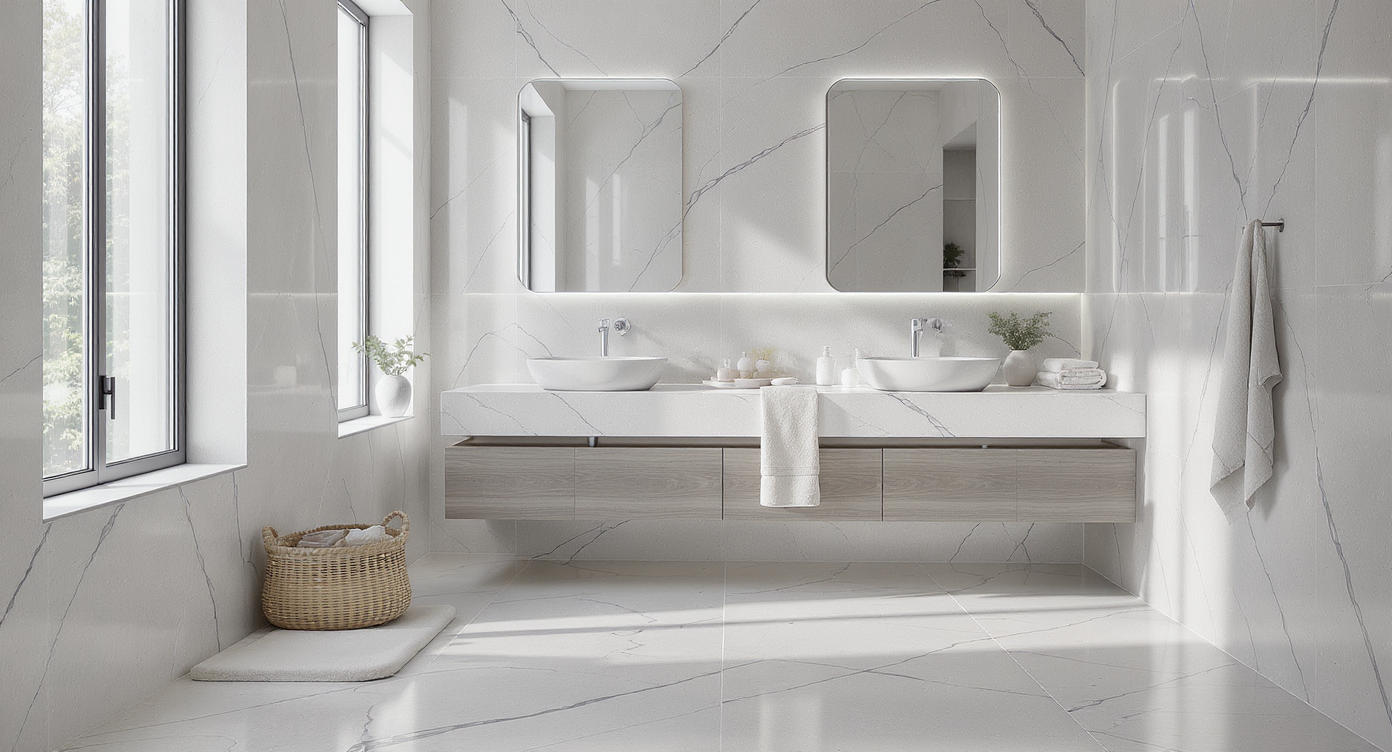
Balanced hue, sheen, and scale define the timeless elegance of one-material kitchens and baths.
Most one-material rooms balance three variables you can measure: hue, sheen, and scale. Hue controls reading distance, sheen affects glare, and scale determines how the eye moves. Colors and tone - Warm neutrals anchor 2025 trends, with beige, sand, and putty creating quiet luxury when used continuously. A monochrome deep green or burgundy can work like a neutral if lighting is warm (2700–3000K) and metals are kept consistent. Textures and finishes - A matte finish on floors paired with a soft-sheen wall of the same material reduces slip risk and adds depth. For shower walls, a honed finish shows less spotting than high gloss. Patterns and slab choreography - Plan seam placement to keep veins flowing. Bookmatched or end-matched slabs read like a mural; aim to align major veins through sightlines such as range to hood or vanity to mirror. For tile, maintain a 1/16–1/8 inch grout line and color-match grout to the field tile to preserve continuity. Forms and edges - A 2 cm counter with mitered waterfall sides keeps the same material language at the island. In showers, maintain a 1/4 inch per foot slope to the drain while continuing the same finish to avoid visual breaks. Lighting rules - Under-cabinet lighting should sit 1.5–2 inches behind the cabinet face to wash the continuous backsplash, not spotlight the counter edge. Pendant lights typically hang 30–36 inches above island surfaces, which reduces glare on polished materials.
How ReimagineHome.ai Helps You Visualize a One-Material Look

ReimagineHome.ai enables instant 3D visualization of one-material kitchen and bath designs with realistic textures.
ReimagineHome.ai can visualize a single-surface concept across kitchens and bathrooms in minutes, translating a modern interior design style guide into photoreal images. Step-by-step 1) Upload your current kitchen or bath. Use the Kitchen or Bathroom scene type so the tool understands cabinetry, appliances, and wet zones. 2) Prompt with specificity. Try: “One-material kitchen, continuous travertine in warm beige, matte floor and honed walls, 2 cm miters, waterfall island, warm brass hardware, 3000K lighting.” For a bath: “Floor-to-ceiling emerald porcelain, bookmatched shower wall, matte floor, linear drain, wood stool for warmth.” 3) Toggle finishes. Generate variants that switch matte, honed, and polished on the same colorway to compare glare and depth. 4) Test scale. Ask for “large-format slabs with minimal seams” then a “small-format mosaic of the same stone” to see how repetition changes energy. 5) Map veins. Use “bookmatch centerline on range wall” or “continuous veining from vanity deck up backsplash” to choreograph focal points. 6) Compare side by side and save. ReimagineHome.ai stores iterations, so you can hone in on the exact balance of tone, sheen, and pattern. Explore more: - How to visualize kitchen trends on ReimagineHome.ai: https://www.reimaginehome.ai/blogs/visualize-kitchen-trends-2025 - Quiet luxury palettes made simple: https://www.reimaginehome.ai/blogs/quiet-luxury-color-palette-guide - Finishes and material mapping 101: https://www.reimaginehome.ai/blogs/how-to-compare-material-finishes
Style Comparisons — How One-Material Differs from Related Styles

One-material kitchens offer seamless unity, contrasting the layered textures of mixed-material styles.
Most contemporary interiors blend at least 2–3 material influences, so it helps to know what sets a one-material space apart. One-material vs Scandinavian minimalist - Scandinavian minimalism favors pale wood plus white, which is still two distinct materials. A one-material room replaces the wood contrast with texture contrast within a single surface, leaning on matte vs honed rather than species variation. One-material vs Japandi - Japandi mixes natural wood with stone or plaster. One-material kitchens and baths drop the second driver and let a singular stone or porcelain carry the architectural rhythm, adding wood only as a touchpoint like a stool, shelf, or framed art. One-material vs maximal mixed-materials - Maximal kitchens celebrate contrast: zellige plus marble plus concrete. One-material is the inverse. It dials back variety to reveal proportion and light play. If you love maximal color, try a bold monochrome stone or tile so you keep energy without the clutter. How ReimagineHome.ai helps decide - Generate each approach in the same room scene and compare. Keep camera angles identical to evaluate scale, brightness, and perceived size across styles.
Visualization Scenario
Upload your existing galley kitchen. Prompt: “One-material concept in warm travertine, honed verticals and matte floors, 2 cm mitered island waterfall, brass hardware, 3000K pendants at 32 inches.” Generate a polished version and a bold monochrome green variant. Compare glare, room size perception, and vein mapping side-by-side. Save the favorite for your contractor brief.
FAQ
- Does a one-material kitchen or bathroom make a small space look smaller? Short answer: no. When the same material runs from floor to wall to backsplash, the eye reads fewer breaks, which can make compact rooms feel larger. - Is an all-one-material room too expensive to maintain? Not necessarily. Choose a durable porcelain or sealed stone, keep grout lines thin, and you will reduce cleaning time. Visualize options to select the right durability. - How do I avoid glare in a bright, south-facing kitchen? Use matte or honed finishes on major planes, keep pendants at 30–36 inches above the counter, and test renderings at different times of day in ReimagineHome.ai. - Can renters achieve the look without a full renovation? Yes. Use large-format, removable wall panels, microcement-look paints for dry zones, color-matched rugs, and accessories that echo the single-material palette. - What about slip resistance in bathrooms? Select a matte or textured finish for floors and maintain the standard 1/4 inch per foot shower slope. Keep polish for vertical surfaces only.
Visualize Your Home with One-Material Confidence
A successful one-material space often starts with a single decisive choice seen at multiple times of day. Before you commit, simulate midday sunlight, evening pendants, and warm under-cabinet washes, and notice how sheen affects glare and color temperature. ReimagineHome.ai gives you that power on demand. Final CTA: See your kitchen or bathroom in one material, then tweak finishes until it feels right: https://www.reimaginehome.ai/?utm_source=blog