Why Patterned Wallpaper Kitchens Are Defining London’s Boldest Remodels
TL;DR
London’s latest kitchen renovations are embracing lacquered tile-patterned wallpaper and exuberant color combinations, transforming practical spaces into expressive showcases of personality. This approach blends maximalist layering, playful materials, and creative storage, resulting in lively kitchens that feel both personal and timeless. Homeowners and designers alike are rethinking paint, pattern, and layout to make each meal and gathering genuinely memorable.
A Kitchen Is No Longer Just a Kitchen
A contemporary London kitchen with lacquered, tile-patterned wallpaper and vibrant decor captures the joyful spirit of bold British remodels.
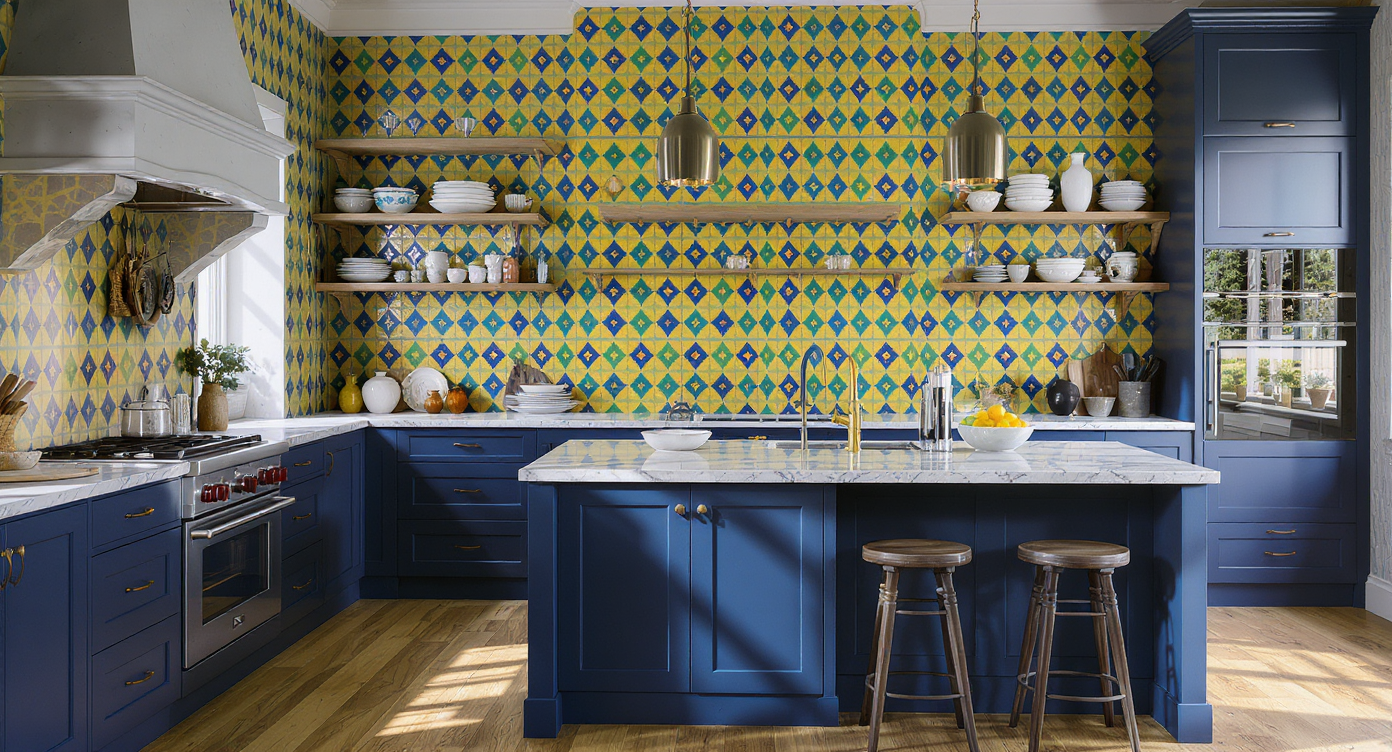
Contemporary London homes are rewriting the narrative about what a kitchen can be. Once the domain of neutral cabinets and timeless subway tile, today’s most exciting spaces feature everything from lacquered tile-patterned wallpaper to playful textiles and bold color schemes. These designs show that kitchens are evolving beyond utility, becoming deeply personal expressions of joy and creativity. A single look at the colorfully renovated Highbury kitchen, where a trompe-l’oeil wallcovering mimics glossy tilework, captures the spirit of a new era in British renovation. The shift is not just about aesthetics. Kitchens now serve as canvases for self-expression. Pattern and texture mingle with functional upgrades, reimagining the everyday act of cooking or gathering with family. The lacquered tile wallpaper trend, in particular, illustrates how homeowners mix practicality with visual impact, introducing a fresh narrative to remodeling and upgrades.
-
The Rise of Playful Patterns and Lacquered Tile Illusions
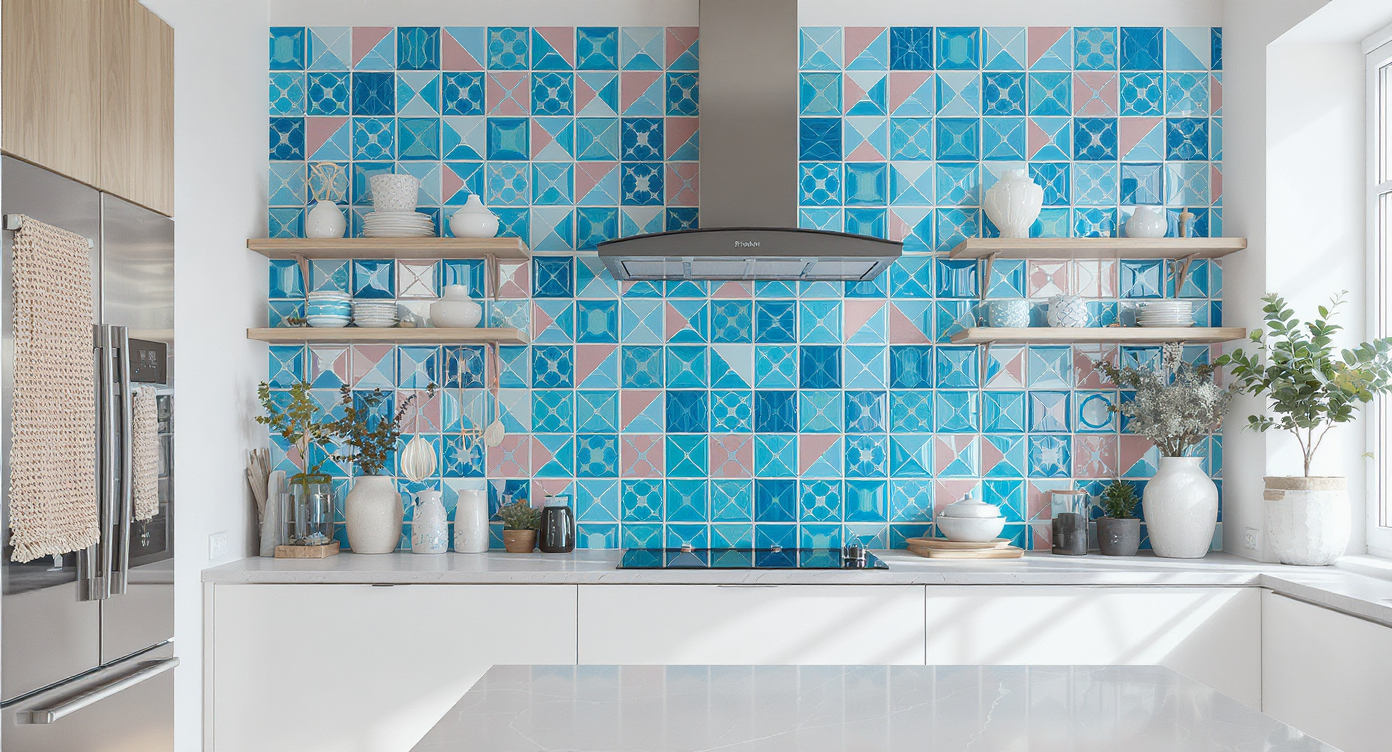
A London kitchen showcases glossy, lacquered tile-effect wallpaper featuring vibrant patterns, blending utility with maximalist design flair.
Traditional kitchen tile has always offered utility—easy cleaning, water resistance, a crisp architectural line. What if those benefits were captured in wallpaper? That question is being answered in homes from North London to across the UK, where designers and homeowners opt for wallpaper with lacquered tile patterns. This innovation gives walls a luminous, almost touchable quality, but with intricate designs and colorways not usually seen in real tile. The effect is maximalist yet controlled, bringing a ‘pattern on pattern’ philosophy to life. Homeowners report that patterned wallpapers offer a shortcut to drama without the permanence or labor of actual tile. A glossy, trompe-l’oeil finish not only amplifies light and color but can play a visual trick, making compact kitchens seem endlessly layered. The rise in these creative wall treatments reflects broader changes noted in 2025 interior design trend forecasts, where bold novelty meets enduring comfort.
Expert Insight
A London couple transforming their galley kitchen was initially wary of mixing vintage crockery, modern art, and a loud wallpaper. But after painting cabinets a deep teal and applying a lacquered tile pattern to one wall, every family gathering became livelier. Grandchildren gravitated to the open shelving, neighbors remarked on the room at every dinner party, and the late afternoon sun seemed to catch the colors in a new way each season.
-
Layering Color, Texture, and History: The British Eclectic Approach
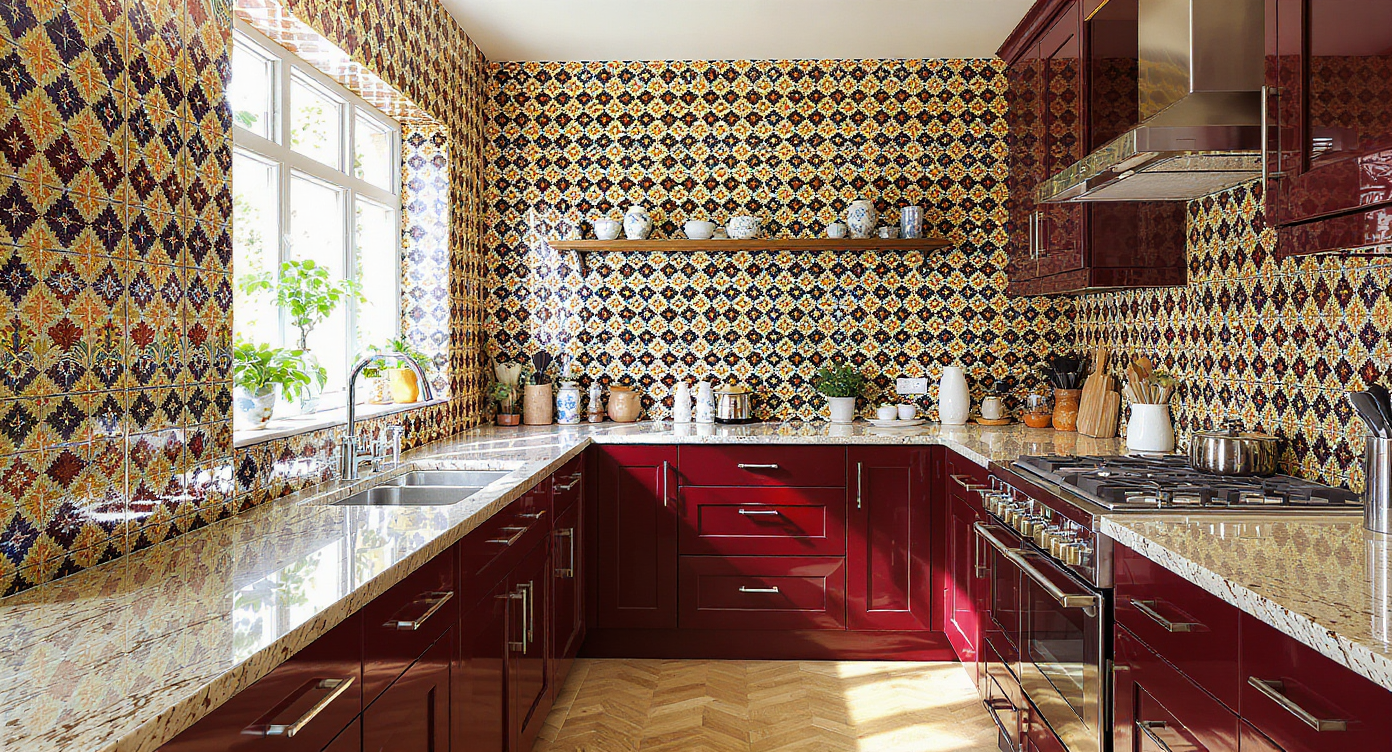
Eclectic British kitchen layers lacquered wallpaper, open shelving, glass-fronted cabinets, antique finds, and vibrant textiles in a curated, colorful space.
The North London kitchen, attributed to designer India Holmes, is an ideal case study in layered design thinking. Here, saturated wall colors coexist with lacquered wallpaper, open shelving, woven rugs underfoot, and whimsical art. Eclectic maximalism is not simply about abundance, but about weaving together disparate eras and influences to craft a genuinely personal environment. This British approach prizes the mix of antique and contemporary, family heirlooms and modern finds. Glass-fronted cabinets showcase ceramics, copper pans hang within reach, and textile choices—from window treatments to upholstery—introduce another storytelling layer. According to our take on dopamine decor, these elements create an environment where every glance sparks a sense of happiness and familiarity. Designers often aim for this kind of planned imperfection. Strategic clusters of crockery, paintings that span genres, and unexpected color combinations give an air of curated chaos. In real-world terms, it is the kind of space you want to linger in, whether chatting over coffee or orchestrating a large family meal.
-
From Functional Upgrades to Everyday Delight
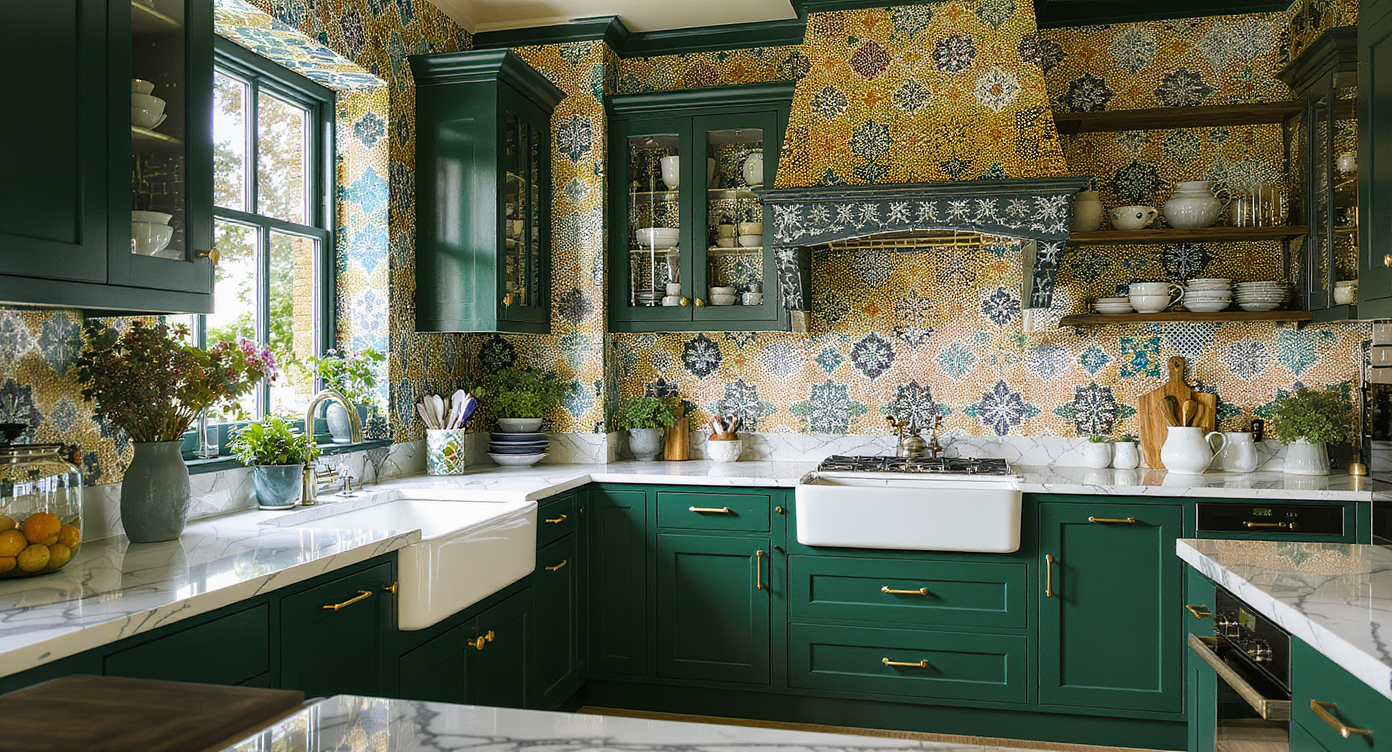
A boldly renovated kitchen blends vibrant patterned wallpaper, lacquered cabinetry, and functional elements for a joyful, multi-use space.
Patterned wallpaper might grab attention, but these kitchens emphasize function as much as aesthetics. Clever layout styling comes into play as spaces must accommodate everyday messes, storage needs, and the rhythms of life without sacrificing style. Lacquered finishes help with cleanability, while busy patterns cleverly mask minor spills or scuffs. A renovated kitchen in this maximalist vein often includes unexpected details: a deep farmhouse sink beneath a vibrantly painted window frame, antique brass handles set against a wash of emerald green cabinetry, or sculptural pendant lights dropping from a patterned ceiling. These decisions demonstrate how function and personality intersect. Approaches like these are echoed in the latest kitchen design trends, where material choices move beyond safe neutrals into richly tactile, color-forward territory. In practice, remodeling and upgrades are more successful when the space operates on multiple levels. A kitchen might double as a social hub on weekends or a tranquil workspace on weekdays, its design quietly fostering whatever activity the day demands.
-
Mini-Scenarios: How Modern Kitchens Invite Personality
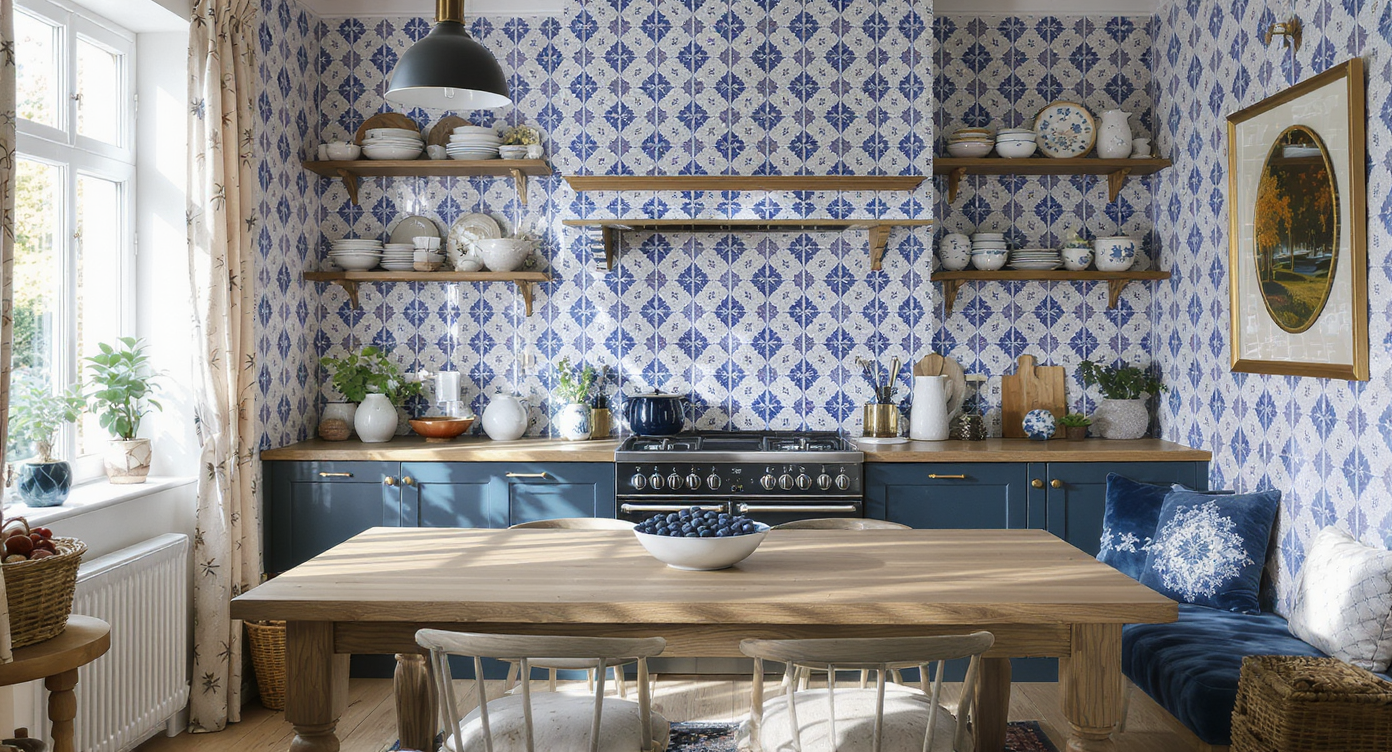
A vibrant kitchen with glimmering blue patterned wallpaper, an oak table set with blueberries, eclectic shelves, and a cozy reading nook.
Picture a morning when sunlight filters through cafe curtains onto a wallpapered wall that glimmers with tile-like shine. There is a bowl of blueberries centered on the oak table, echoing the blue from the pattern above the stove. Maybe a visiting friend traces the geometric shapes on the cabinets as you pour a second cup of coffee. On another day, a family gathers for lasagna night, setting mismatched plates from open shelving onto the table, each piece recalling a market trip or inherited tradition. Laughter bounces off painted floorboards and the lacquered wallpaper, the room’s vibrancy making a regular weekday dinner feel special. Or consider the small moments: a cozy reading nook tucked beside a kitchen window, dotted with pillows in vivid velvet and a vintage lamp. The kitchen—once designed as purely practical—suddenly becomes the heart of memory-making, a testament to the thoughtful fusion of layout styling, color, and history.
-
Common Mistakes to Avoid
With so much pattern and color, enthusiasm can sometimes overtake discretion. One frequent misstep is committing to a wallpaper or paint before considering the light’s effect on saturation or sheen. Patterns that dazzle online may feel overwhelming in a dark corner or unbalanced when paired with bold cabinetry. Experts recommend sampling large swaths of any new paint or wallpaper in situ and observing them throughout the day. Another issue relates to storage: open shelving invites openness but demands regular curation. Over-cluttering can turn charm into chaos. A thoughtful edit—swapping out some crockery for closed storage or introducing baskets for loose items—preserves the room’s narrative without sacrificing calm. And when combining legacy furniture with contemporary finishes, designers suggest a unifying thread, perhaps a recurring color or motif, to avoid visual noise.
-
Tips and Expert Insights
Designers stress the value of intentional layering. Rather than filling every gap, allow the kitchen’s central features to breathe. A patterned wall pairs best with solid counters or monochrome cabinetry. Consider using lacquered wallpaper around specific architectural moments, such as a chimney breast or pantry alcove, to create depth without overcrowding. When working with maximalism, restraint is still possible. Echo a color from the wallpaper in subtle ways—a cushion here, a lamp base there—to weave the look together. Lighting, both natural and artificial, enhances lacquered textures and colored paints, reshaping the mood as the day advances. Soft textile touches, like a wool runner or fabric blinds, balance out hard kitchen surfaces for comfort. For homeowners worried about enduring trends, blending classic layout styling with trend-driven updates, such as statement wallpaper or select textiles, allows for flexible change. Seasoned renovators often introduce playful elements in easily swapped decor, ensuring that the kitchen remains both current and timeless. Many of these strategies are reflected in the growing interest in nature-inspired and tactile tile designs.
-
How to Use This in Your Next Designs
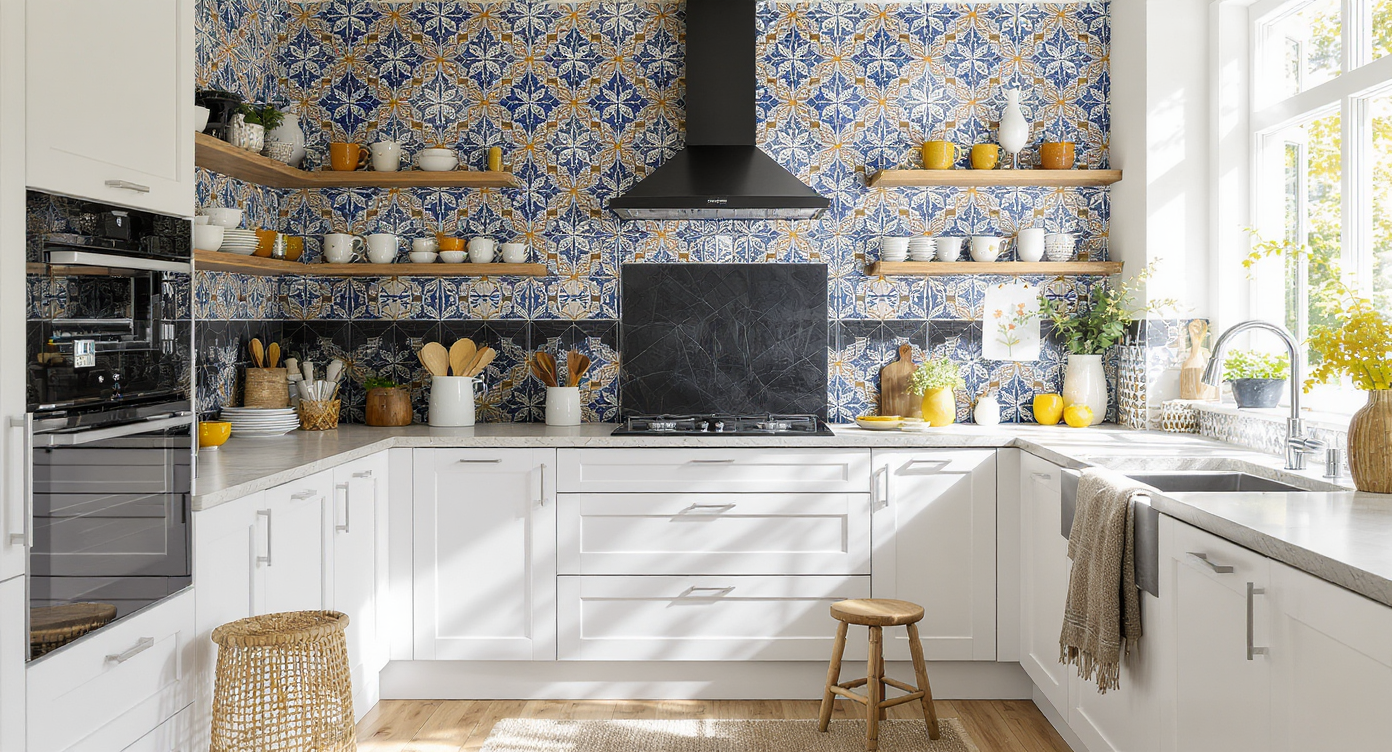
A London kitchen showcasing a hero patterned wallpaper, versatile cabinetry, open storage, and adaptable elements for flexible design.
Begin with a clear-eyed audit of your space, considering what feels joyful and what’s simply habitual. Take a cue from this Highbury kitchen—choose a single hero pattern, such as a lacquered tile wallpaper, then layer surrounding elements thoughtfully. Bring in paints and textures that echo or contrast without clashing. Let open storage highlight your favorite pieces but balance it with hidden zones for less display-worthy items. If undertaking remodeling and upgrades, prioritize flexible materials and easy-to-change elements. Many designers start with neutral flooring or cabinetry, allowing for bolder wallcoverings or textiles to change with future tastes. Even in rented spaces, peel-and-stick wallpapers or fabric-wrapped screens can introduce personality without major work. Above all, the best layouts encourage flow and adaptability. Think about how you and your household use the kitchen across a typical week. Adapt storage, lighting, and decor so that functionality complements your aesthetic ambitions, rather than undermining them.
-
Visualization: Walking Through a London Maximalist Kitchen
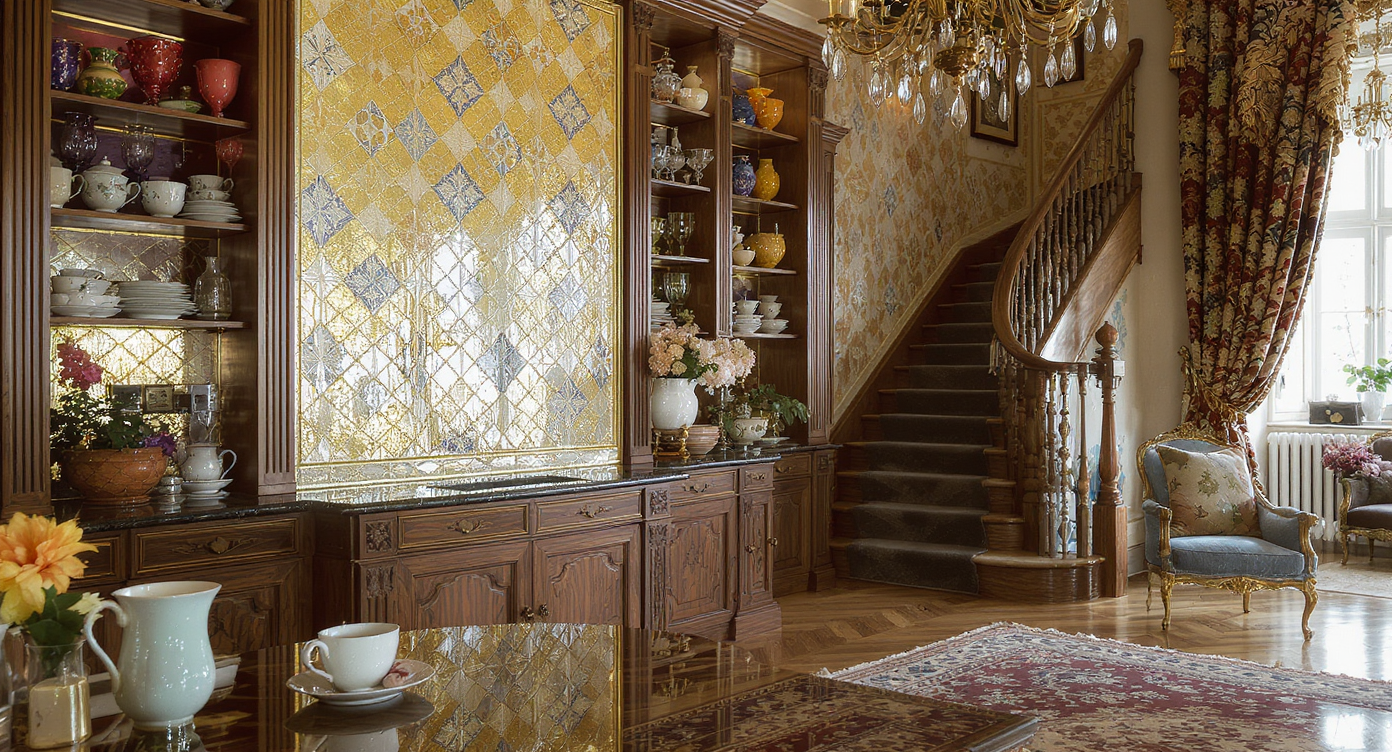
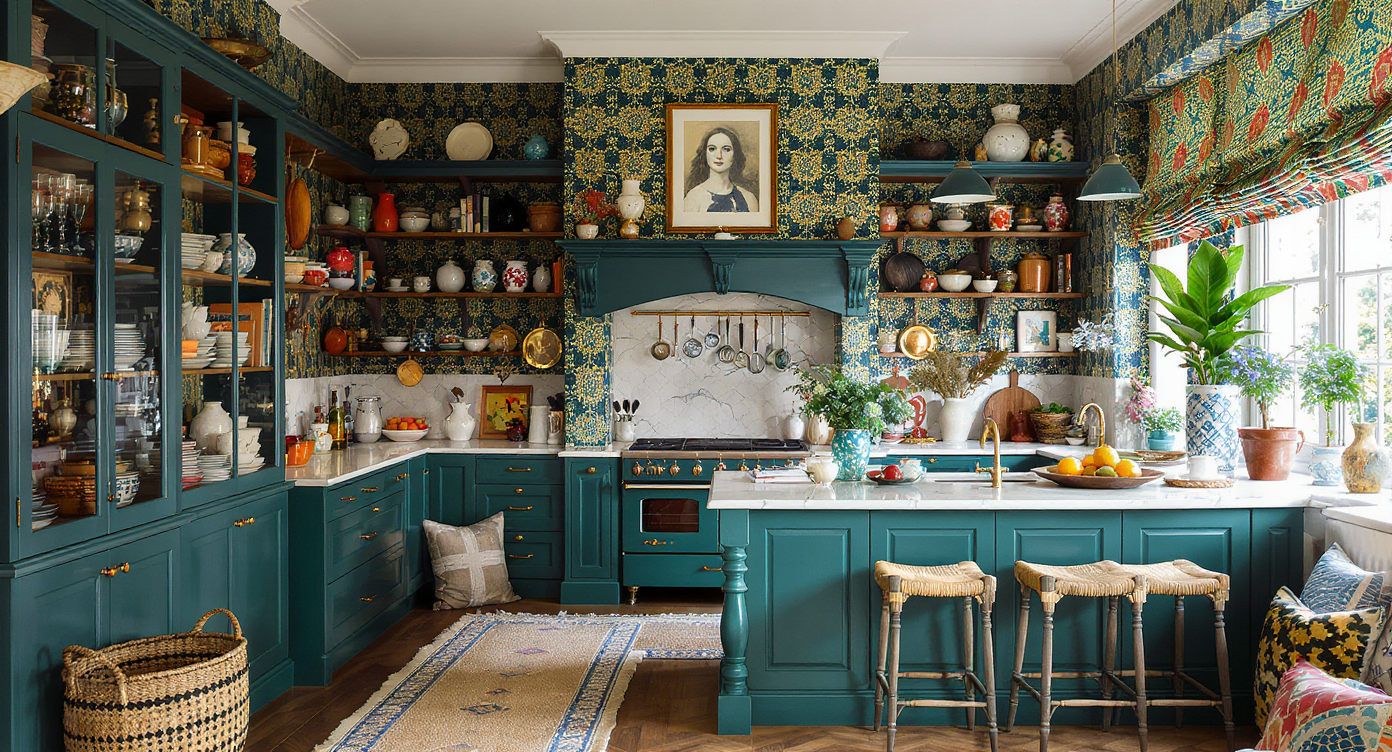
A luminous North London kitchen with shimmering tile-patterned walls, antique glassware, cozy rug, and a bold staircase behind drapes.
Imagine stepping into this North London kitchen on a gray winter day. You’re greeted first by a wall shimmering with a tile-patterned finish, its surface luminescent as though real porcelain. Open shelves laden with antique teacups and colored glassware catch your eye, while the rug under your feet, surprising in its setting, lends a sense of coziness. To your right, a painted staircase rises behind bold drapery, suggesting the next visual delight is never far away. The smell of coffee mingles with the faint note of beeswax polish on woodwork. Each detail—intentional, layered, playful—creates not just a space but a living story. This is design that makes daily life feel celebratory.
Visualization Scenario
Envision yourself walking into an unexpected, joy-filled kitchen: light gleams off a lacquered tile wallpaper, patterned as if hand-glazed. The shelves reveal an eclectic mix of pottery, glassware, and beloved kitchen tools. A woven runner cushions each step. Even on a gray day, the room sparkles with personality, proof that style and soul can coexist harmoniously.
Frequently Asked Questions
Quality lacquered wallpaper is designed to resist moisture and light spills, but is best kept away from direct hob or sink splashes. Many homeowners add a tempered glass splashback for extra protection.
Can open shelving and maximalist decor work in a small kitchen?
Yes, as long as curation is mindful. Rotate displayed items and keep essentials accessible but organized to prevent clutter overwhelm.
How can I introduce bold pattern without risking trend fatigue?
Try incorporating statement wallpaper or textiles in smaller zones—such as an alcove or wall section—so you can switch them out over time. Pair bold prints with classic cabinetry or neutral floors for flexibility.
What is the simplest way to add texture in a kitchen remodel?
Textiles like vintage rugs, fabric blinds, and seat cushions quickly add tactile warmth. Even swapping hardware for aged brass or ceramic can offer a subtle textural lift.
Where can I visualize my own kitchen ideas?
Online tools such as ReimagineHome.ai help you trial wallpaper, layouts, and materials in lifelike settings before making changes.
A New Rulebook for Joyful Kitchen Remodeling
London’s vibrant take on kitchen renovation discards the notion that these spaces must be reserved or uniform. Instead, designers and homeowners are layering in history, play, and unapologetic color, taking full advantage of contemporary materials like lacquered tile wallpaper and inventive layout styling. The message is straightforward: kitchens should evoke joy as much as order. By sampling colors, anchoring bold patterns with neutrals, and balancing open display with smart storage, the result is a kitchen that’s ready for both every day and the extraordinary. For those eager to visualize these possibilities, tools like ReimagineHome.ai offer a starting point for transforming inspiration into lived reality.