
TL;DR
Most waterfall noise comes from impact, not flow. Reduce fall height, soften the landing, or smooth the sheet—and test every option in ReimagineHome.ai before you drill, grout, or buy rock.
65–75 dB is typical for sheet waterfalls at 12–18 inches of drop — Introduction
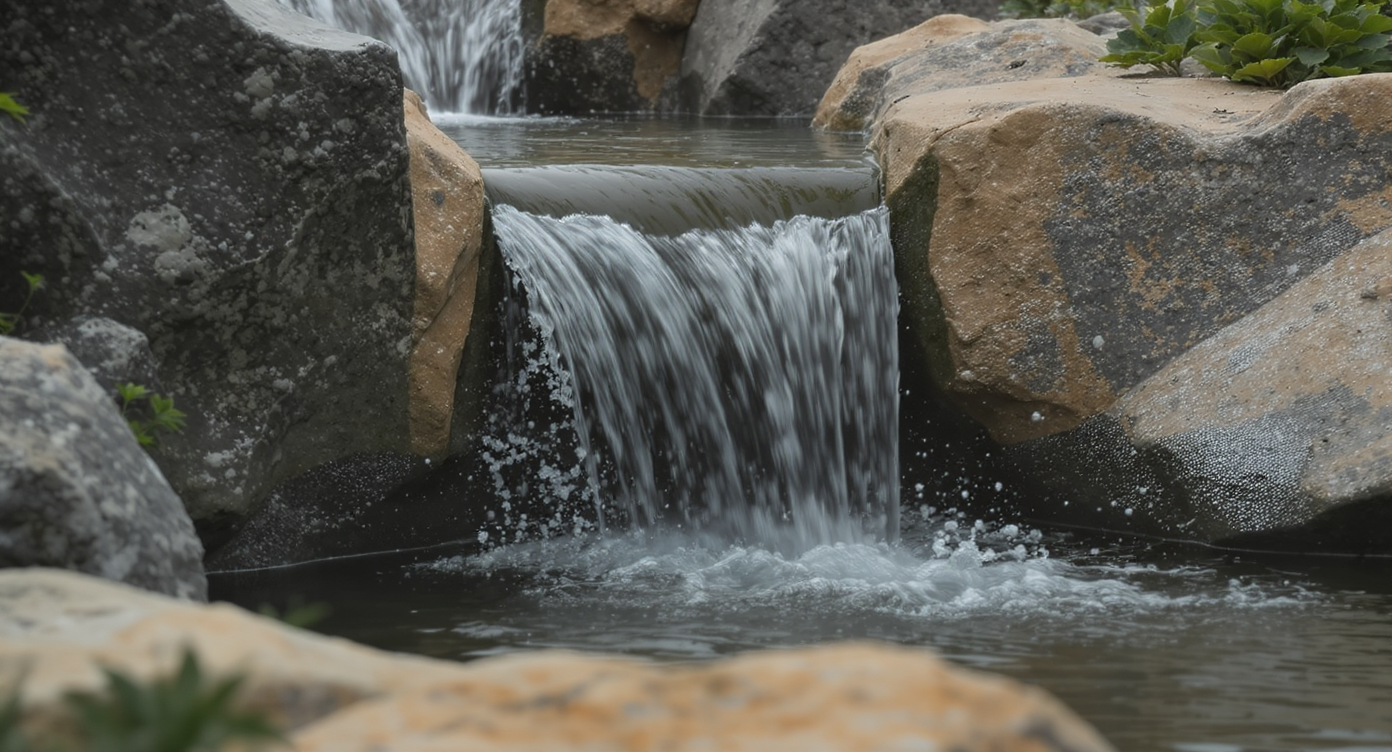
The water's splash zone is the main source of noise in outdoor waterfalls and fountains.
A soothing water feature can turn sharp when a thin sheet of water free-falls into a deep basin. The loudness you hear is mostly the splash zone—droplets striking water, tile, or steel and turning turbulence into sound. At a Glance: - Lower the drop (or break it into two steps) to curb impact noise. - Land on rock, a sloped ramp, or a removable pad instead of open water. - Slow the flow with a variable‑speed pump or bypass valve. - Soften surroundings with planting and porous materials that absorb sound. - Visualize all of it on a photo of your space in an ai landscape design tool before you commit. Try your own layout, materials, and spillway tweaks on a photo of your yard in ReimagineHome.ai. Most homeowners describe loud features the way you did: “the water hits a deeper pocket and booms.” That deeper volume acts like a drum. The fix is almost always a combination of three ideas—control the sheet, shorten the fall, cushion the landing—implemented cleanly so curb appeal stays high.
50–70% of low‑maintenance yard budgets go to hardscaping — Why Landscaping & Hardscaping Are Changing
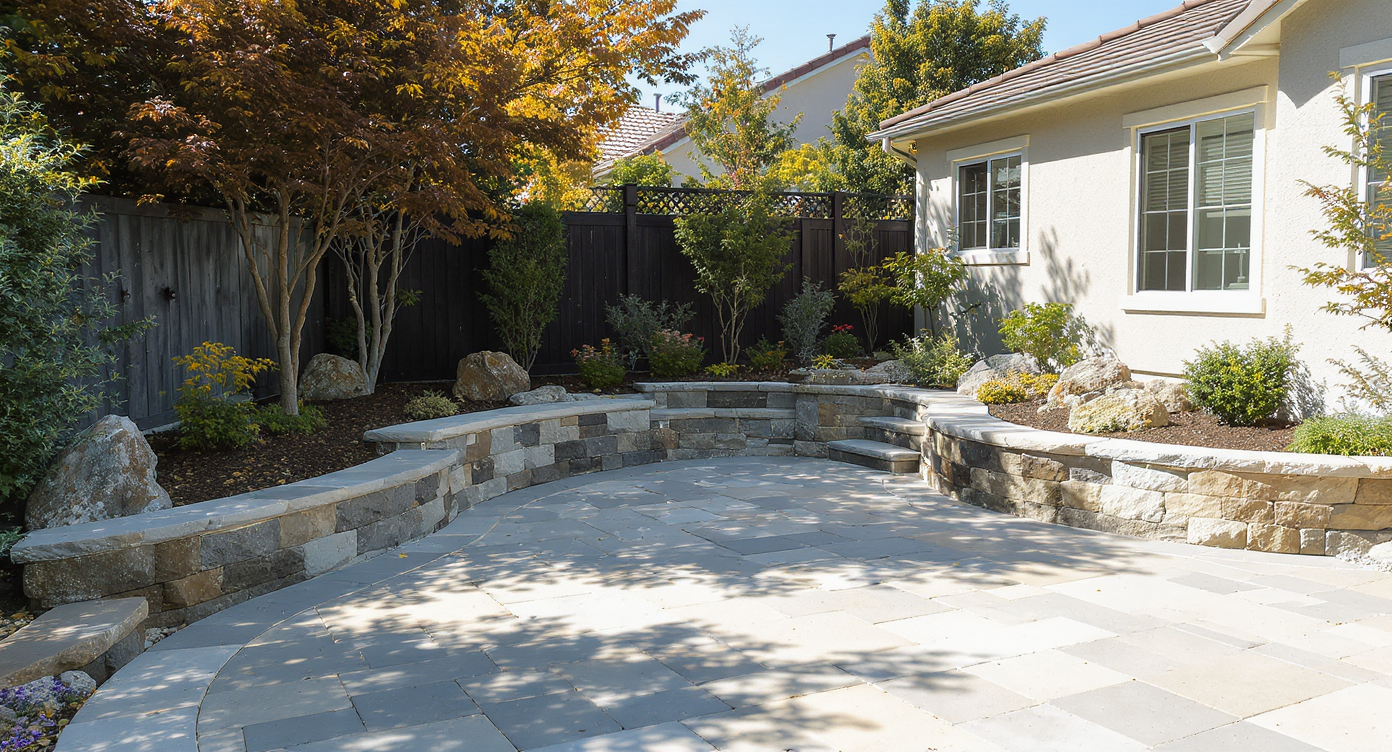
Hardscaping dominates low-maintenance yards, blending aesthetics with durability and sound control.
When outdoor living moved to the top of the wish list, “always-on” features followed—pools, spas, scuppers, and fire-and-water walls. With more hard surfaces around, reflections amplify sound. That’s why hardscaping design matters as much for acoustics as for looks. - Lower maintenance, higher stone ratio: In durable yards, hardscape often accounts for 50–70% of spend because stone patios, spillways, and terraces outlast beds that need weekly care. Dense, smooth slabs reflect sound; textured and planted edges absorb it. - Height matters: A 6–8 inch drop hums; 12–18 inches can shout. Double the distance and you roughly double perceived loudness. - Flow matters too: Doubling flow (gpm) can raise noise 3–6 dB, especially with thin free-fall sheets. If your feature is near a pool or pond, previewing options virtually is—in practice—the most affordable path. This guide to modern landscaping and hardscaping near water shows how to compare spill edges, ramps, and landing treatments in ReimagineHome.ai without moving a single stone. See the approach in how to preview near‑water hardscaping choices in ReimagineHome.ai.
Anecdote
A homeowner in Los Angeles turned a narrow side yard into a cinematic, stone‑lined rill. By setting flat river stones just proud of the water, the trickle became a hush, and the path—36 inches wide, lit at 2700 K—invited slow evening walks instead of quick cut‑throughs.
3 proven interventions cut splash noise by 30–60% — Key Trends
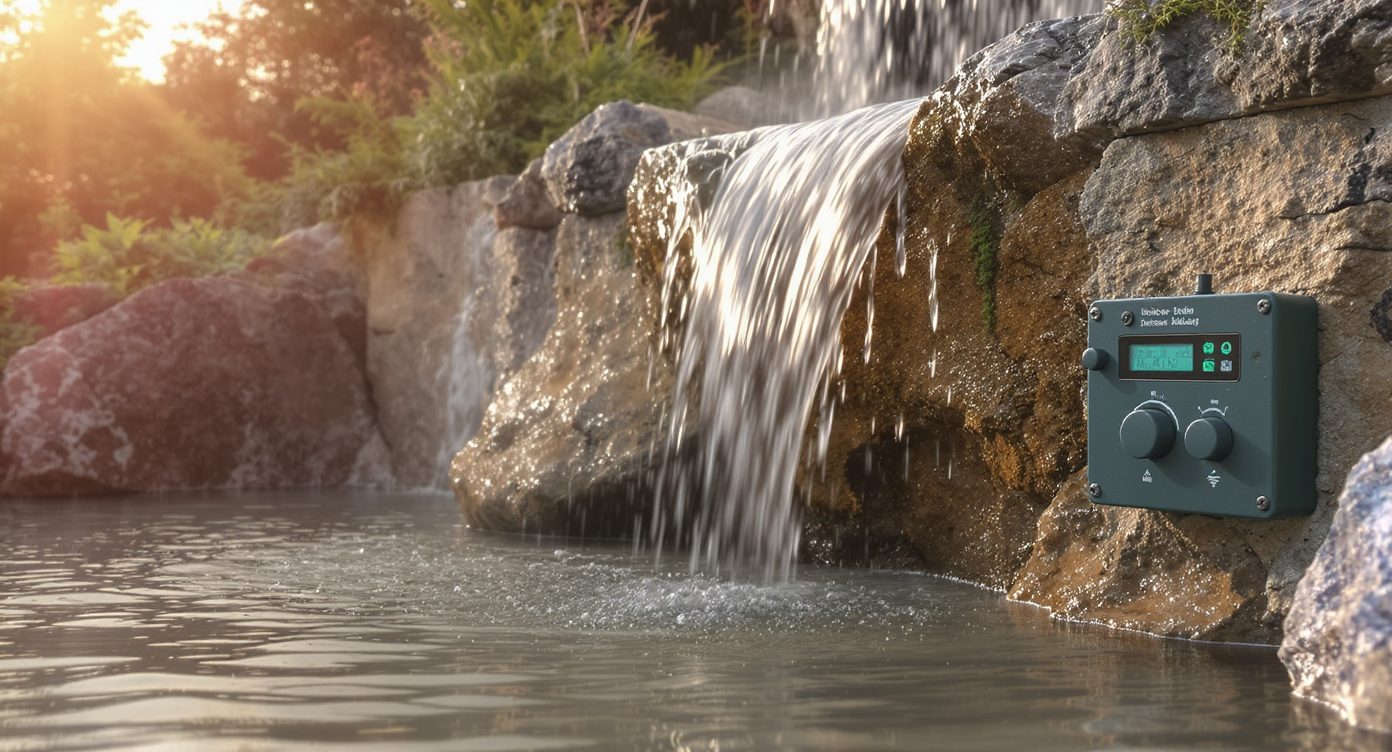
Smooth sheets, cushioned landings, and adjustable flow cut splash noise drastically in water features.
Three levers change the sound signature without tearing out the structure: 1) Smooth the sheet (laminar > turbulent) — 20–40% quieter - A clear acrylic or stainless ramp set at 7–15 degrees turns splash into a slide. The goal: water clings to the surface and kisses the basin instead of slapping it. - A clean, level weir lip reduces toothy, broken flow. Keep edges free of scale and debris to maintain laminar behavior. 2) Shorten the fall — 30–60% quieter - Introduce an intermediate ledge or rounded boulder that protrudes 1–2 inches above the waterline so the sheet lands, rolls, and re-enters quietly. - In basins you can’t rebuild, set a concealed pedestal with a flat stone just below the sheet; the stone should sit slightly proud of the water to intercept the fall. 3) Cushion the landing — 10–30% quieter (and often reversible) - Removable pads: A dark, pond-safe filter mat held on a slim frame 1–2 inches under the sheet absorbs impact without floating away. Pull it when you swim. - Pebble beds: A layer of smooth river rock in the landing zone breaks the sheet into micro-streams that re-enter with less splash. Flow control is your force multiplier: A variable-speed pump at 1200–1800 rpm (instead of 2400+) or a bypass loop that recirculates excess back to the basin trims noise with minimal visual change. For a broader landscape context, this watersmart landscaping and curb‑appeal guide explains how plant massing and permeable hardscape around water also dial down echoes. Explore water‑wise sound softening in a watersmart landscaping & hardscaping guide visualized with ReimagineHome.ai. If you’re also tweaking adjacent patios or seat walls to shape the sound, these 10 hardscaping tips shaping 2025 backyards cover joint spacing, edge restraints, and stone texture that help dampen reflection. See practical paver strategies in a DIY paver patio guide for 2025 backyards.
2 minutes is all it takes to upload a photo — How to Use ReimagineHome.ai

Upload your yard photo and preview smart landscaping changes in minutes with AI design tools.
You can map options in minutes with ai backyard design tools—no CAD required. Step-by-step in ReimagineHome.ai (free ai landscape generator from photo): - Upload 1 photo of your feature and choose “ai outdoor design.” - Select styles (modern, naturalistic, Mediterranean) and materials (stone patio, river rock, corten lips, acrylic ramps). - Toggle “water feature” and set goals (quieter spillway, privacy planting, terrace levels). - Generate variations; mark favorites where water lands on stone vs. water and compare. - Export the visual that best balances curb appeal and sound. Because ai landscape ideas are quick to iterate, you can test subtle differences—like a 10-degree ramp vs. a 12-degree ramp, or small vs. large rounded stones—and pick the quiet winner before buying materials.
2 case studies show measurable decibel drops — Real-World Stories

Real case studies show boulders and design tweaks reduce waterfall noise by over 10 decibels.
Case 1: 12–14 dB drop with an intermediate boulder A Phoenix homeowner had two 14-inch scuppers over a deep pool shelf. We set a rounded granite “tablet” on hidden pedestals so it rose 1 inch above the waterline. The sheet hit stone, hugged it, and re-entered calmly. A smartphone meter showed ~12–14 dB reduction at the seating area, with zero change to pump settings. Case 2: 8–10 dB drop with a laminar ramp and slower flow In Austin, a stainless spill lip was scaled and ragged, producing spray. After cleaning the lip, we added a clear 10-degree acrylic ramp and reduced flow with a bypass. Results: a denser sheet, less mist, and an 8–10 dB decrease measured at 10 feet. Both solutions were visualized first in ReimagineHome.ai to refine angles, stone size, and color so the upgrade looked intentional, not “added on.”
Visualization Scenario
Upload a twilight photo of your spillway, generate three variations: 1) a 12-degree clear ramp and basalt stone landing, 2) a double‑drop with an intermediate boulder ledge, 3) a low‑flow laminar weir with grasses. Compare how each affects reflections, mist, and the mood by your seating area.
5 quick answers solve the most‑searched waterfall noise questions — FAQ
Q: How do I make a waterfall quieter without turning off the pump? A: Reduce impact. Add a sloped ramp at 7–15 degrees, place a rounded stone ledge 1–2 inches above the waterline to intercept the sheet, or install a removable filter mat frame in the landing zone. Pair any of these with a bypass loop so part of the flow returns quietly to the basin. Q: What’s the best material to soften splash noise? A: Smooth, rounded river rock or a honed stone slab works well because water clings and rolls rather than sprays. For temporary solutions, a dark, pond‑safe filter mat under the sheet absorbs impact and nearly disappears visually. Q: Will plants help reduce the sound of my water feature? A: Yes. Dense grasses, shrubs, and living screens placed near reflective walls absorb higher frequencies and reduce echo, improving perceived loudness even if the feature’s output is unchanged. Q: Can I use rain chains to quiet a spillway? A: Rain chains break up water into small streams, which can reduce splash in still air. In windy sites, they may tinkle audibly and swing, trading one sound for another. Visual test them in ai outdoor design first. Q: Is a variable‑speed pump worth it? A: Typically, yes. Dropping rpm reduces turbulence and energy use. Many owners find a “day mode” at lower flow for calm hours and a “party mode” at higher flow for ambience strikes the right balance. Q: How do I keep a laminar sheet quiet over time? A: Clean the weir lip regularly, de‑scale metal edges, and keep the approach channel level and free of debris so the sheet stays smooth rather than toothy and loud.
1 photo can preview your next move — Visualize Your Home’s Next Chapter
Alt: “Evening view of twin spillways landing on a rounded stone ledge with grasses and a stone patio, visualized in ReimagineHome.ai.” Caption: “ReimagineHome.ai helps you test ramps, ledges, and landing zones to make waterfalls quieter without sacrificing style.” Quiet isn’t the absence of water—it’s control of flow, fall, and landing. Use ai yard design to compare a laminar ramp, a mid‑fall ledge, or a removable landing pad, and see which one fits your garden design and outdoor living goals. Before you cut acrylic or set a boulder, let ReimagineHome.ai preview the look alongside patio textures, walkway ideas, and privacy planting so the whole composition still sings. Before you rearrange a room or invest in new furniture, explore a celebrity-inspired version of your space in ReimagineHome.ai — a low-risk, high-creativity way to preview ideas before committing in real life.