Restoring a Hidden Door in a Load-Bearing Wall: What to Consider
TL;DR
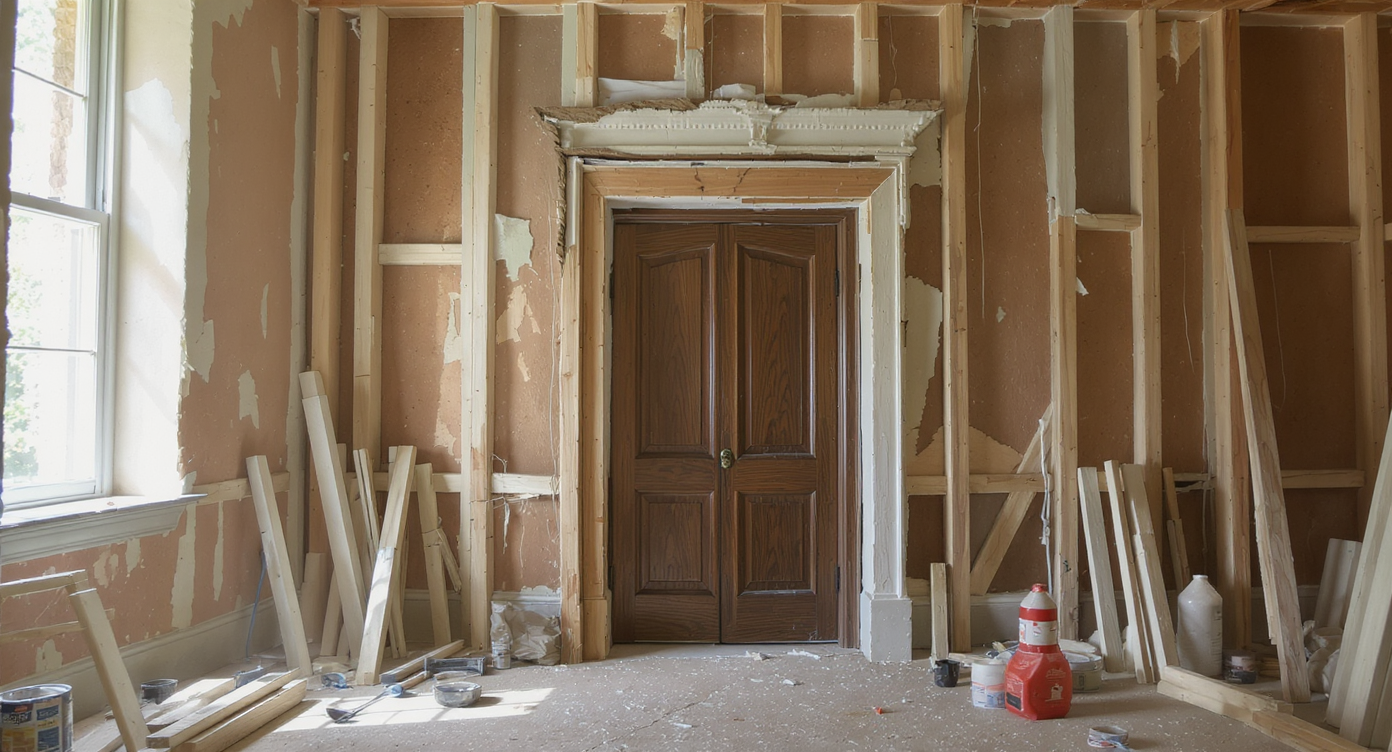
Uncovering and reopening an original doorway in a load-bearing wall can dramatically improve a home's layout—especially in older houses where room access evolved over time. However, before making changes, it is crucial to verify which elements are purely cosmetic and which impact structural integrity. Consulting with a structural professional ensures both safety and resale confidence, especially in spaces where previous remodeling left layers of history behind the walls.
Uncovering the Past in Home Design
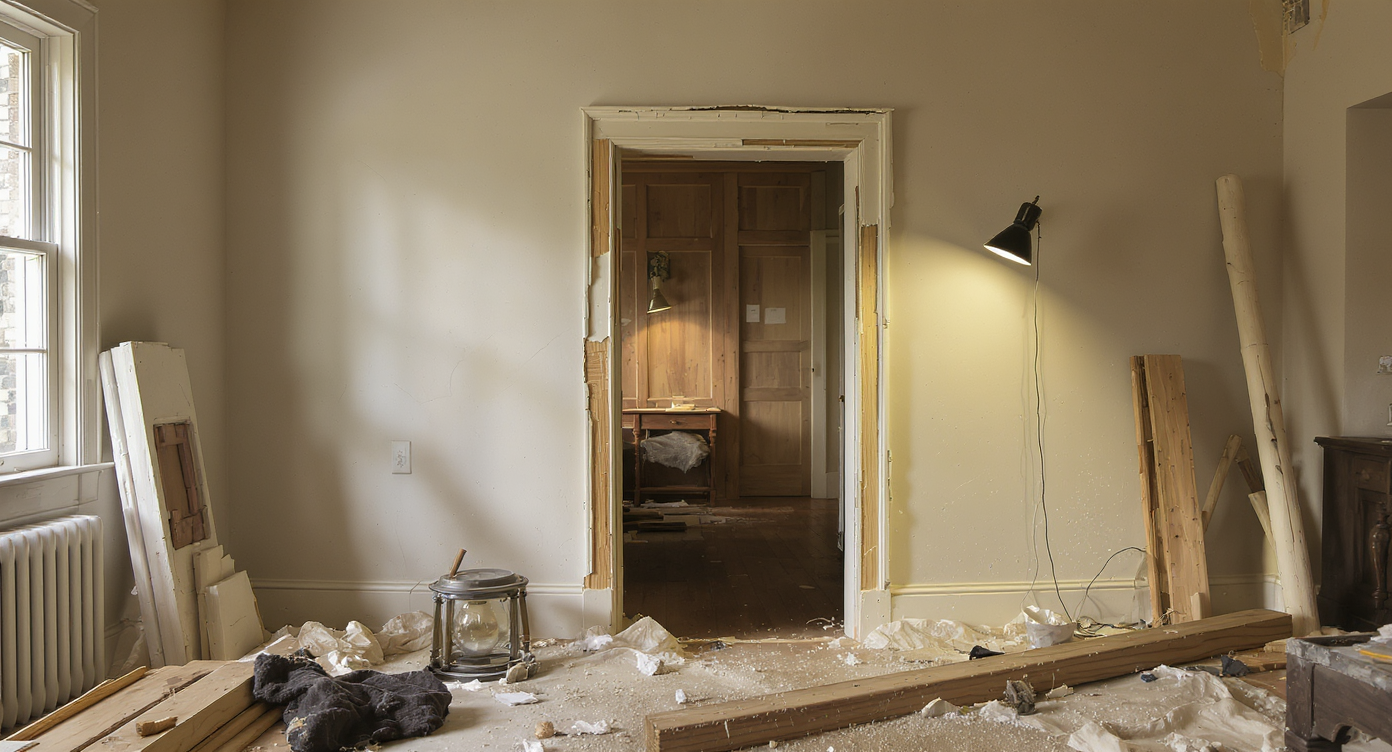
A partially uncovered hidden doorway in a vintage home’s load-bearing wall hints at restoration while revealing structural challenges ahead.
Old homes tell stories through hidden quirks—sealed archways, boarded-over windows, and sometimes, entire doorways lost behind layers of remodel. Discovering such a feature can spark visions of restoring original flow or reclaiming wasted square footage. For homeowners living with awkward 'captive' rooms—a space accessible only through another—it is tempting to undo the modifications and bring back functional connections. But when the potential new opening sits in a load-bearing wall, aesthetic aspiration crosses paths with structural responsibility. Decisions like these are more than cosmetic. A hidden door may promise improved utility, but the steps to safely restore it require careful consideration of both old and new construction norms. Before reaching for the saw, it is worth understanding what you are dealing with, why earlier owners may have closed the passage, and how to balance preservation, safety, and contemporary needs.
-
Why Hidden Doorways Exist—and Why They Matter
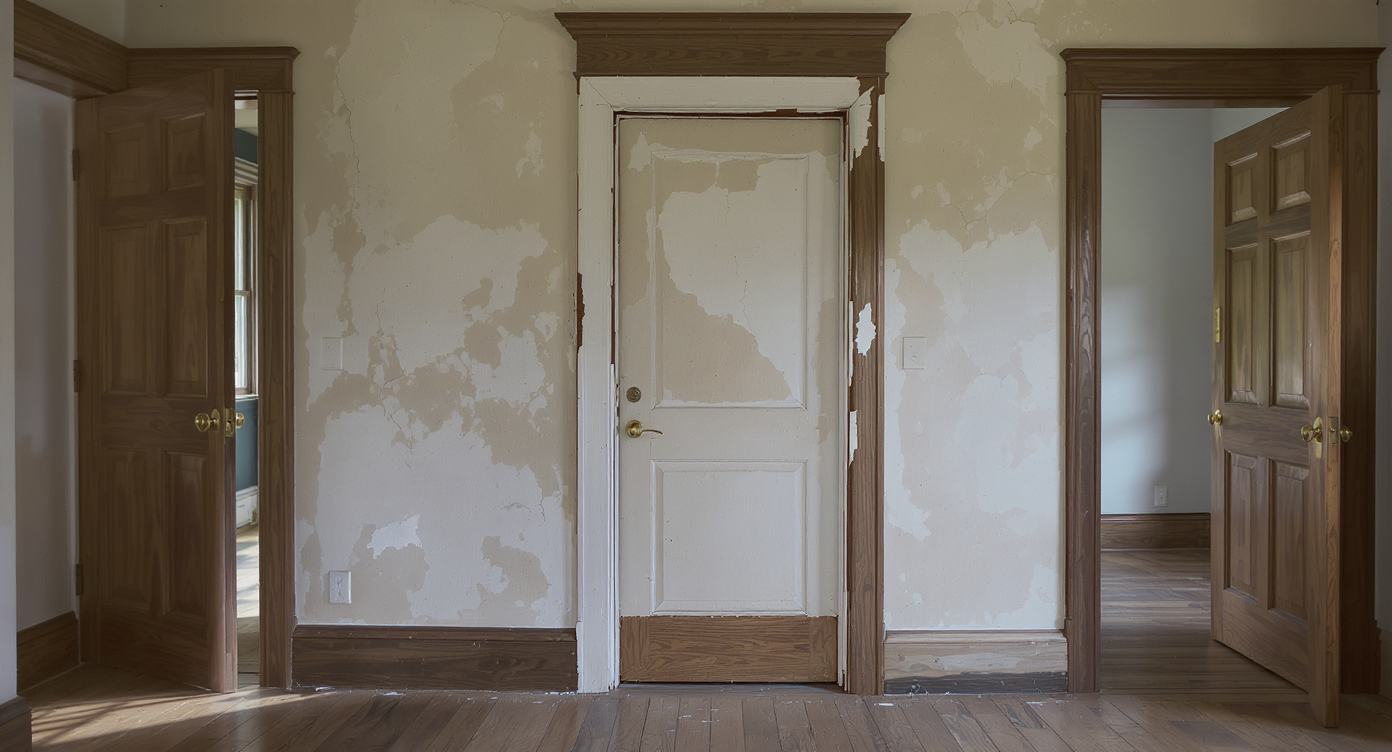
A subtle outline and patched wall reveal the presence of a hidden, enclosed doorway in an older home, showing evolving room layouts over time.
Across decades, homes evolve with each owner and every addition. Sometimes, a growing family needed more closet space. Other times, shifting tastes or ownership priorities led to the enclosure of doorways and the rerouting of rooms. Hidden doors are most commonly found in older homes, where building codes and framing techniques did not always match today’s rigor. The practical challenge is evident when a home features 'captive' rooms. For instance, a guest room accessible only through another bedroom diminishes flexibility and can affect resale. The impulse to expose a forgotten doorway is often born from the need for better flow or simply curiosity. However, the integrity of load-bearing walls must remain paramount. Much like opening up attics to add usable living space—a process that demands mindful planning and code compliance, as highlighted in transforming an attic into useable space—removing elements in a load-bearing wall starts with research. The intent is not just to restore a passage, but to do so without undercutting the home's structure.
Expert Insight
A homeowner renovating their grandfather’s home stumbled on a section of wall that sounded hollow. With curiosity and care, they found the intact casing of a former kitchen door—complete with aged hinge marks. By involving a local engineer, they determined the infill was only drywall support. The subsequent restoration opened up daily traffic flow, improved natural light, and became the family’s favorite feature—proof that sometimes, the best design solutions are already hiding in the walls.
-
Understanding the Load-Bearing Wall Dilemma
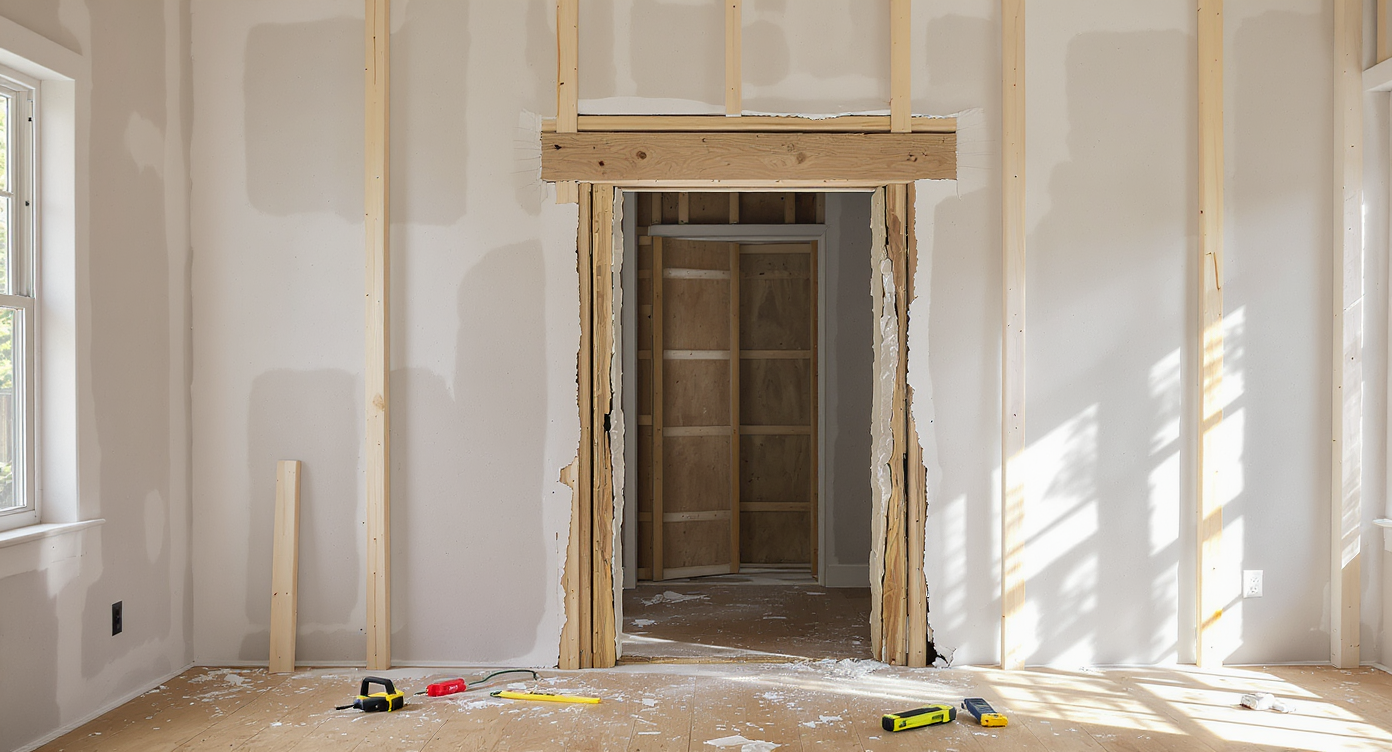
A hidden doorway in a load-bearing wall partially uncovered, revealing the header, infill studs, and tools used to determine their roles.
Load-bearing walls carry the weight of everything above—from upper floors to the roof. Unlike partition walls, their anatomy cannot be altered without thoughtful analysis. Many original doorways closed off over the years still retain their headers—horizontal supports that distribute weight around an opening. Sometimes, an infill stud and fresh layers of drywall simply mask the original function. Other times, modifications from decades past do not reflect today’s standards. Determining whether a stud within the former doorway is structural or simply cosmetic often calls for detective work. Contractors and engineers deploy stud finders, bore small exploratory holes, and even use wire probes or cameras to survey what lies behind. A key indicator is whether the infill is continuous from floor to ceiling (structural) or runs only within the opening (likely just for drywall support). Homeowners considering restoring such features should recognize that safety trumps sentiment. The cost of a structural misstep can be high, both for present stability and future resale. As seen when planning DIY updates that hope to add value for resale, well-intentioned efforts sometimes require professional reinforcement. For more on balancing DIY ambitions with long-term value, see what real estate agents say about DIY renovations and resale.
-
Navigating Restoration: Practical Pathways and Considerations
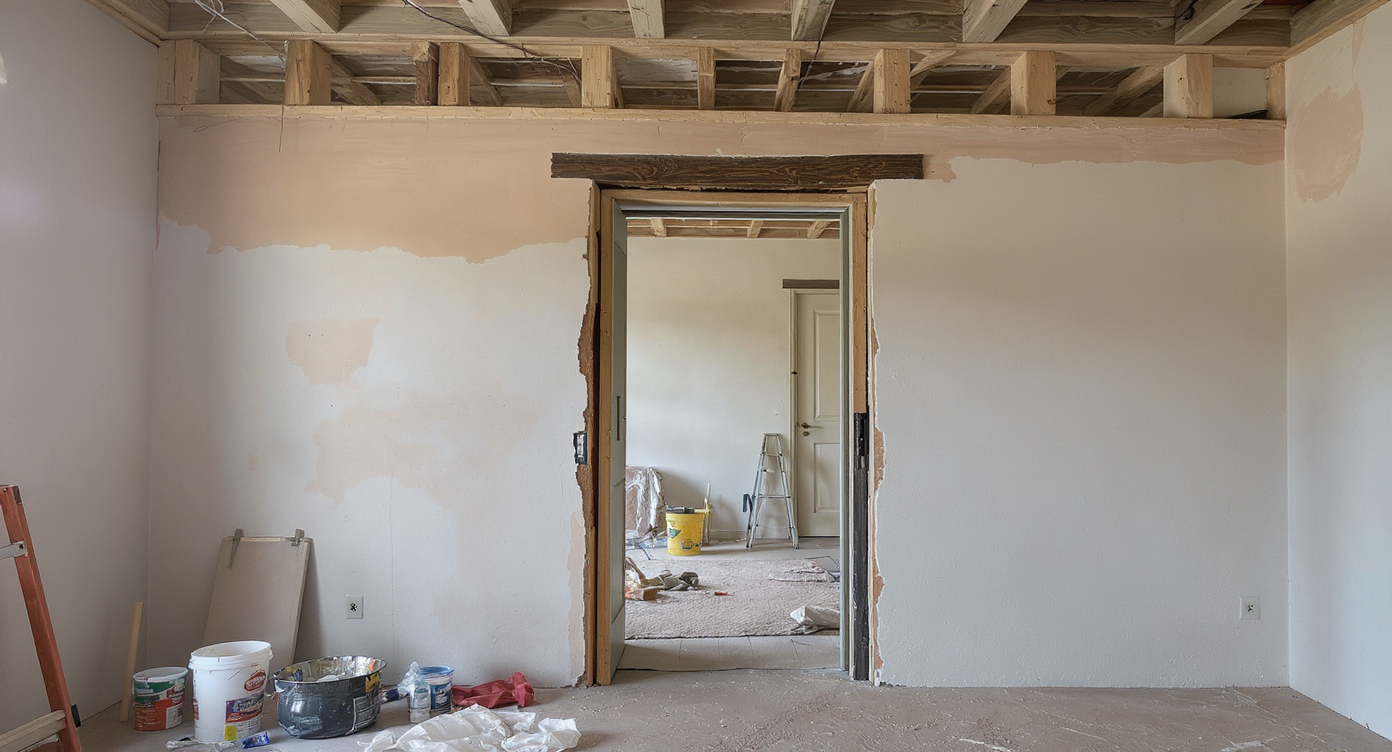
A historic doorway mid-restoration reveals a thick load-bearing wall, original header beam, removed stud, and exposed framing for review.
Unveiling a historic doorway begins with an audit of what is truly structural. In many cases, the infill stud was simply added to make drywall installation easier. If the original header and adjacent supports are intact, it may be entirely feasible to remove that stud and return the opening to its intended purpose. However, as many engineers and seasoned renovators warn, assumptions can be risky—especially with homes that carry the marks of multiple remodels. Modern building codes have evolved. Headers that might barely have met requirements 80 or 100 years ago often do not align with current standards for span and load. It is not uncommon to find gaps from wood shrinkage, evidence of settling, or even creative, nonstandard fixes hidden behind finishes. Therefore, current best practice is to involve a structural engineer or experienced contractor for an on-site review before proceeding. Their inspection often reassures both current homeowners and, later, potential buyers. When the doorway is safely open, challenges may still arise. Old walls may be thicker than modern framing, sometimes measuring six inches wide or more. This may require special ordering a pre-hung door with a deep jamb or fabricating a custom solution to achieve a seamless finish. Even smaller details, such as relocating a light switch to the newly accessible room, deserve forethought.
-
Anecdote: Hidden Door, New Life
In a turn-of-the-century home undergoing gentle renovation, a young couple discovered an odd drywall patch in a central hallway. Peeling away layers revealed the original door frame—intact and bearing the patina of decades. Consulting a local engineer, they confirmed that the remaining header and framing were sound, making the restoration straightforward. Today, that once 'captive' guest room welcomes visitors with ease, and the quirky bit of vintage character is now a point of pride during every tour.
-
Common Mistakes to Avoid
Overconfidence with structural changes is the leading misstep. Many homeowners assume that the presence of a former door frame guarantees safety for reopening. In reality, home evolutions may leave hidden weaknesses or outdated techniques behind the scenes. Cutting into a load-bearing wall without a thorough inspection risks not just the immediate area, but the entire load path above it. Skipping permits or professional input may also create issues for future resale, as buyers and agents increasingly expect disclosures and documentation. Another mistake comes in underestimating finishing challenges. Mismatched jamb widths, uneven old floors, or pre-existing plaster can complicate the straightforward hanging of a new door. These details can delay a project or add unanticipated costs if unaccounted for.
-
Tips and Expert Insights
Seasoned designers and builders offer practical guidance for projects like these: - Use multiple inspection methods—combine stud finders with visual openings, bore holes, and even temporary removal of small sections of wall to map out what is truly structural. - Ask a local building department for archived plans or permits. These can confirm original configurations and sometimes highlight past alterations. - Invest in proper materials. For walls thicker than standard, special order jamb extensions or use solid wood inserts to bridge gaps for a professional look. - Consider accessibility and electrical updates in tandem. Reopened doors change circulation and lighting needs. A phased approach—plan, inspect, then restore—saves both time and money in the long run. Budgeting for expert consultation is part of every thoughtful renovation. For more strategies on stretching your renovation dollar without costly mistakes, browse these affordable renovation tips for planning.
-
How to Use This in Your Next Designs
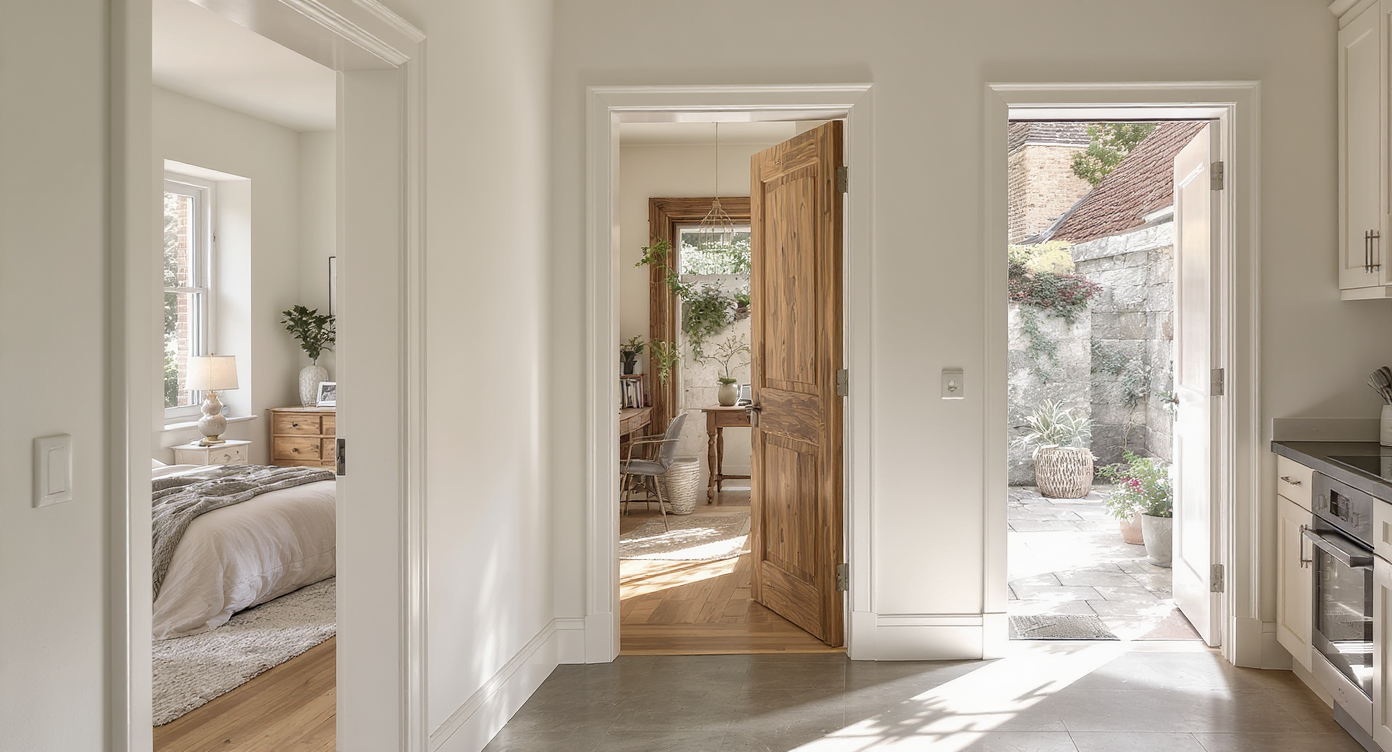
Restored interior doors reconnect a hallway to guest, office, and kitchen spaces, enhancing layout flexibility and authentic flow.
Restoring a concealed doorway can unlock flexibility in layouts, especially when tailoring guest accommodations, creating direct circulation between spaces, or restoring historical authenticity. Architects often recommend prioritizing ‘flow’—the ease with which one moves from room to room—when planning modern updates to older homes. For multi-generational households or those expecting to host frequently, reclaiming such connections enhances both value and livability. Practical mini-scenarios: - A family with frequent overnight guests reopens a sealed door, replacing the awkward journey through a child’s bedroom with direct hallway access, ultimately making the space more welcoming. - A home office tucked in a former nursery becomes much more functional when a lost door to a central corridor is restored, minimizing disruptions during the workday. - In a small house, a kitchen that once had a rear door (now a pantry) regains its outdoor connection by reopening and reinforcing the original frame, making summer entertaining seamless.
-
Visualization Scenario: Standing at the Threshold
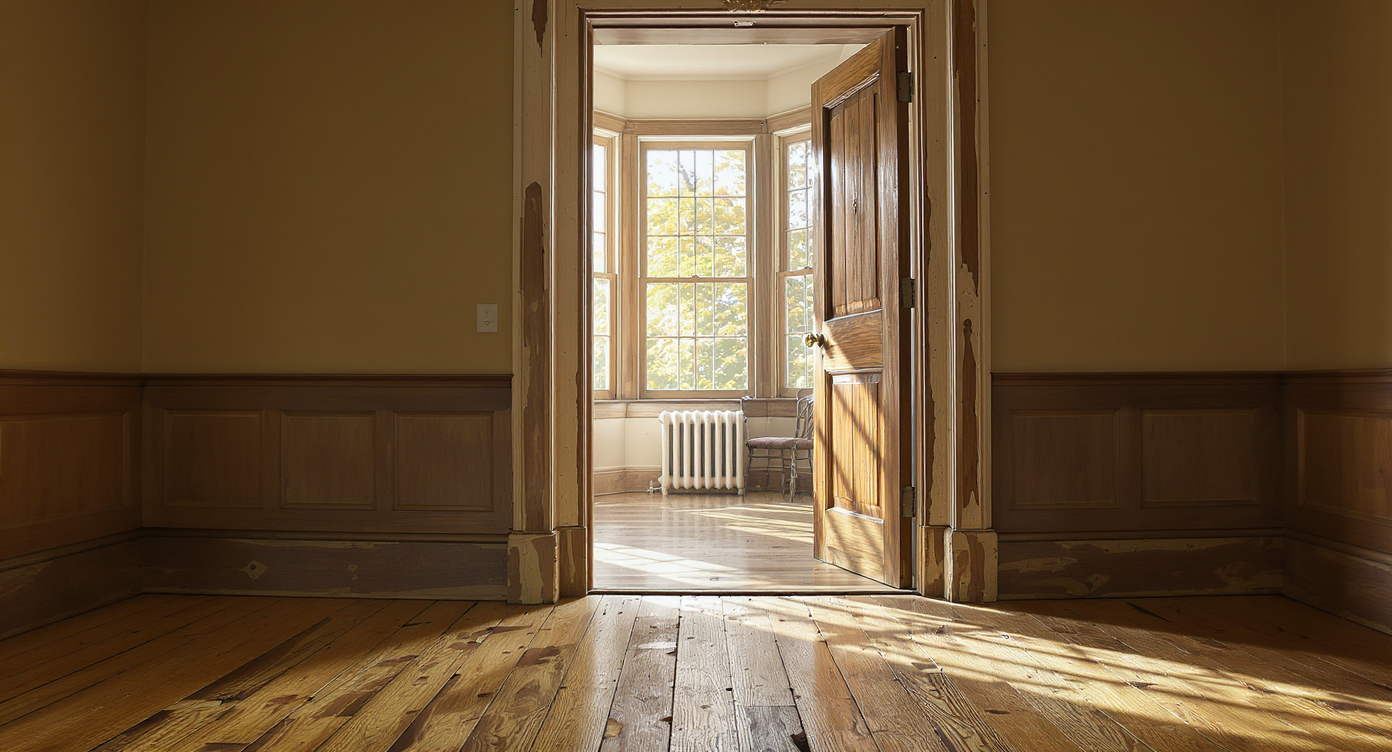
Standing at a restored vintage threshold, sunlight reveals seamless transitions between period woodwork and a bright guest suite beyond.
Imagine standing on creaky century-old hardwood, fresh sunlight pouring into a hallway that once served as the spine of the home. Where a wall once signaled isolation, a newly opened doorway frames the view into a revitalized guest suite. Subtle period details—original molding, carefully matched new woodwork—blend the old character with current needs. The moment you swing the door wide, the house feels whole again, and every corner is accessible without awkward detours.
Visualization Scenario
Picture yourself hesitating at a solid wall long believed permanent. As the drywall gives way, a weathered frame emerges, hinting at the room's original intent. Later, with the new door hung, vibrant morning light connects previously closed-off spaces, and your home finally lives up to its full promise—all while respecting engineering integrity and timeless design.
Frequently Asked Questions
Not always. The presence of a former door frame does not guarantee current structural safety. Consult a structural engineer or qualified contractor to evaluate the framing—headers, jack studs, and supporting members—before removing any infill.
Is it expensive to restore a hidden door in an old home?
Costs vary widely based on wall thickness, required permitting, finishing materials, and necessary structural reinforcements. If the header and adjacent framing are sound, it can be a modest project. Fees for engineering consultation and potential custom jambs should be budgeted.
Will restoring a door affect my home’s resale value?
Improving room access and restoring original flow often enhance both value and market appeal, as potential buyers appreciate logical layouts. Documenting professional oversight reassures future buyers about the work's quality and safety.
What if my wall is thicker than modern jamb kits allow?
Special order doors with custom jamb depths, or have a carpenter add jamb extensions to fit the opening. Professional finishing will make the transition seamless.
Where can I visualize similar restoration projects?
You can explore adaptive design solutions safely with ReimagineHome.ai before starting any deconstruction.
Bringing the Past (Safely) Into the Present
Reclaiming a concealed door is about more than nostalgia—it is a design choice that can restore balance, flow, and purpose to your home. While the thrill of uncovering architectural history is real, the importance of proper inspection and professional input cannot be overstated. Each hidden feature comes with its own story of adaptation, and with careful planning, you can honor both past and present. For those imagining new possibilities or seeking visualization support, ReimagineHome.ai offers inspiration and practical tools to make sense of changes, no matter how your home has evolved.