Solving the Odd Layout: How to Make Transitional Rooms Work as Modern Storage Hubs
TL;DR
Transitional rooms with odd layouts can be transformed from confusing pass-throughs into hardworking, design-forward spaces. Start by determining the core function—storage, a plant nook, or an extension of the adjacent kitchen or bath—then select built-ins, colors, and textures that echo a modern or mid-century aesthetic. Layer in natural light, storied surfaces, and artwork, embracing the in-between room as an asset instead of a design puzzle.
Why In-Between Rooms Pose a Design Challenge
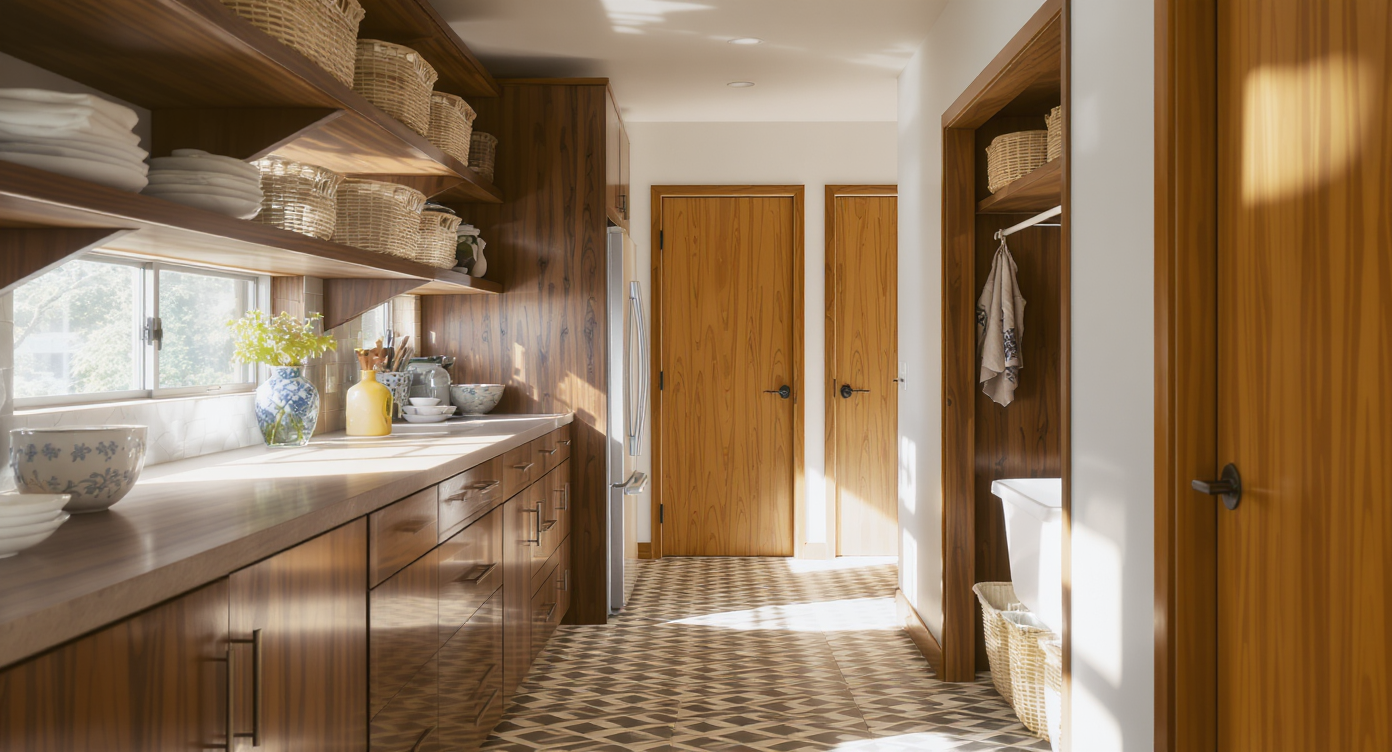
This sunlit pass-through space showcases modern storage solutions in a 1970s split-level home, unifying mid-century style with practical utility.
Rooms that link major hubs of the home often feel like an afterthought. These pass-through spaces—frequently joining kitchens, mudrooms, or bathrooms—can be hard to define and even harder to love. Their awkward dimensions or ambiguous purpose tempt some homeowners to overlook them altogether. However, with a bit of strategic planning, these in-between areas can become some of the most valuable, cohesive, and visually striking parts of the house. The real opportunity lies in mapping storage and style to the architectural lineage of your home. A 1970s California split, for example, practically invites modern or mid-century modern influences while rewarding owners with abundant sunlight, quirky geometry, and an unfussy approach to everyday living. What may start as a maintenance closet or laundry nook can easily evolve into a utility center that quietly communicates good taste. The key is resisting the urge to simply fill the void and instead thoughtfully define its function within the home’s broader flow.
-
Defining the Role of a Transitional Room
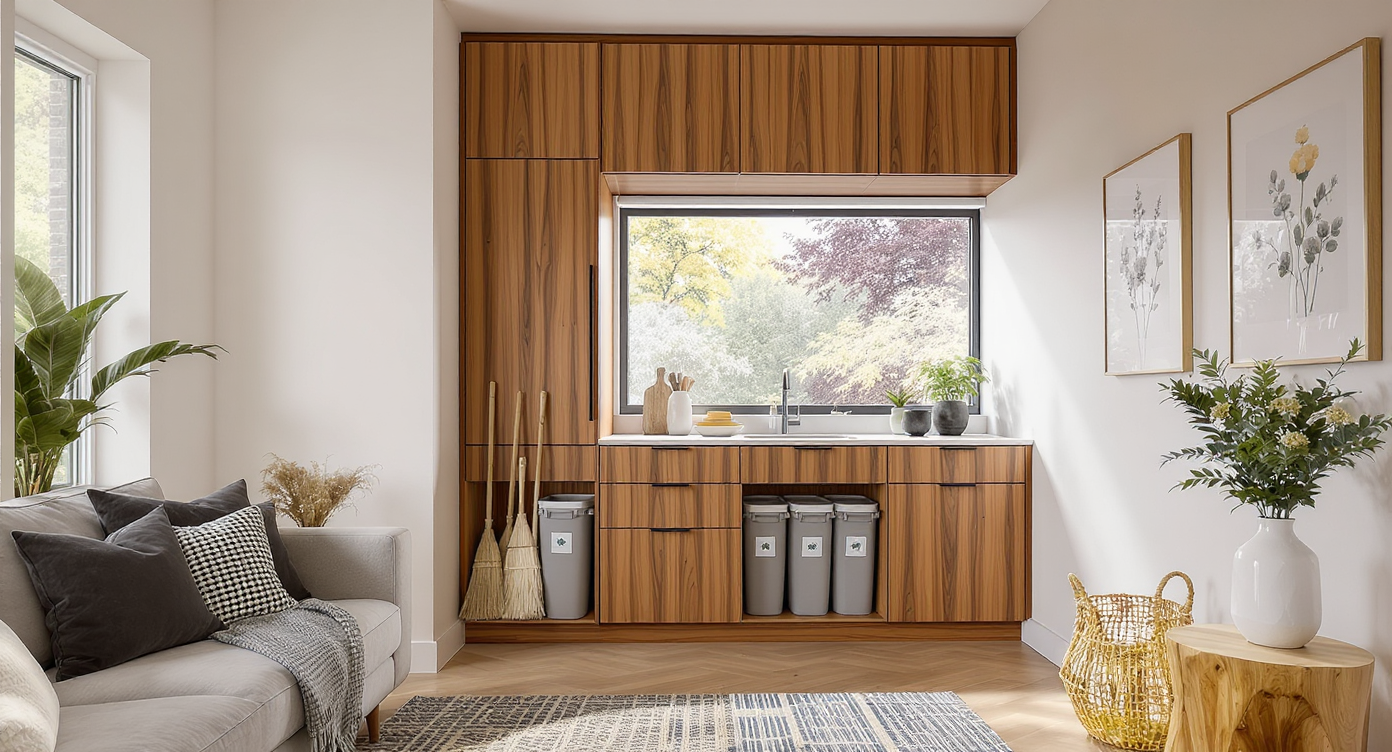
A transitional room defined by purpose, featuring built-in walnut storage for household essentials and seamlessly connecting adjoining spaces.
The first step to resolving an ambiguous layout is framing the purpose of the space. Is it a mudroom, a butler’s pantry, a secondary corridor, or something that blends tasks? Observing how you naturally move through the area offers vital clues. In homes where the side door leads only to a seldom-used yard or where another mudroom is present, the room rarely works as a formal entry point. Instead, it becomes an auxiliary zone for storage—housing brooms, recycling bins, and backup kitchen supplies—while still maintaining the visual prominence of a connection between main living areas. Purpose-led design allows you to anchor finishes and built-ins that harmonize with the adjacent rooms. For instance, in a house with Scandinavian floral artwork, warm woods, and signature mid-century details, built-in storage under a window—crafted in a walnut or oak finish or a painted tone that transitions between adjacent spaces—simultaneously adds utility and reinforces the architectural intent. According to advice on refreshing dated interiors without losing their soul, starting with practical needs rather than trends keeps these rooms authentic and versatile.
Expert Insight
A homeowner in a lakeside split-level once struggled to define a long, narrow connector between their kitchen and half bath. Rather than concealing it, they incorporated a bench-height cabinet in walnut, echoing the home’s wood trim. On top, a rotating array of potted plants and a painting from the family’s Scandinavian heritage gave the space personality. Instead of an underwhelming hallway, the room became a bright, practical bridge—and even drew compliments from guests who lingered longer than expected.
-
Blending Storage, Style, and Natural Light
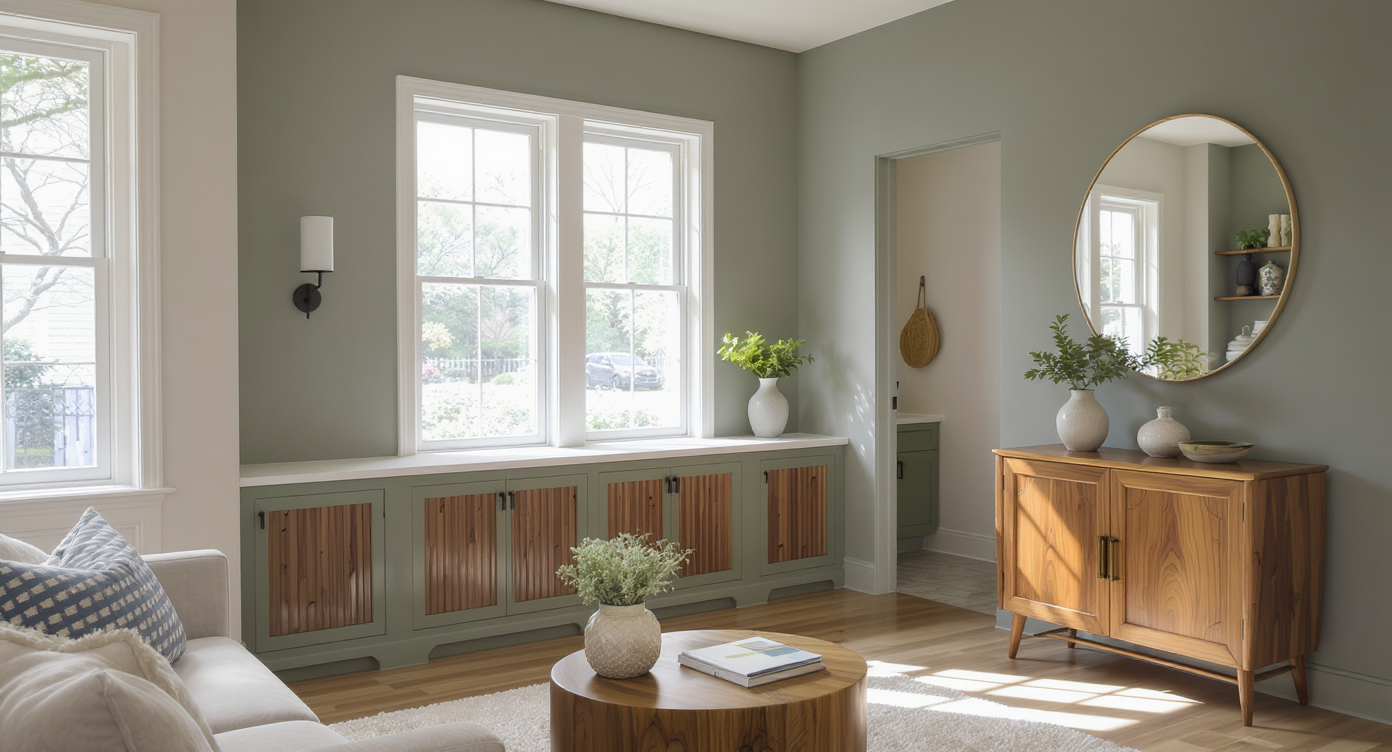
Highly intentional transitional room storage: built-in under-window cabinetry, broom closet, and sculptural credenza, all bathed in natural light.
Storage in a transitional space works best when it’s intentional and beautiful. Shallow under-window cabinetry, concealed broom closets, or even credenzas with sculptural fronts provide places for cleaning supplies and bulky kitchen items without overwhelming the room. For a unified effect, echo finishes or hardware found elsewhere in the home—such as slatted wood or period-inspired pulls—mirroring existing millwork or colors for cohesion. Natural light is another undervalued asset in these rooms. Homeowners often debate installing window treatments, but leaving windows bare enhances airiness and creates a connection to the outdoors. The right shade of wall paint can also harness sunlight, transitioning the eye between the white-walled kitchen and a boldly hued bathroom. Designers often recommend painting these spaces in a muted version of adjacent accent colors, referencing key pieces like a favorite green from the powder room or a brown found in existing millwork. This approach is supported by strategies for choosing harmonious paint colors that feel intentional across multiple rooms.
-
Making Small Details Count: Art, Plants, and Texture
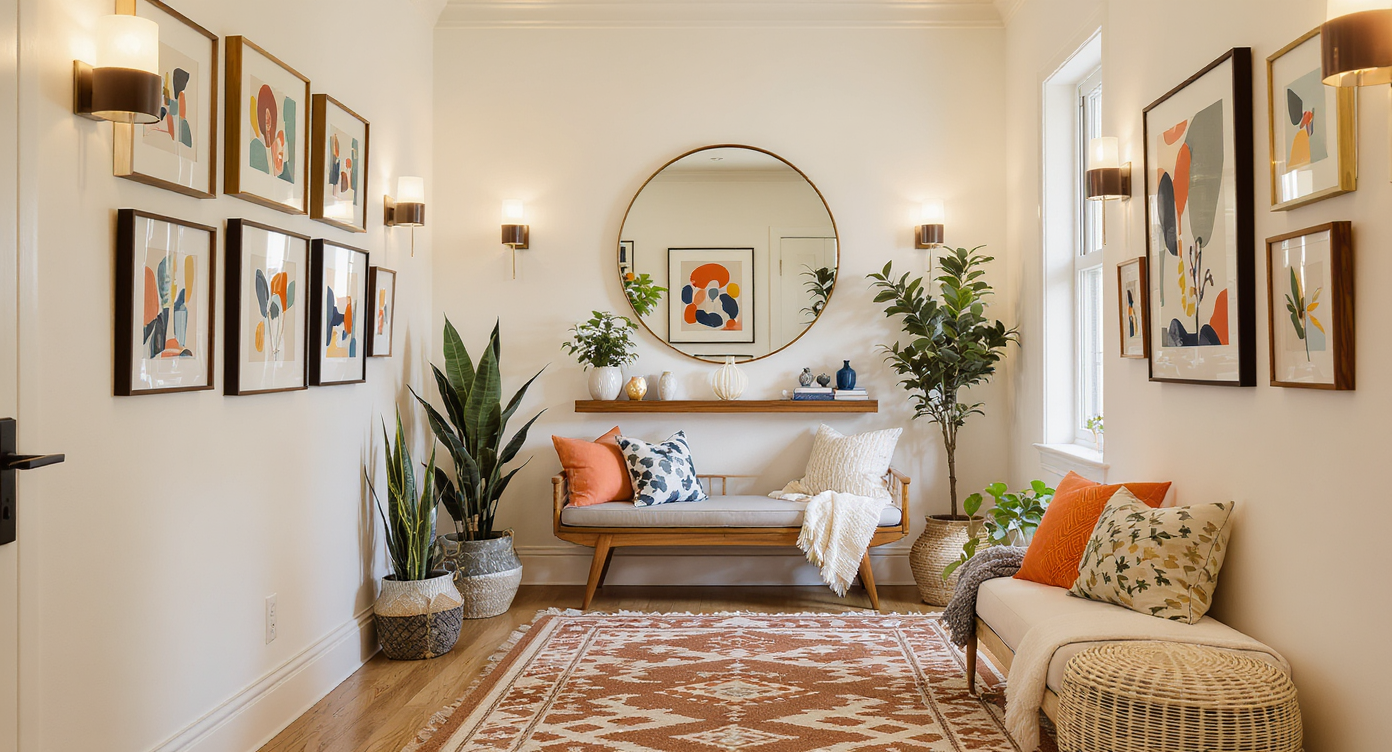
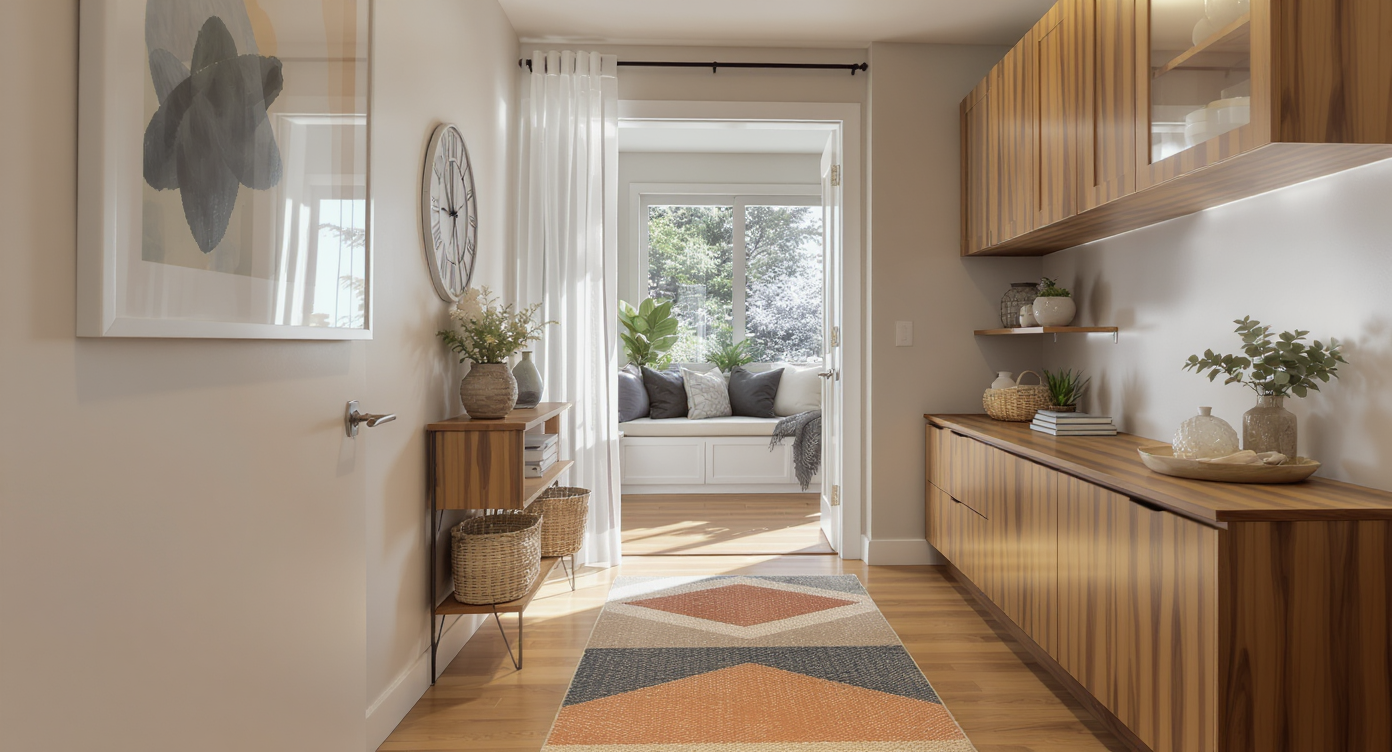
Layered small details like art, mirrors, cozy runners, textured baskets, and lush plants transform a transitional space into a vibrant micro-gallery.
Emerging trends suggest a move toward layering transitional spaces with personal touches rather than ignoring them. Artwork, especially pieces already present in the home, brings narrative continuity and color. Oversized mirrors, wall lighting, and open ledges for rotating art or children’s creations foster a sense of purpose. For plant lovers, abundant light transforms these rooms into micro-galleries or even functional greenhouses, inviting everything from low-maintenance sansevieria to statement-making indoor trees. Texture, from plush patterned runners to woven baskets or terracotta planters, animates passageways and softens hard angles. Strategically placed rugs or padded bench seats create comfort and interest. As highlighted in the “California cool” adaptation of mid-century boho interiors, incorporating retro, bohemian, and natural elements yields a space that feels both personal and current. You can explore how this philosophy manifests in mid-century boho design and experiment with the color layering and tactile choices that give an “in-between” room depth.
-
Learning from Real-Life Scenarios
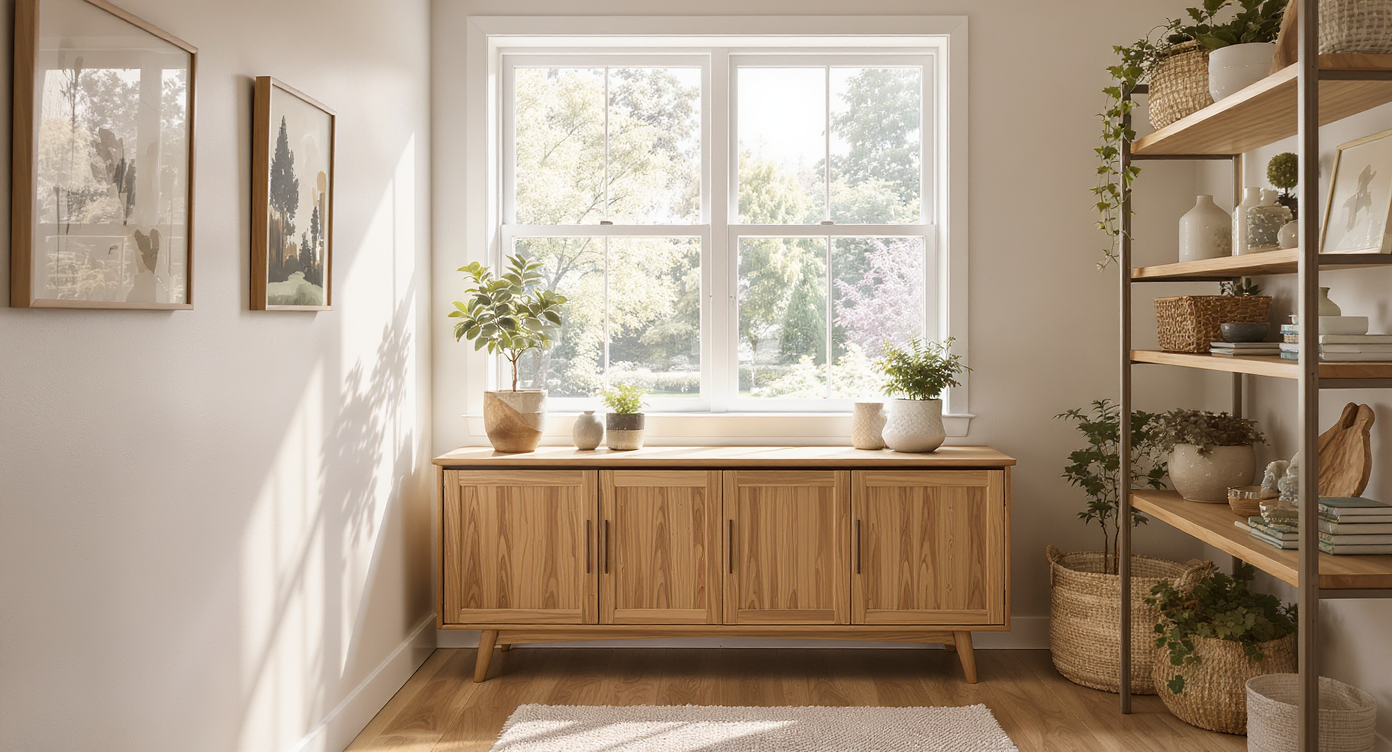
A transitional hallway transformed into efficient storage and a serene nook with custom cabinetry, plant displays, and integrated lighting.
Homeowners repeatedly encounter these transitional rooms when renovating split-levels, ramblers, and open-plan houses from the postwar era. One practical scenario involves a family with a woodworking background transforming their undefined side hallway into a blend of storage and display. By crafting a bench-height cabinet beneath the window, they gain not only a discreet place for cleaning equipment and overflow pantry goods but also a landing zone for art, plants, or pet essentials. In another case, a room previously used to stockpile vacuums and a recycling bin evolves into a plant-filled nook after adding shelves and tailored lighting. Guests appreciate the curated serenity on the way to the powder room, enjoying glimpses of sentimental paintings chosen to match wall hues. Each tweak draws from the same underlying goal: taking awkward dimensions and writing them into a functional, storied narrative.
-
Common Mistakes to Avoid
A frequent pitfall is defaulting to generic storage solutions or crowding the space with too much cabinetry or mismatched materials. Oversized pieces can block pathways, interrupt sight lines, or compete with architectural features. Another common issue is failing to consider the adjacent color universe—introducing clashing hues rather than harmonious gradients. Some homeowners skip lighting upgrades, leaving the area with harsh overhead can lights instead of selecting warm, directional fixtures that highlight artwork and create mood. Lastly, resisting the urge to use every square inch for storage helps maintain a sense of openness, especially in corridors or rooms with limited floorspace. Taking inspiration from strategies for breaking up wood tones without paint can help balance the natural warmth of mid-level rooms.
-
Tips and Expert Insights
Designers frequently stress the importance of intent. In smaller spaces, custom built-ins matching baseboards or wall colors can create a streamlined look. If you crave visual interest, fluted or slatted wood cabinet fronts communicate mid-century flair and harmonize with period details elsewhere in the home. A muted desaturated version of a nearby room’s accent paint can bridge transitions and unify sightlines. Practical mini-scenarios: Add a narrow drawer to a storage bench for pet leashes or gloves by the side door, or tuck concealed outlets in a cabinet for recharging vacuums and handheld appliances. Open shelving above a trash/recycling center can provide a home for cookbooks and everyday art. With the right runner rug and a touch of greenery, even narrow corridors gain welcoming character.
-
How to Use This in Your Next Designs
Approach the next odd or ambiguous space in your home with fresh eyes. Consider first how you want to feel passing through the room, and what hidden utility could be unlocked. Often, the most effective updates merge custom storage with thoughtfully chosen colors and standout accessories. These “in-between” spaces, once defined by uncertainty, have the capacity to become beloved parts of a home’s daily rhythm when designed with personal habits, household needs, and the architecture’s innate strengths in mind.
Visualization Scenario
Picture entering your kitchen and glancing toward a formerly awkward corridor now transformed: beneath the window, walnut cabinetry hides appliances and seasonal cookware, while an overhanging shelf spotlights your child’s latest masterpiece and a cascade of pothos. A muted green wall connects gently to the color story of the adjacent bathroom. On your way to refill the recycling or catch a private call, you pass warmly under a modern sconce. It no longer feels “in between.” Instead, it feels entirely essential to the home’s flow and identity.
Optional FAQ
Begin by referencing the palette of adjacent rooms. Use a slightly muted shade of a dominant color from the kitchen or bath to create natural flow. For guiding steps, see the 5-step system for paint color selection.
Should I keep the side door in a rarely used in-between room?
If the door offers practical value for the future or improves resale potential, keep it but style around it. If not, consider closing it off and maximizing storage.
How can I add storage without making the room feel cramped?
Select shallow cabinets under windows and opt for open shelving above eye level. Use cohesive finishes to maintain openness.
Can I turn the space into a plant nook?
Absolutely. Good natural light makes these rooms perfect for plants. Use a mix of shelving and window benches to display greenery. For design prompts, try ReimagineHome.ai.
Is it important to match the storage design to the rest of the house?
Yes, drawing materials, colors, and hardware from nearby rooms ensures the transition feels intentional rather than piecemeal.
Embracing the In-Between Room as a Modern Asset
That once perplexing hallway or connector can become a source of daily satisfaction when approached as a canvas instead of a compromise. Whether you choose deep cabinetry, a flourish of greenery, layered textures, or museum-worthy art, the trick is connecting new interventions to the soul of your home—not bending the room to fleeting trends. Cohesion, utility, and narrative potential are the real luxuries here, transforming the transitional space into a seamless extension of your home's personality. Homeowners eager for tailored, visual solutions can find expanded inspiration at ReimagineHome.ai.