12 Simple Fixes That Make a Dark Home Feel Brighter
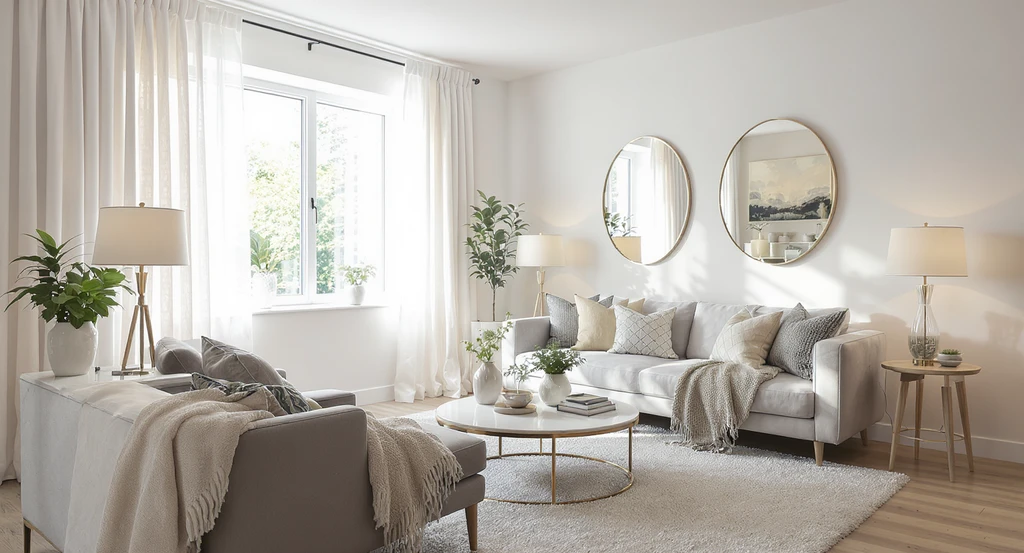
Why Does My House Feel So Dark?
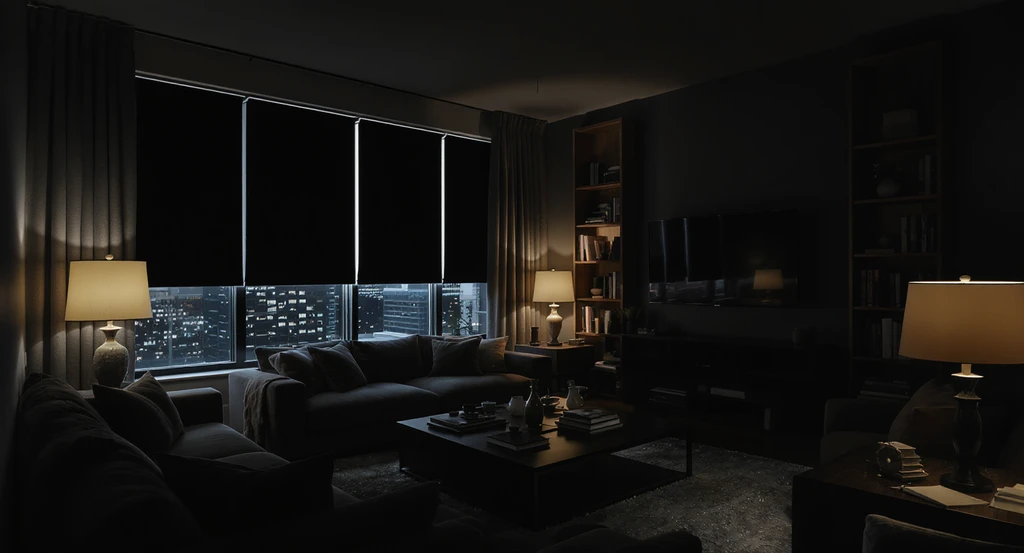
A realistic living room illustrates how ai home design solutions for dark rooms can reveal lighting issues—showcasing how ai visualizes brighter room makeovers and helps homeowners identify steps to resolve dim spaces.
If you walk into your home mid-day and wonder, “Why is it so gloomy?”, you’re not alone. Many people expect that large windows or strong bulbs will make their homes feel bright, but that isn’t always the case. In most homes, darkness isn't caused by just one thing. Wall colors, furniture placement, window treatments, and lighting all affect how bright a room feels.
If you're unsure what to do, the simple answer is: most dark-room issues can be corrected with small, strategic changes rather than major renovation. You just need to identify the true problem areas and address them step by step.
-
01. Choosing Wall Colors That Absorb Light
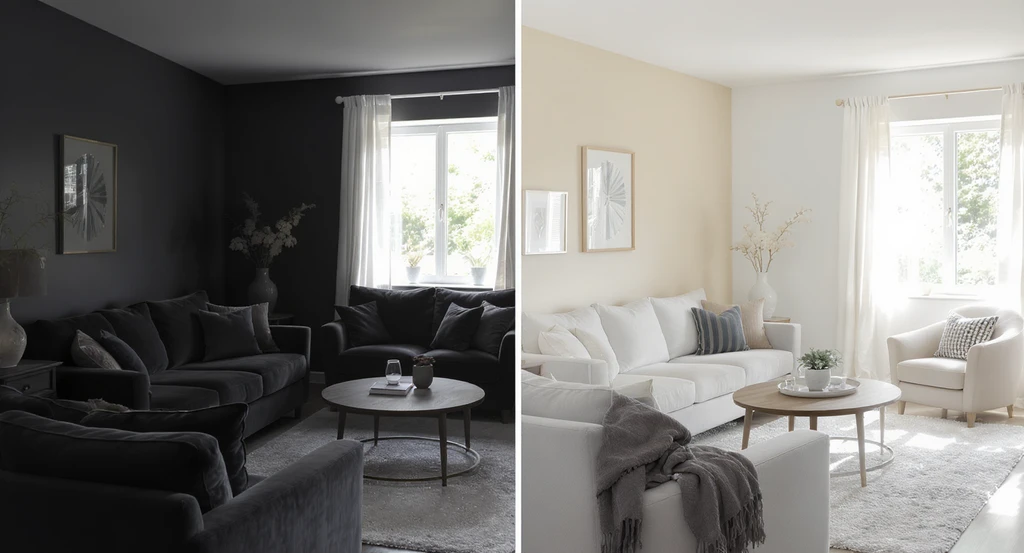
See how ai home design solutions for dark rooms use lighter paint shades to reflect light, demonstrated by virtual staging ai visualizing a brighter room makeover. Discover the best ai tools to brighten home interiors and how they can guide lighting choices without replacing an interior designer.
A common mistake is painting rooms in dark or saturated tones, like charcoal, navy, or deep green. These colors absorb, rather than reflect, light, easily reducing perceived brightness even with daylight flowing in. This happens when people follow trends or copy paint colors from larger, sunlit homes.
Simple fix: Choose lighter shades (such as warm whites, creams, or pale taupe) with a high light reflectance value (LRV). These hues bounce light around the room, making the space feel more open. For more advice, our guide on transformative fixes for rooms that feel “off” covers how color choices can define a room’s feel.
-
02. Using Oversized Furniture That Blocks Light
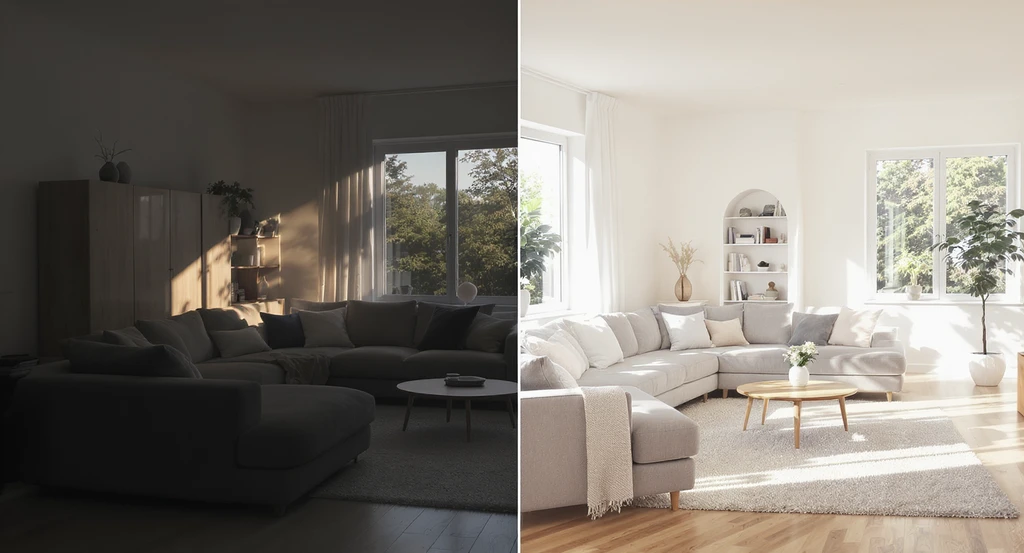
AI home design solutions for dark rooms reveal how swapping oversized furniture for leggy, low-profile pieces arranged away from windows can instantly brighten your living space. Using the best ai tools to brighten home interiors, this virtual staging ai example shows can ai replace an interior designer for lighting issues by improving both scale and natural light flow.
Large sofas, cabinets, and bulky furniture can block natural light and make a room feel smaller and darker. This usually happens in attempts to maximize comfort or storage in a small footprint.
To fix: Choose lower-profile furniture, open shelving, and pieces with visible legs. Arrange furniture away from windows and passageways to keep light moving freely through the room. Getting scale and placement right allows both sunlight and artificial light to reach wider areas.
-
03. Hanging Heavy Curtains That Obstruct Windows
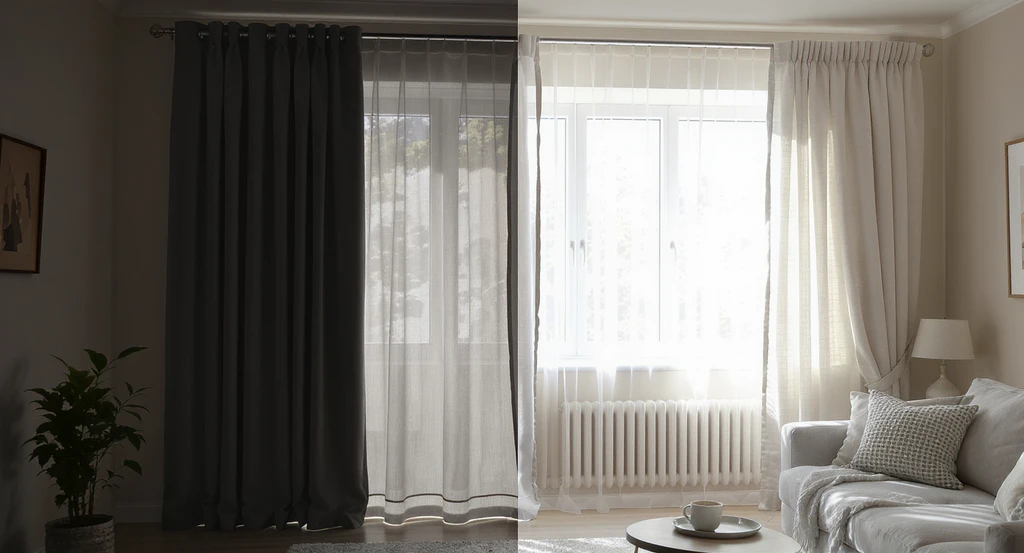
AI home design solutions for dark rooms can visualize the impact of replacing heavy curtains with sheer, light fabrics and using wider rods. This brighter room makeover demonstrates how virtual staging AI for light enhancement offers real fixes for lighting issues often missed by interior designers.
Many homeowners install thick blackout curtains or dark drapes, thinking they insulate or provide privacy. However, these block substantial sunlight, especially if hung inside the window frame.
Easy fix: Replace heavy curtains with sheer panels or light-colored fabrics that let more daylight into the room. Curtain rods should extend at least 6–10 inches past the window frame; this allows panels to pull completely clear of the glass and maximizes daylight. Read our in-depth tips for living room curtains in this guide to picking the right curtains.
-
04. Relying on a Single Light Source
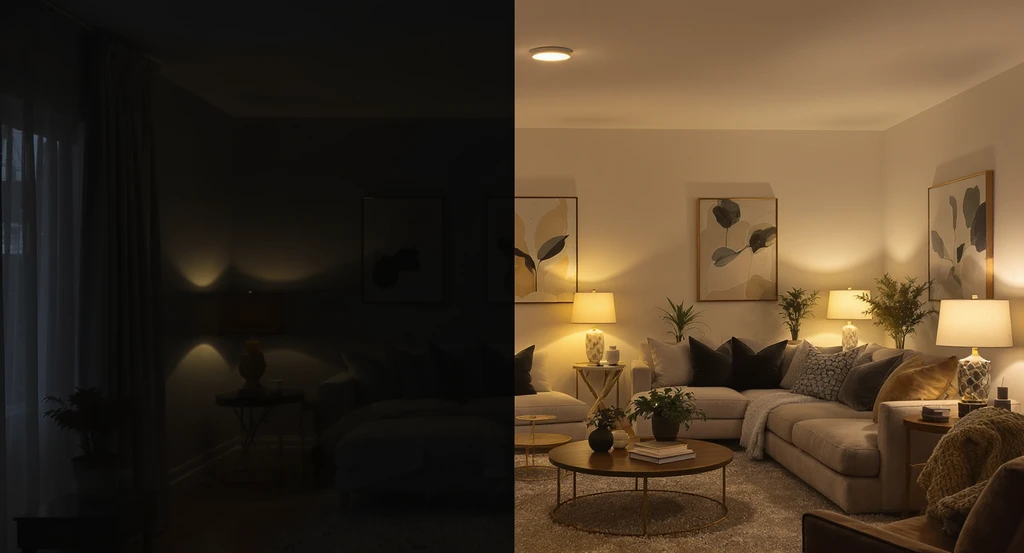
Layered lighting, as visualized with ai home design solutions for dark rooms, brightens living spaces more effectively than a single light source and supports how ai visualizes brighter room makeovers.
Rooms that only use one overhead fixture tend to look shadowy, especially at the ends and corners. This usually starts as a cost-saving or convenience habit, but a single source can never evenly light a complex space.
Easy fix: Don't rely on one ceiling light. Use floor lamps, table lamps, and wall lighting to brighten dark corners. Learn why lighting layouts matter in our post about the crucial role of lighting.
-
05. Ignoring the Impact of Too Many Dark Finishes
Mixing dark floors, cabinetry, and fixtures can build up a heavy, light-absorbing environment, even if each finish looks attractive alone. This often happens when several dark finishes are used together without enough lighter elements to balance them.
Correction: Break up dark elements with lighter paint, rugs, reflective accents, or natural wood. Contrasting surfaces increase perceived brightness and help distribute existing light more effectively. If you’re unsure where to start, try swapping or layering in one lighter item first and observe the effect.
-
06. Not Leveraging Mirrors to Reflect Light
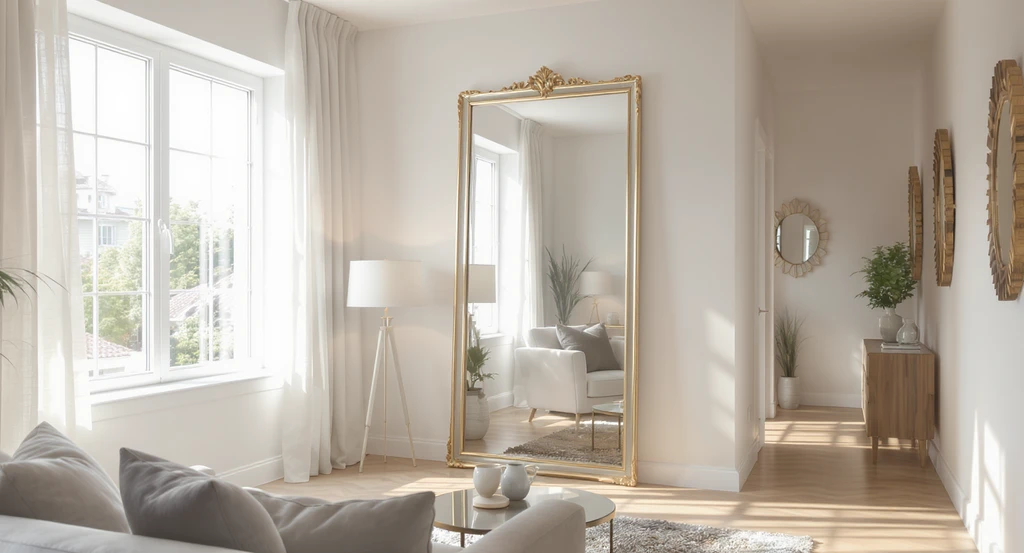
Strategically placed mirrors, as visualized by ai home design solutions for dark rooms, reflect natural and artificial light to brighten interiors. See how virtual staging ai enhances room brightness and solves lighting issues.
Mirrors are one of the easiest ways to make a room feel brighter because they reflect both natural and artificial light. Many times, they’re placed purely for utility (e.g., over sinks), not to capture or spread light.
Best practice: Place mirrors across from windows or adjacent to lamps to double the effect of incoming light. Using mirrors in narrow areas (like hallways) can also make these zones feel less closed-in. As we explain in our guide to transformative room fixes, the strategic placement of mirrors is one of the easiest and fastest ways to correct visual darkness.
-
07. Using Flooring That Absorbs Rather Than Reflects Light
Rooms with dark hardwood, tile, or carpet can feel more closed in. This is usually overlooked because the impact of floors on brightness isn’t immediately obvious during design.
Correction method: Add large, light-colored rugs or choose finishes with subtle sheen. The goal is to break up dark surfaces so they reflect as much light as possible. Lighter flooring, even just as an added rug or runner, visually expands the space without major renovations.
-
08. Lack of Reflective Surfaces and Textures
If a room feels dull or dark, it may need more surfaces that reflect light, such as glass, mirrors, or metallic accents. Overuse of matte, textured, or absorbent finishes can lead to a deadened visual effect even when spaces are theoretically well-lit.
Correction principle: Add accents in polished metal, glass, mirrored, or lightly glossy finishes. This can be as simple as a metallic tray, a glass lamp base, or a shiny side table. Layering in several small reflective details has a bigger combined impact than you might expect.
-
09. Does Your Room Get Enough Natural Sunlight?
The direction your windows face strongly affects how much quality daylight you receive. North-facing rooms, for example, will always feel cooler and dimmer than south-facing areas. This often leads to mismatched expectations and repeated decorating frustration.
Correction logic: Adjust the color palette, lighting temp (warmer bulbs for north, cooler for dark corners), and function according to orientation. Recognize the permanent sunlight pattern of each space and plan your brightness solutions around that baseline.
-
10. Too Much Clutter Can Make a Room Feel Dark
Packed consoles, overflowing shelves, or too many collectibles crowd eye movement and block both real and perceived light paths. This is especially common when storage needs outweigh design priorities.
Correction checklist:- Remove or contain excess decor (aim for 20–30% reduction).
- Keep surfaces visibly open, especially near windows.
- Arrange furniture and decor to open lines of sight through the room.
-
11. Why Does My Room Feel Dark Even With the Lights On?
Even well-lit rooms can feel dark if they lack visual clarity. If a space is cluttered, badly proportioned, or lacks contrast, the mind interprets the area as shadowy or heavy. This typically happens in multipurpose or temporary setups where design is secondary to utility.
Correction focus: Balance out shapes and create clearer pathways. Use contrast, light against dark, to guide the eye and highlight focal points. Even small styling changes can shift your perception from cave-like to inviting.
-
12. How a Brighter Room Would Look Before You Make Changes
A frequent issue is not knowing what to change first. Many homeowners worry about wasting money on paint or furniture, unsure if it will actually brighten a room.
Now, using REimagineHome AI or similar AI visualization tools, you can preview wall color, furniture swaps, additional lighting, or scaled-back decor before committing. This reduces risk and speeds up the process of making the room brighter and balanced. According to our article on using AI home design solutions for tricky layouts, previewing your room’s potential often reveals options you may not have considered.
Frequently Asked Questions: Brightening Dark Spaces
Why is my house dark even with large windows?
Dark paint, oversized furniture, heavy curtains, and relying on only one light source are common culprits that overpower even abundant natural light.
Do I always need to add more ceiling lights?
No. Layering light at multiple heights (ambient, task, accent) and adjusting bulb temperature often works better than simply adding fixtures.
Will mirrors really make a difference?
Yes, especially when placed across from light sources or windows; they amplify both natural and artificial light.
What’s the fastest way to brighten a room?
Start by replacing heavy curtains, decluttering, using lighter wall paint, and adding layered lighting.
How can AI help with brightening rooms?
AI-powered design tools allow you to preview changes—like wall colors and furniture—before buying, increasing confidence and accuracy.
How to Make a Dark House Feel Brighter
A dark-feeling home is almost never a one-problem scenario. Color, scale, window treatments, clutter, surface quality, and light sources all play a role in how open and bright (or dim and crowded) a room feels. Fortunately, most darkness issues can be solved step by step, with paint, lighting, decluttering, and strategic use of reflective surfaces, no renovation needed. Visualizing changes before you start removes uncertainty and helps you focus on the most effective corrections.