Where to Place Play Structures in a Soccer-Ready Backyard: A Decision Logic Using Reference Images
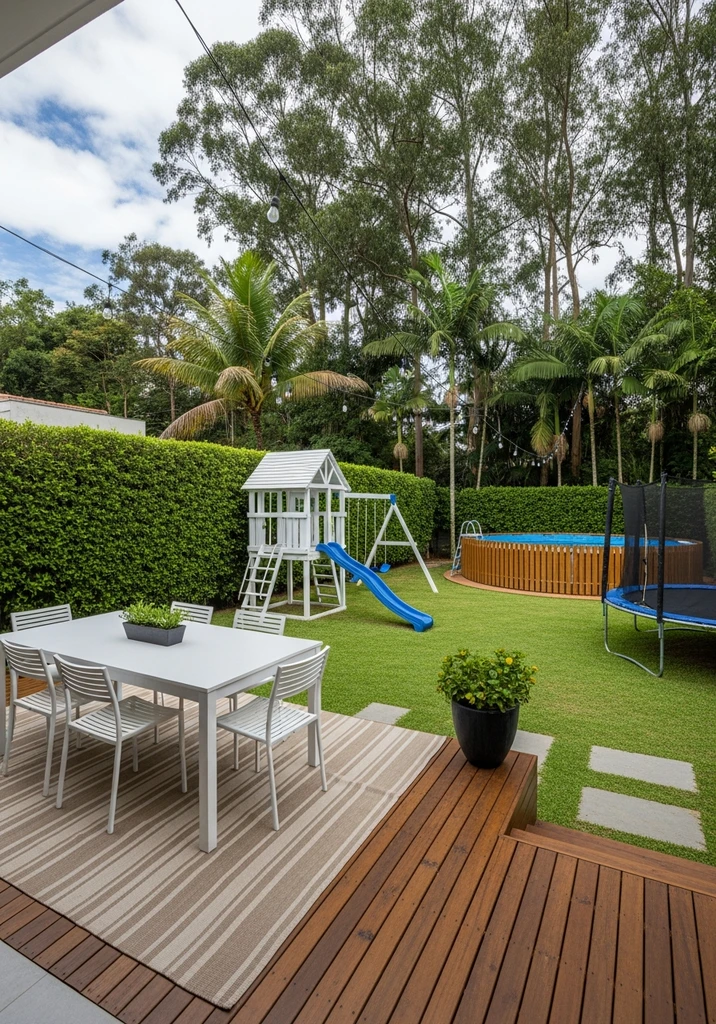
Deciding Play Structure Placement Without Losing Open Lawn
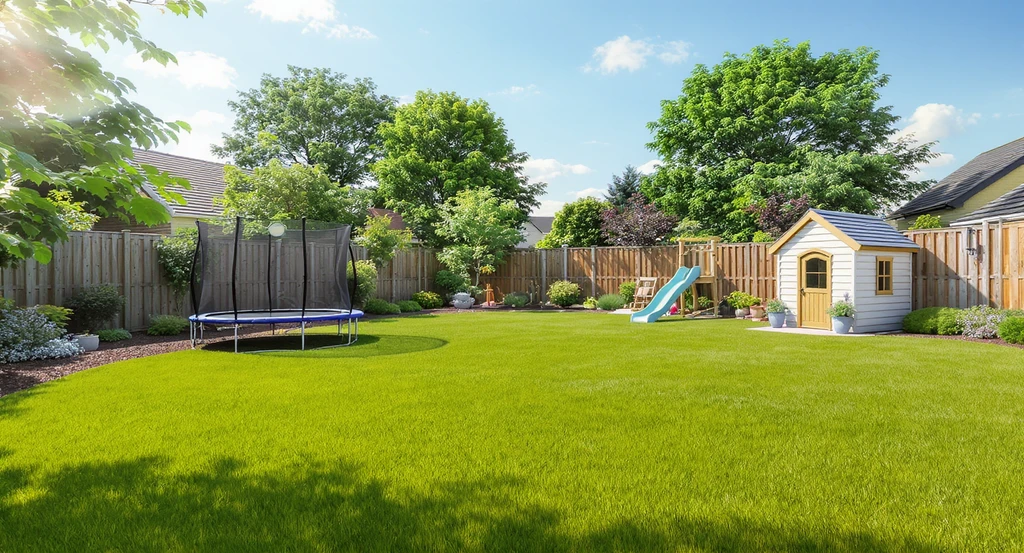
Best backyard layout ideas for play equipment: Place the trampoline in the back-left corner and the cubby house with slide along the rear boundary to maximize open space for sports and boost curb appeal.
The best placement for a cubby house with a slide and a trampoline in a backyard that doubles as a soccer field is to locate both along the rear and far side boundaries, minimizing intrusion into the central lawn. The trampoline should be tucked tightly into the back-left corner, with the cubby house and slide positioned just in front—keeping the main grass space open and adaptable.
This placement system ensures that active play features don't obstruct sport zones or sightlines. By using reference images and AI-powered visual repositioning, you can preview different layouts, optimize for play and resale, and avoid common mistakes such as cramping the yard or blocking sunlight. This list explains how visual planning and spatial reasoning can help you choose with confidence.
-
The REimagineHome AI Evaluation System
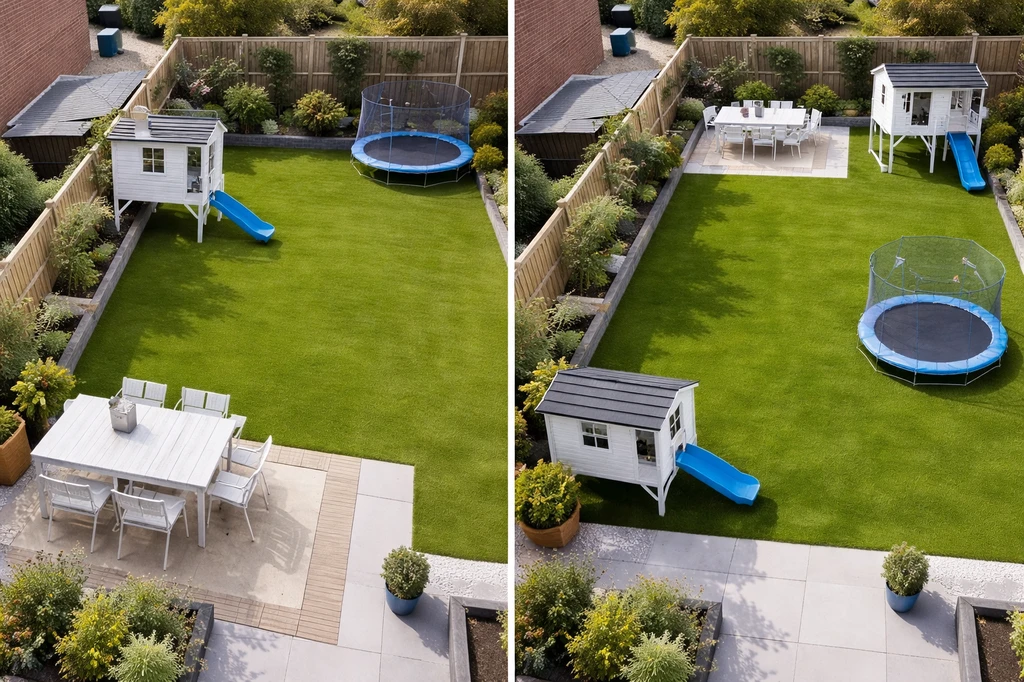
Using real backyard layout ideas with play equipment, this visual guides how to design a family-friendly backyard by showing the best trampoline and cubby house placement tips to preserve open space for backyard sports and curb appeal.
Our assessment uses real backyard photos and style reference images to guide AI visualization, showing you exactly how each layout change affects field space, play function, and visual balance. This decision structure lets you move structures digitally and see how placements impact traffic flow, open areas, and long-term usability before you lift a shovel. Key criteria include central lawn preservation, clear access, and realistic lighting, all referenced against multiple visual scenarios.
Expert Insight
A family in a soccer-loving household debated where to place their trampoline and slide set. They used REimagineHome AI's reference image tool to virtually test every spot—avoiding blocking their daughter's soccer practice field—and ended up choosing a layout they’d never have considered otherwise.
-
1. Tuck the Trampoline into the Farthest Back-Left Corner
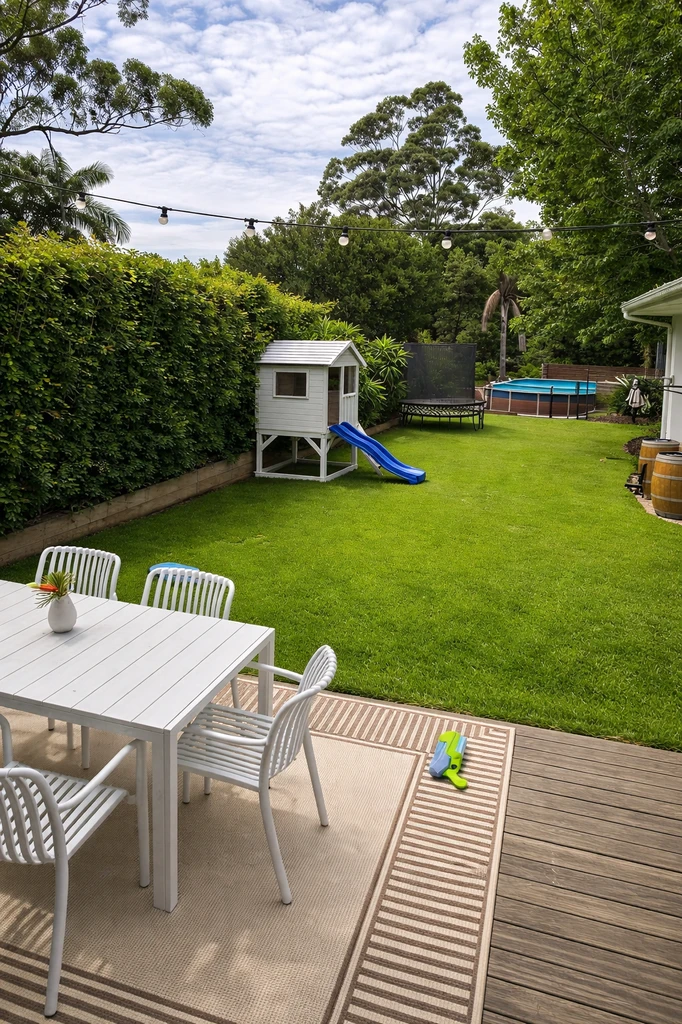
Smart backyard layout ideas show how tucking a trampoline into the back-left corner preserves open space for soccer while integrating kids’ play equipment attractively.
Positioning the trampoline snug in the back-left corner, closely against the fence and out of pathways, uses dead space and minimizes lawn loss. This ensures that soccer play remains unbroken and maximizes guest circulation. It works when the corner receives adequate light and the area is level. It fails if the corner is too shady, muddy, or exposed to hazards like low branches. Spatially, it redirects active zones away from high-traffic lawn and improves sightlines from the house. As shown in our side yard play space guide, boundary placement often unlocks multi-use yards without sacrificing usability.
-
2. Place the Cubby House and Slide in Front of the Trampoline, Near the Back Boundary
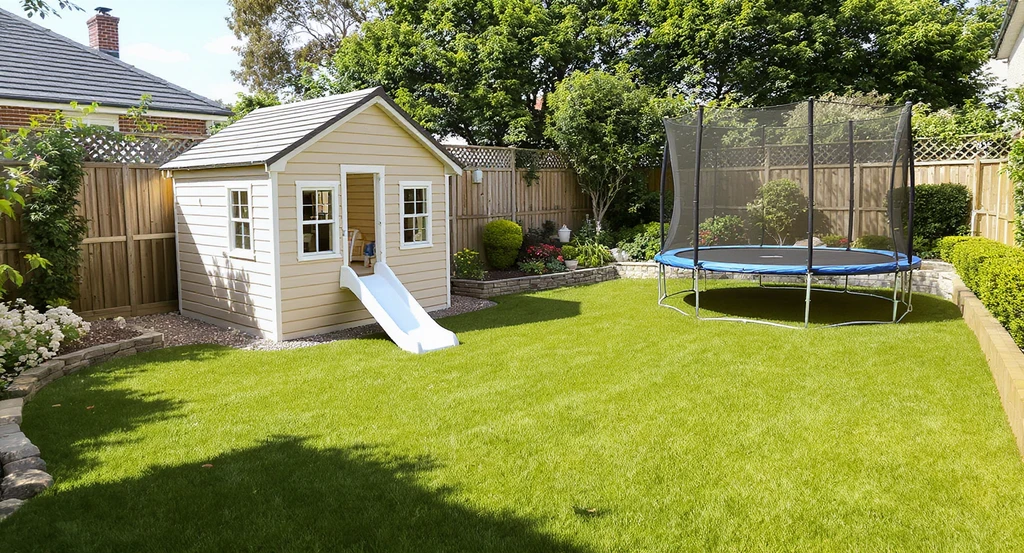
This backyard layout demonstrates how to place a cubby house and slide near the fence, just forward of the trampoline, to maximize open lawn for soccer and ensure best practices for integrating kids play structures with family-friendly curb appeal.
Set the cubby house flush along the fence line, just forward of the trampoline. This minimizes intrusion while keeping play features visible and accessible. This works best when the slide faces into the yard, utilizing run-off space safely. It fails if the cubby encroaches into garden beds or obstructs views. The placement supports natural play supervision, keeps the open lawn uninterrupted, and aligns sunlight exposure for the slide. The visual logic is similar to boundary-focused curb appeal strategies discussed in our curb appeal article, where clustering features on boundaries preserves function and aesthetics.
-
3. Keep the Central Lawn Free for Flexible Use
The core decision insight is to preserve the majority of the grass field. Avoid scattering play equipment across the main lawn, as this fragments space and complicates active sports. This system works for families who value open play, soccer matches, or gatherings. It fails if too many items creep inward or temporary features (like blow-up pools) encroach on the field. Spatially, this protects optimal traffic flow, maintains resale flexibility, and keeps the view uncluttered—a key factor in backyard value, as proven with AI visualization tools in our hardscaping feature.
-
4. Reference Images Streamline Layout Decisions
Using inspiration photos—whether from Pinterest, past projects, or saved hotel room images—lets you anchor your vision for style, safety, and color before permanent changes. Reference images empower the AI to match colors, textures, or playground types while retaining the unique features of your yard. This method avoids design regret and supports precise communication. It works when you can articulate your style cues and boundaries. It fails if reference images are mismatched for scale or climate. This strategy ensures the final layout functions both for daily family use and long-term property appeal.
-
5. Optimize Placement by Simulating Multiple Configurations
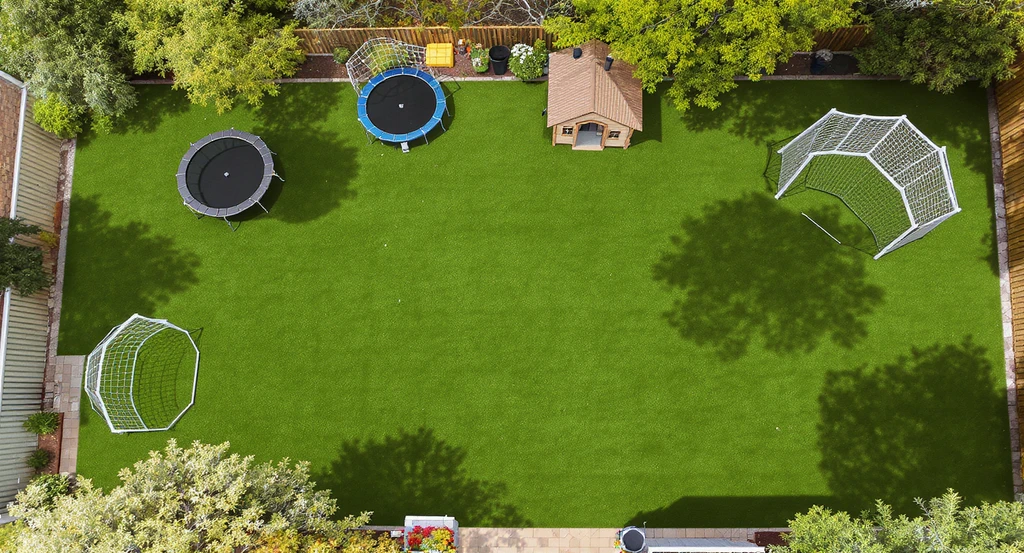
Simulating multiple backyard layouts illustrates optimal play structure placement, helping you design a family-friendly backyard while preserving open space for sports and maximizing curb appeal. Discover how to integrate kids play structures and use digital previews for the best trampoline and cubby house placement.
The major non-obvious insight is the value of iteratively testing many possible layouts, not just one. Digital previews allow you to see the effects of moving the cubby or trampoline to the left, right, or behind other structures—precisely as in the iterative scenarios above. This lets you weigh trade-offs between shaded areas (good for summer, too gloomy in winter), access to the deck or pool, and visual privacy. A simulation-driven approach typically reveals misjudgments in scale or shadow that are invisible until you preview the arrangement realistically.
-
Trade-Offs and Spatial Reasoning: What to Watch
Push play structures too far into the lawn, and you lose open field space. Huddle them too close to boundaries, and you might create shaded, damp, or less-inviting play spots. Placement affects sunlight hours, garden maintenance, and lawn wear. Visualizing each layout prevents costly rework and supports confident decision-making. Think about sightlines from key vantage points (kitchen, outdoor dining, pool) for both safety and resale sensitivity.
-
Definition: Reference Image Placement in AI-Powered Backyard Design
Reference image placement in AI-powered design occurs when specific photos such as play structure styles, colors, or furniture are provided alongside a user's real backyard image. The AI uses these references to generate realistic, stylistically consistent renderings. Many believe this is simply about copying a look, but in reality it synchronizes personal taste, safety needs, and actual site constraints for tailored design solutions and minimized regret.
Visualization Scenario
Imagine uploading your own backyard photo and seeing your cubby house and blue slide instantly repositioned by the AI—first along the hedge, then back by the pool fence, the trampoline shrinking and shifting corners—in real time. With every change, you spot how much soccer field you retain, and confidently decide before buying a single set.
Frequently Asked Questions About Play Structure Placement in Active Backyards
- What is a reference image in backyard design?
- A reference image is any photo—such as a saved Pinterest shot, previous design, or product detail—that guides the AI to match style, size, and layout preferences during a virtual remodel. This ensures the design fits your yard and meets your expectations.
- Will perimeter placement affect resale value?
- Yes. Keeping the bulk of open lawn improves buyer appeal, as families value flexible outdoor space over overcrowded yards. Boundary placement preserves future options without making play structures the dominant feature.
- How do I test different layouts before building?
- Upload your yard photo and any reference images to the ReimagineHome AI tool. You can quickly preview several arrangements of play features, optimizing the layout for both play and openness without any physical work.
- Does placing a trampoline in a shady corner create issues?
- Potentially. While boundary placement is efficient, too much shade may make equipment slippery or prevent the grass underneath from growing well. Preview the area’s sunlight pattern before finalizing the spot.
- Do I need reference images for good results?
- No, they are optional. You may simply describe your preferences in words. However, visual references improve the accuracy and realism of the AI’s suggested layouts.
Confident Layouts Start with Visualization and Reference Images
Placing a cubby house and trampoline along the yard's edges—back-left corner for the trampoline, against the boundary for the cubby—protects open play zones and optimizes both safety and resale. Uploading reference images to REimagineHome AI accelerates smart decision-making and saves your lawn from unnecessary clutter. Consider using the tool to preview every scenario and boost your confidence before any ground is broken.