5 Keys to Buying Furniture That Feels Right Every Time
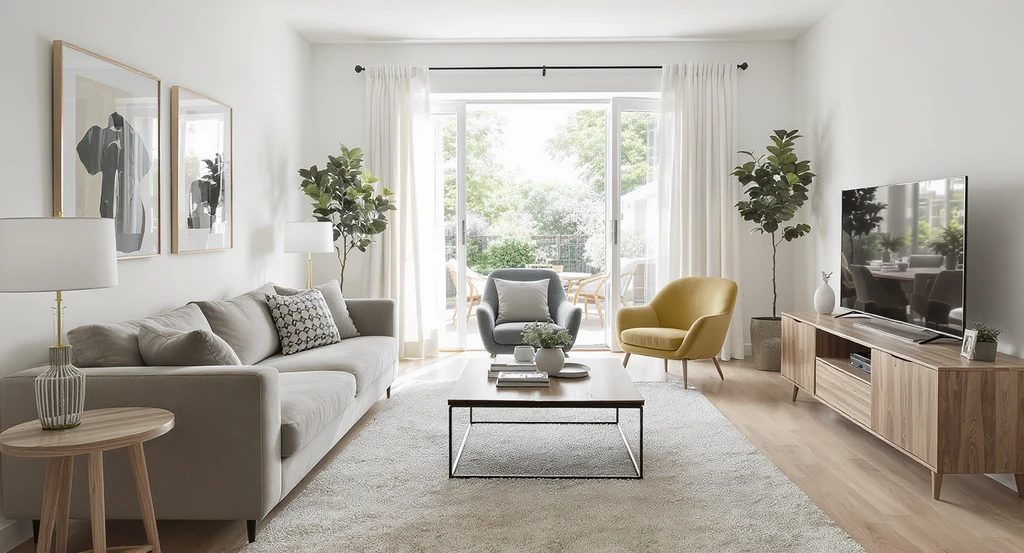
-
01. Prioritizing Looks Over Comfort
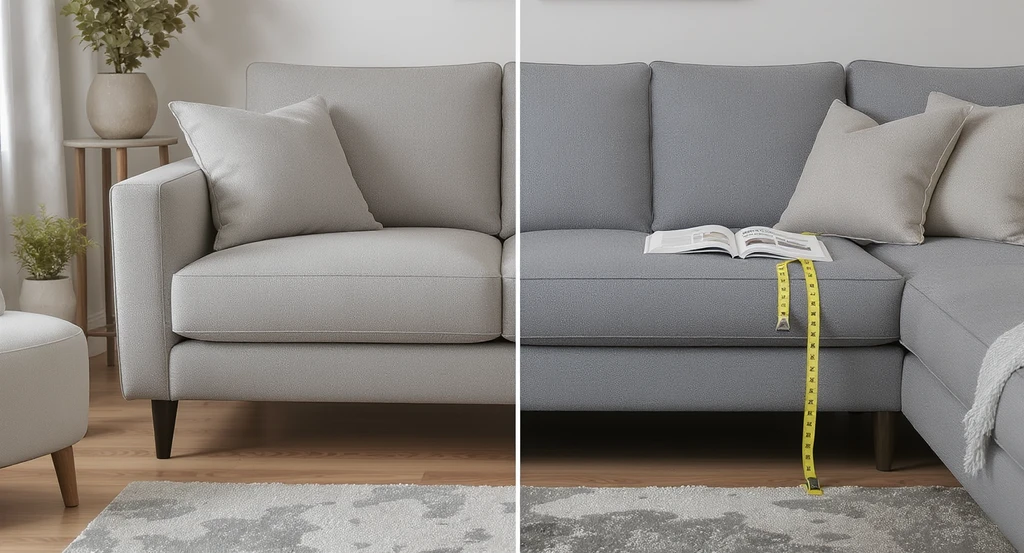
Avoid ai home design regrets by comparing furniture comfort and style before purchase. Learn how to choose durable ai recommended furniture and prevent buyer’s remorse with ai home tools through effective visualization and measurement.
The most common regret is buying furniture based on appearance rather than how it feels or functions. Stylish low-profile sofas, elegant accent chairs, or structured benches can look great in photos but turn out to be uncomfortable for daily life.
This happens because buyers are often drawn to showroom displays or online images without testing for seat depth, back support, or cushion firmness. To prevent discomfort and purchase regret:
- Always sit and test seats for comfort, not just appearance
- Check that seat depth and height work for all expected users
- If shopping online, look for specific comfort reviews and clear descriptions, not just style shots
For more on why comfort beats appearance, see our advice in common sofa buying mistakes to avoid.
-
02. Impulsive Scaling and Sizing Errors
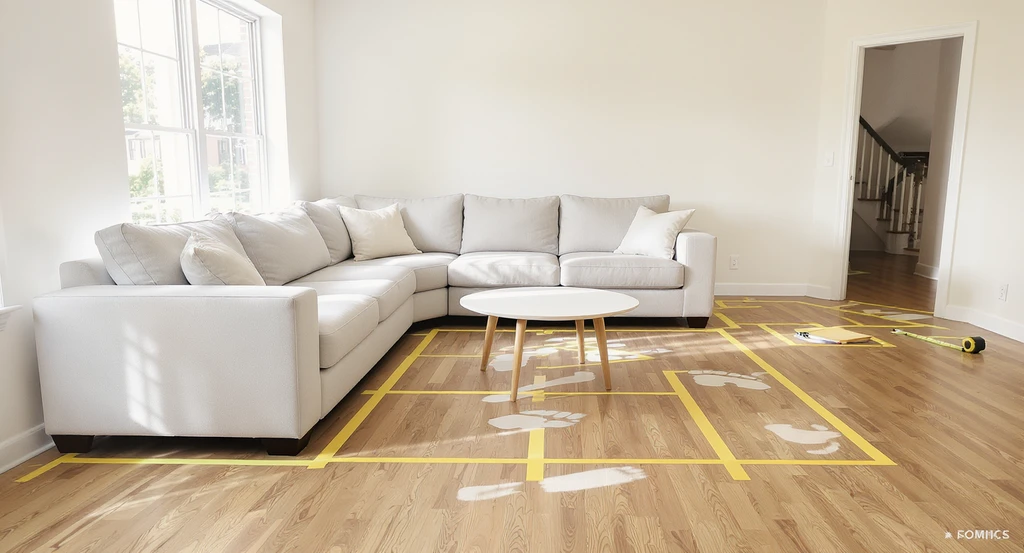
To avoid ai home design regrets and common mistakes with ai room layouts, use ai visualization tools to map and measure furniture footprints before buying, ensuring a balanced and practical fit in your space.
Many regrets come from buying furniture that simply doesn’t fit the space—either crowding the room or looking undersized. Large sectionals and deep sofas can overwhelm a living area, while tiny coffee tables leave layouts feeling unbalanced.
This mistake is often due to skipping critical steps like measuring doorways or taping out furniture footprints. To correct this:
- Measure twice before buying: room dimensions, doorway widths, stairwells, elevators, and ceiling height. Many furniture returns happen because items fit the room but cannot reach it.
- Use painter’s tape to map out footprint on the floor
- Confirm clearance for walking paths (ideally 30–36 inches around large pieces)
Improvements in REimagineHome AI visualization tools now let you preview scale and fit in your room before you buy, a direct way to avoid the spatial regret detailed in our guide to furniture store regrets.
-
03. Choosing the Wrong Fabric for Your Lifestyle
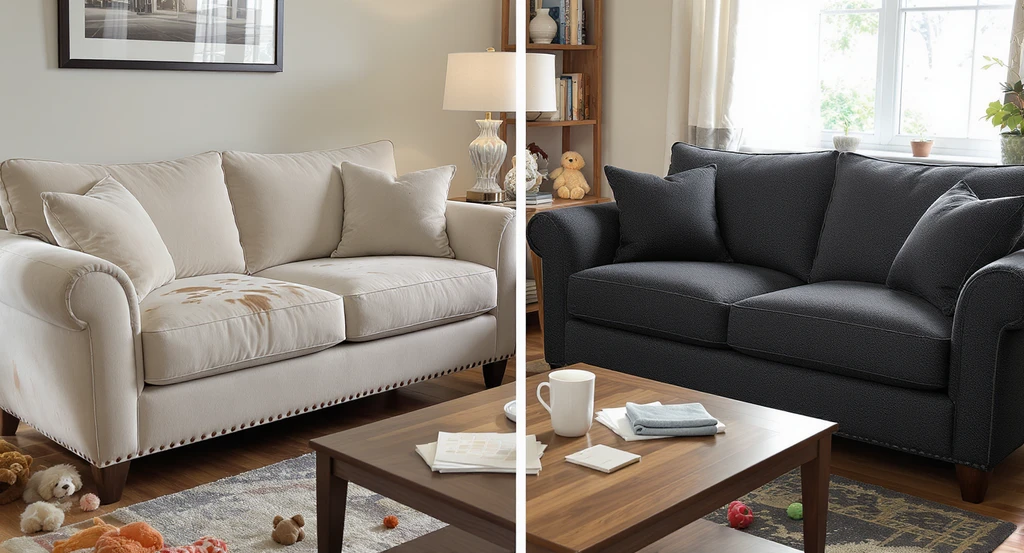
Realistic visualization of how choosing performance fabrics for sofas can prevent buyer’s remorse and ai home design regrets to avoid. See common mistakes with ai room layouts and learn how to choose durable ai recommended furniture that fits active lifestyles.
Showroom or online images often favor trending fabrics, velvet, linen, light colors, but these materials can be difficult to maintain in a busy household. Regrets mount quickly when stains, pet claws, or wear appear within months of use.
This happens when durability and cleanability are ignored for the sake of style. To avoid this:
- Always check for a high rub-test or durability rating on upholstery
- Opt for stain-resistant or easy-clean materials for high-use items
- Match material choices to your lifestyle, kids and pets require performance fabrics
See expert advice on what to skip and which alternatives last longer in our furniture materials guide.
-
04. Buying Fast Furniture That Lacks Durability
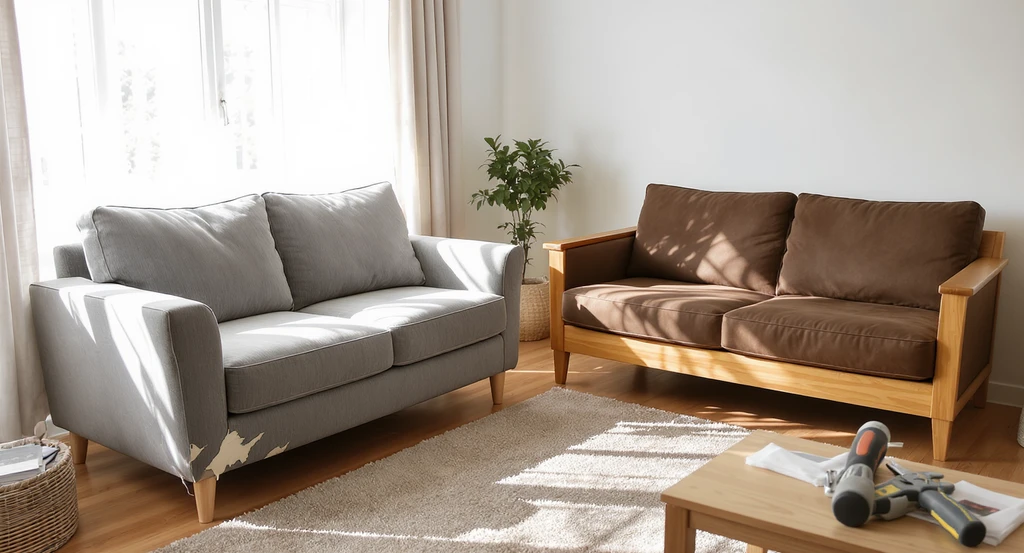
Spotting common mistakes with ai room layouts, this image compares a flimsy fast furniture sofa and a sturdy, durable solid wood piece—helpful for preventing buyer’s remorse with ai home tools.
Purchasing inexpensive and quickly assembled pieces to fill a room can feel like a solution, but these items are a common source of early replacement and waste. Frames may wobble, finishes can peel, and repairs are rarely cost-effective.
The problem usually arises when buyers rush to furnish a new home or prioritize price over integrity of construction. To correct this:
- Check for solid wood or engineered frames, not just veneers
- Test joints and assembly, does it wobble or feel flimsy?
- Instead of asking "How much does it cost?" ask "How long will it last?" A sofa that lasts ten years often provides better value than one that needs replacing after two or three years.
As highlighted in real-life homeowner lessons, a slightly higher upfront investment in quality prevents both hassle and redundancy down the road.
-
05. When the Delivered Furniture Doesn't Match Expectations
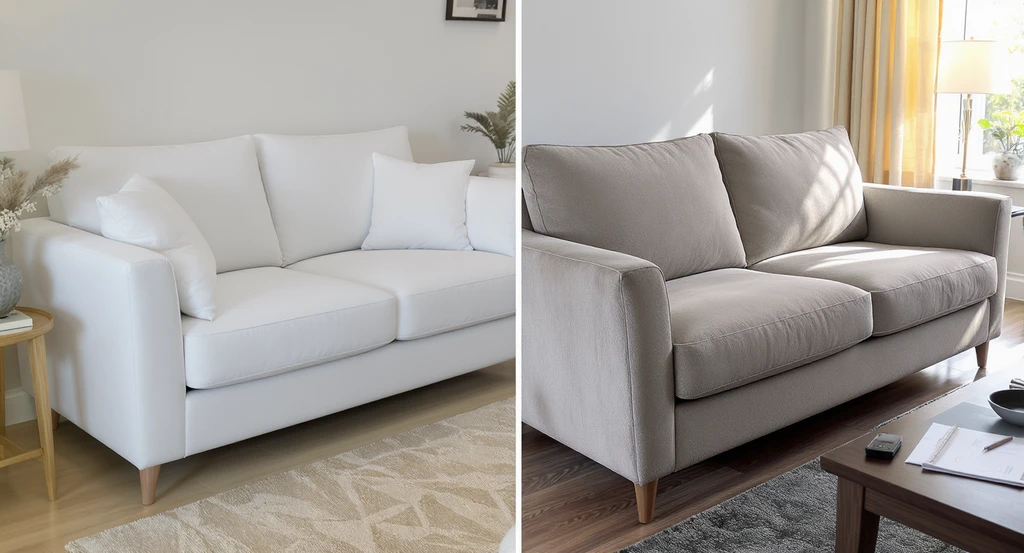
This hyper-realistic split image illustrates a common ai home design regret to avoid: differences between showroom and delivered furniture quality. Use ai visualization and model-specific reviews to prevent buyer’s remorse and ensure you choose durable, ai recommended furniture.
Many report that the delivered furniture does not match the quality, comfort, or finish of what was seen in the showroom. This is often due to differences in manufacturing batches, materials substituted for display, or vague warranty information.
To minimize this regret:
- Read brand and model-specific reviews, not just general ratings
- Ask about delivery versus showroom models, are there material differences?
- Clarify warranty policies before purchase
It’s a pattern explored in detail in furniture buying regrets shared by real homeowners.
Frequently Asked Questions
- What’s the single most common cause of furniture regret?
- Improper scaling—buying pieces that are too large or too small for the room, which disrupts traffic flow and overall balance. This is one of the most common furniture buying mistakes and is usually avoidable with better measurement and planning.
- Is durable furniture always more expensive?
- Not always. While solid wood furniture and high-performance fabrics may have a higher upfront cost, they often provide better long-term value by lasting significantly longer than cheaper alternatives.
- How do I preview how furniture will really fit?
- Use painter’s tape to mark furniture dimensions on your floor, or use a digital room visualization tool to see how pieces will fit and look in your space before making a purchase.
- Should I buy matching sets or mix and match?
- Mixing furniture styles often creates a more personal and curated look than buying a complete matching set. The key is maintaining balance through complementary colors, materials, and proportions.
Key Takeaways for Smarter Furniture Buying
Most furniture regrets come from overlooking comfort, scale, durability, or real-life use. A clear improvement checklist: Decide how furniture will actually be used. Measure both room and pathways. Choose materials suited to your lifestyle, and research both quality and warranty beyond the showroom. Use visualization tools or tape outlines to preview layout and fit. With these steps, you’ll spend more wisely, and enjoy your space longer.