How to Use 3D Tours for Fall Real Estate Showings
TL;DR
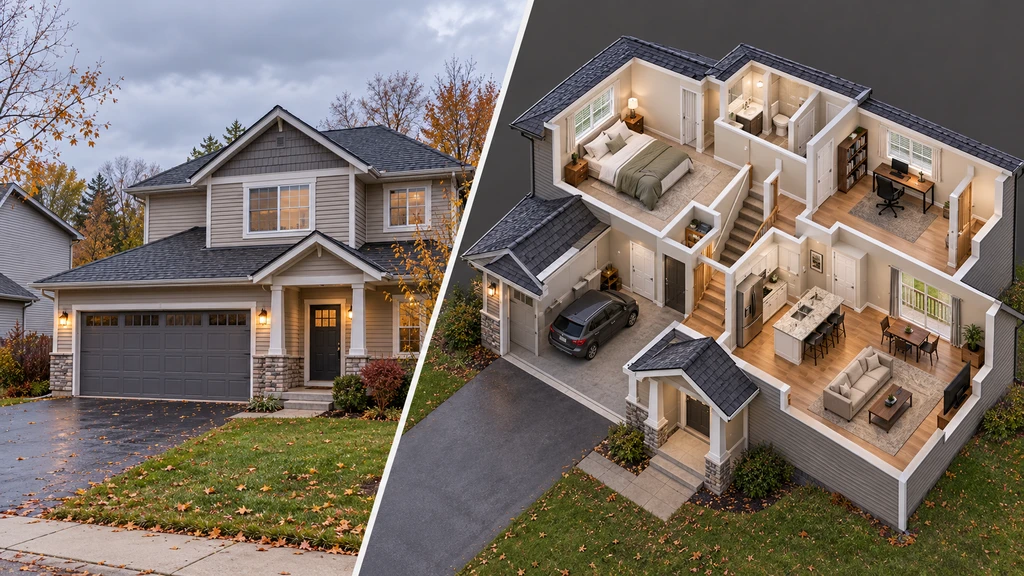
When weather makes a showing harder, do not send buyers more photos by default. First identify whether their question is spatial, factual, or sensory. Virtual tours can clarify layout and room flow.
Why Virtual Home Tours Are More Valuable in Cold Weather, But Not Always Enough
When a buyer asks for a virtual tour before driving through rain, snow, or early darkness, the real question is not, “How do I show them everything online?” It is, “What is stopping them from booking the showing?”
Most buyer questions are spatial, factual, or sensory. Spatial questions concern layout and room connection. Factual questions need verified details, such as a wall measurement. Sensory questions involve light, noise, smell, or condition. A virtual home tour for real estate agents is strongest for the first category, useful context for the second, and not proof for the third.
-
Classify the Buyer’s Question Before Choosing a Tour Format
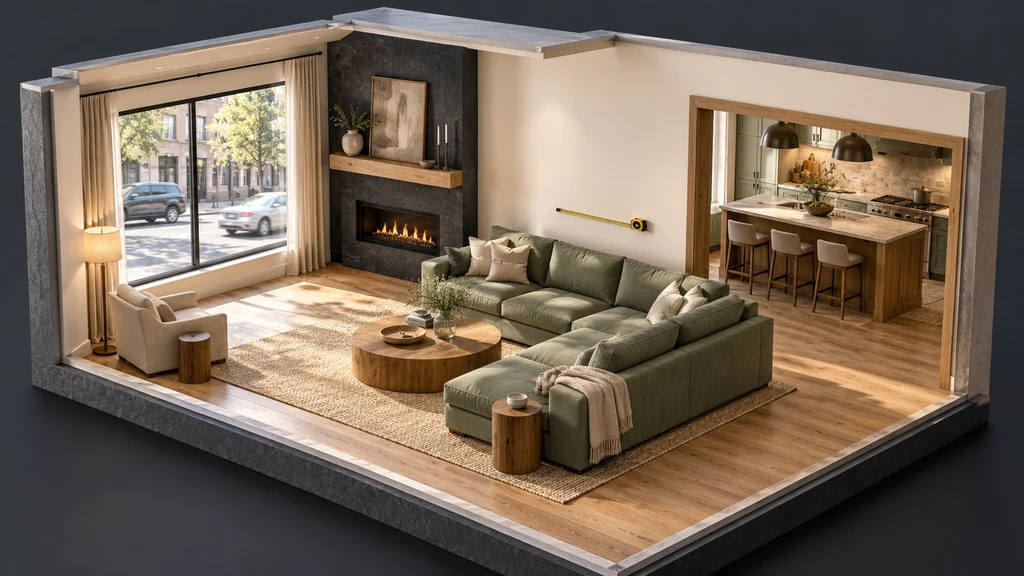
A 3D virtual home tour can clarify how a living room connects to the kitchen and whether furniture may fit, while noise and street conditions still need an in-person check.
Not every buyer needs more visuals; they need a better answer. When a buyer asks for more information before seeing a home, first ask: “What are you still trying to decide?”
Question type What the buyer may ask What helps remotely Best next step Spatial “How does the kitchen connect to the living room?” A continuous route video, floor plan, or a previewable 3D view of the selected space The buyer can shortlist or rule out the property Factual “Will our sectional fit?” Verified wall, passage, and room measurements Book a focused showing if fit affects the decision Sensory “Is the street noisy?” or “Does this room feel dark?” Current footage can provide context, but not proof See the property in person Use remote material for spatial questions. Use verified facts for factual questions. Do not treat either as a substitute for sensory or condition-based checks.
When a buyer needs clearer context on how selected rooms connect, a previewable 3D view can help them assess the layout before deciding whether to visit in person.
-
Send a Remote Decision Brief, Not a Larger Photo Folder
One common mistake is sending thirty extra images without answering the buyer’s actual concern. Instead, create a short remote decision brief.
- Route proof: Share one uncut clip showing the route the buyer asked about—for example, entry to kitchen or living room to primary suite.
- Constraint proof: Add a measured note or still image for every limitation the video cannot explain, such as a tight passage, shallow storage, low ceiling, or angled wall.
- Still verify in person: State what remains unresolved: exact fit, condition, noise, light, odor, or weather-hidden exterior details.
End the brief with one decision question: “Which is true: the layout question is answered, you need one verified fact, or you need to see the property in person?”
When the issue is unclear photo order, missing rooms, or a misleading wide-angle image, review our guide to common listing photo mistakes before sending additional material.
-
Show the Three Routes Buyers Would Test During a Real Showing
Show the Three Routes Buyers Would Test During a Real Showing
Buyers do not experience a property as isolated listing photos. They experience it through daily routes. Only show the route connected to the buyer’s blocked question; a buyer concerned about a home office does not need a long backyard walkthrough first.
- The arrival route: parking, path, entry door, coat storage, and first view into the home.
- The daily-use route: kitchen to living space, dining area, laundry, garage, patio, or backyard.
- The private route: main living areas to bedrooms, bathrooms, closets, and private work areas.
Show the relevant route in one continuous take. This reveals what stitched-together photos can hide: a kitchen island that narrows circulation, an office exposed to household traffic, or a bedroom that opens directly onto the main living area.
For guidance on presenting virtual tours clearly and transparently across listing platforms, read what Realtors need to know about virtual tours and MLS media in 2026.
-
Do Not Let Fall and Winter Weather Hide Important Evidence
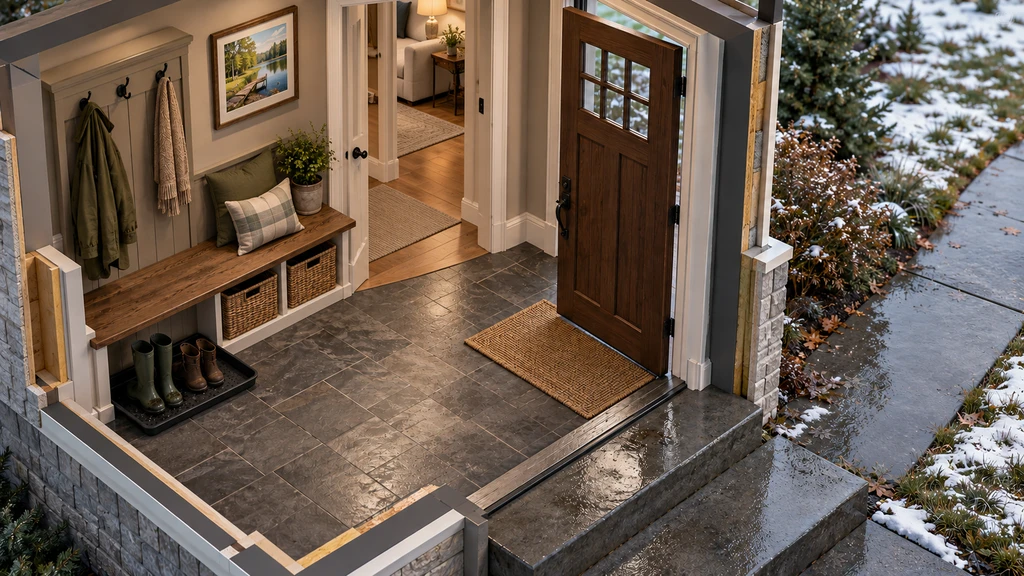
A cold-weather tour should show the complete arrival route—from the path and front door to storage and the first connection into the home.
Fall and winter conditions can hide property details that buyers would normally inspect during a showing. Do not quietly leave them out. Label what is visible now and what still needs an in-person review.
- Snow-covered or wet exterior: Show the current parking-to-door route. If you use an older yard or patio image, label the season and year clearly.
- Short daylight: Include a current late-afternoon view when a buyer asks about natural light. Do not rely only on bright daytime listing photos.
- Outdoor areas that cannot be judged today: State that a patio, drainage area, pool surround, garden, or yard grade needs an in-person review when accessible.
- Seasonal storage: Open the coat closet, mudroom, garage entry, or boot storage. These spaces matter more when wet gear and outerwear are part of daily life.
Never use an old seasonal image as if it shows today’s condition. If weather prevents a useful view, say so directly. That is better buyer qualification, not negative marketing.
-
Decide: Send More, Book a Showing, or Pause
If the buyer needs to know… Agent action Buyer outcome How rooms connect or how a route works Send a route video, floor plan, or a previewable 3D view of the selected space Shortlist or rule out remotely Whether furniture, storage, or access will physically fit Send verified measurements and identify what still needs checking Schedule a focused showing if fit affects the decision Whether the property feels quiet, bright, dry, private, or well maintained State honestly what current visuals cannot prove Wait for an in-person visit rather than pushing a decision This is the point of the remote tour: not to replace every showing, but to help the buyer make one clear next decision.
-
How Upcoming 3D Tools Could Help
While a guided video shows what the agent records, immersive 3D platforms allow buyers to change viewpoints and explore room relationships post-tour. ReimagineHome’s upcoming Photos to 3D experience aims to turn multiple photos into an explorable 3D model, letting agents answer layout and route questions better—even when buyers can’t tour in person due to weather. .
Virtual Home Tour FAQs for Real Estate Agents
1. Can a virtual home tour replace an in-person showing?
No. It can clarify layout and room connection, but it cannot verify property condition, odors, noise, exact fit, natural light at a specific time, or inspection concerns.
2. What should real estate agents show in a fall or cold-weather virtual tour?
Show the relevant arrival, daily-use, or private route; key storage; current exterior access; and any feature that weather prevents buyers from judging properly.
3. When should an agent book an in-person showing instead of sending more video?
Book a showing when the buyer needs to verify measurements, condition, light, noise, outdoor access, neighborhood feel, or a feature hidden by weather.
4. What is the best outcome of a remote property tour?
The buyer should reach one clear next step: rule out the property, request one verified fact, or schedule a focused in-person showing.
The Rule for Fall and Cold-Weather Showings
Use remote material for spatial questions. Use verified facts for factual questions. Reserve sensory and condition questions for an in-person visit. The buyer should leave with one clear outcome: rule out the property, request a measurement, or book a focused showing.
When a buyer needs to compare how selected rooms connect after reviewing an agent-recorded video, ReimagineHome’s upcoming Photos to 3D experience is designed to use several views of the same space to create a previewable 3D model. It can add spatial context, but it does not replace verified measurements, disclosures, inspections, or an in-person visit.
takeaways here...