11 Design Upgrades That Transform a Main Social Space Without Adding Clutter
TL;DR
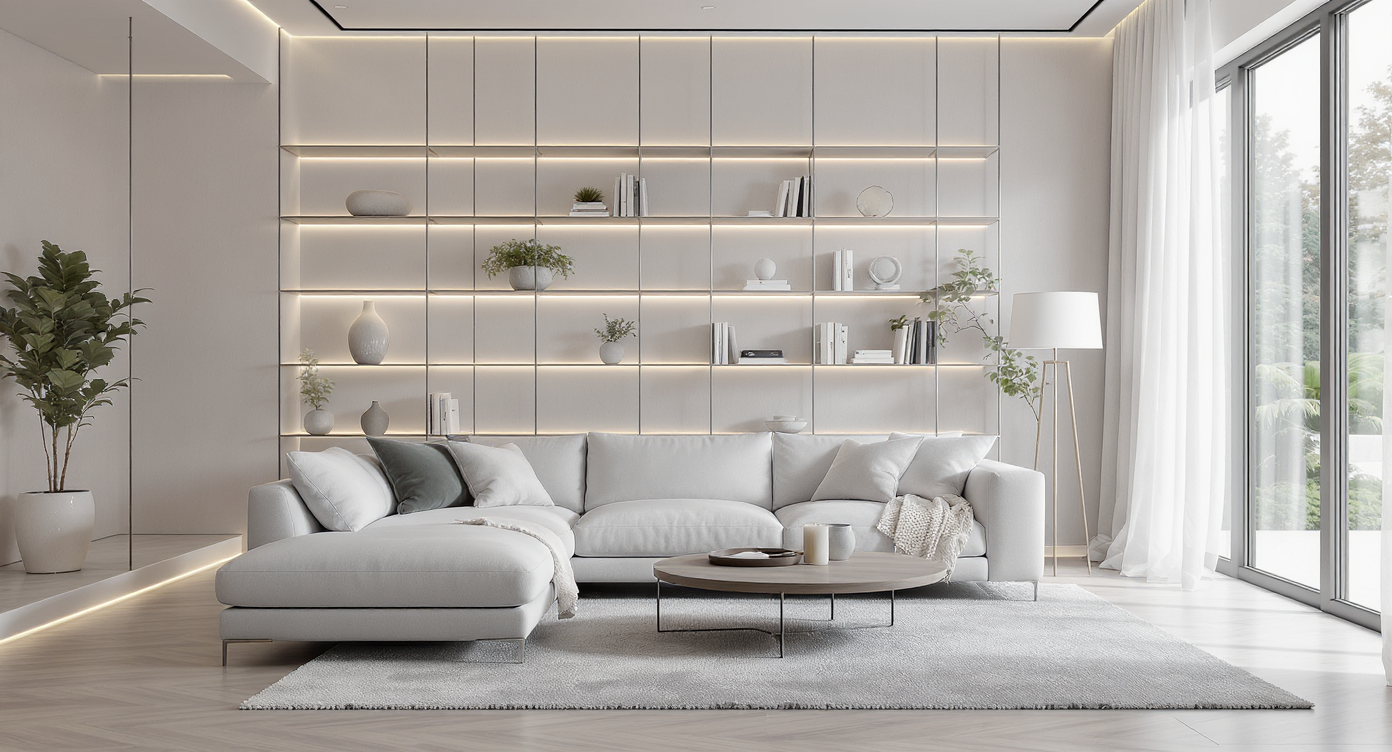
These 11 design upgrades will refresh your main social space, blending functional changes and subtle styling for a more inviting, cohesive look. From strategic color coordination to thoughtful use of soft furnishings and updated curtain placement, each idea adds warmth and character without overwhelming the room. Minimalists and style-seekers alike can benefit from nuanced, highly-impactful changes.
Why Small Changes Matter in a Main Social Space
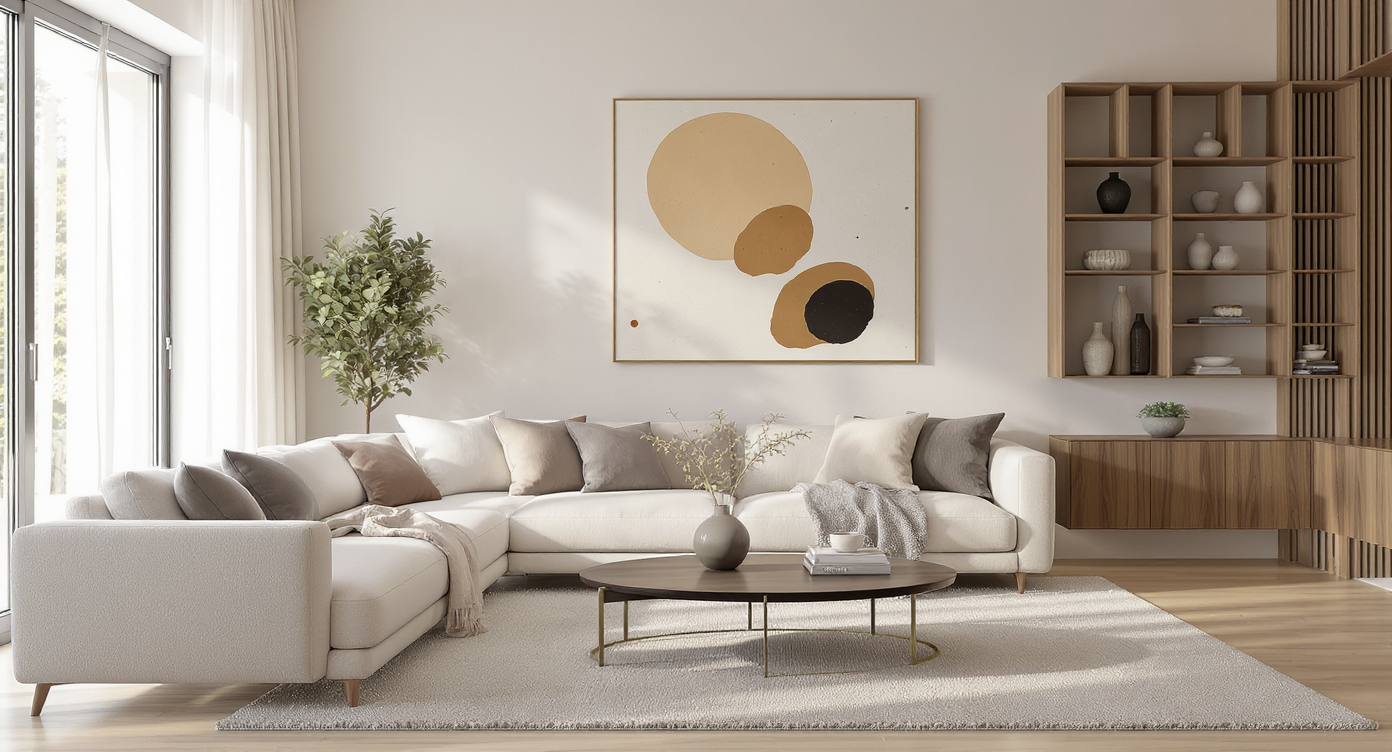
A thoughtfully styled minimalist living room that feels warm and welcoming without adding clutter, communicating inviting simplicity.
Redecorating a main social space might seem intimidating, especially for anyone who prefers a minimalist or clutter-free aesthetic. Yet, even the best-planned rooms can sometimes feel slightly off—missing warmth, depth, or personality despite thoughtful furnishings. The gap between a finished room and a truly inviting space is often closed by addressing subtle layout styling, soft furnishings, and balanced color coordination. This listicle explores accessible, high-impact changes that do not sacrifice simplicity but instead refine and enrich the everyday experience of your main gathering area. Whether you are settling into a new home or seeking to improve an existing one, these insights will guide you through edits that designers and homeowners find most rewarding.
-
1. Rethink Curtain Placement and Length
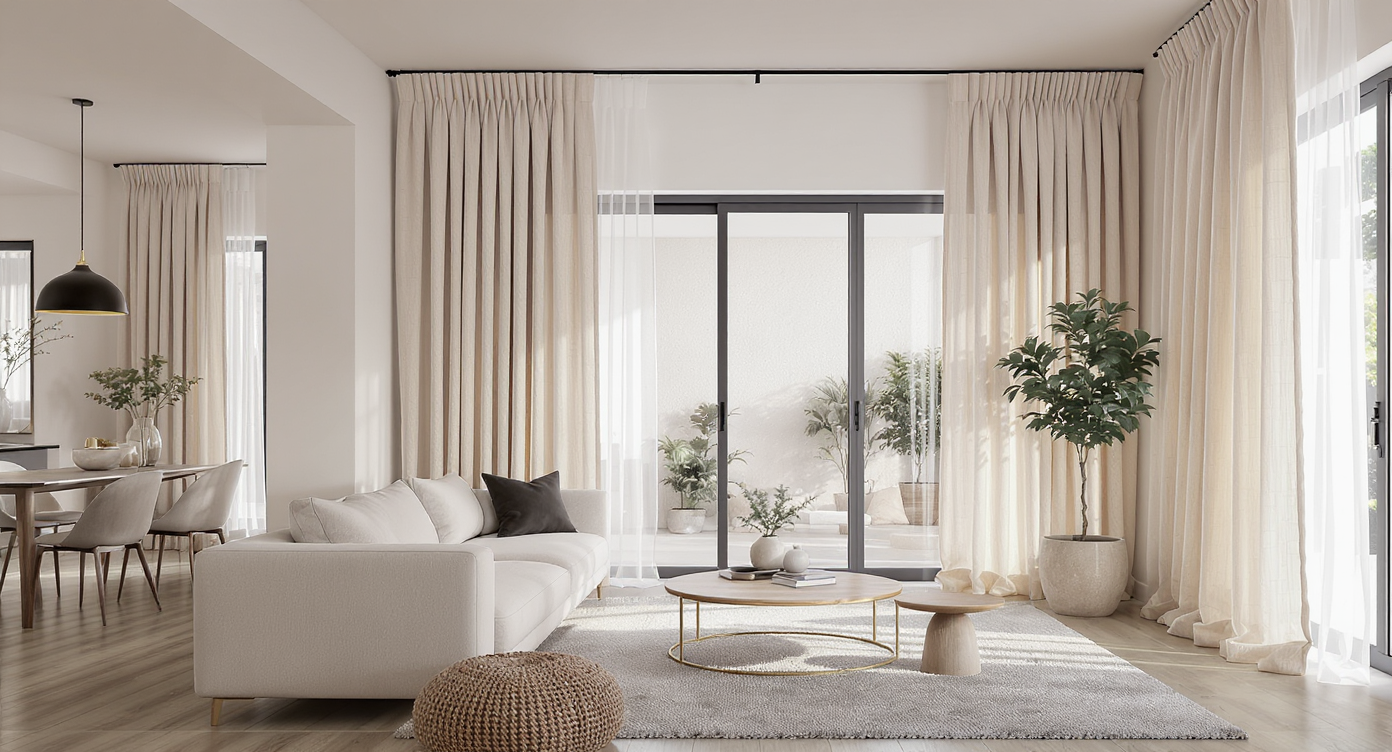
Elegant, high-mounted pinch-pleat linen curtains elongate the walls and unify adjoining living and dining zones without adding clutter.
One of the quickest ways to elevate a living room is to extend curtains higher on the wall and let panels gently graze the floor. This elongates the walls, making the ceilings appear taller and giving the entire main social space a more luxurious, intentional feel. Matching curtain panels across adjoining windows also promotes cohesion, bridging the gap between related zones—especially in open plans where the dining and lounge areas flow together. For added texture, consider switching to pinch-pleat or heavier linen panels, taking cues from tips on creating a serene but lively minimalist space in our guide to welcoming minimalism.
-
2. Anchor With a Proper Coffee Table
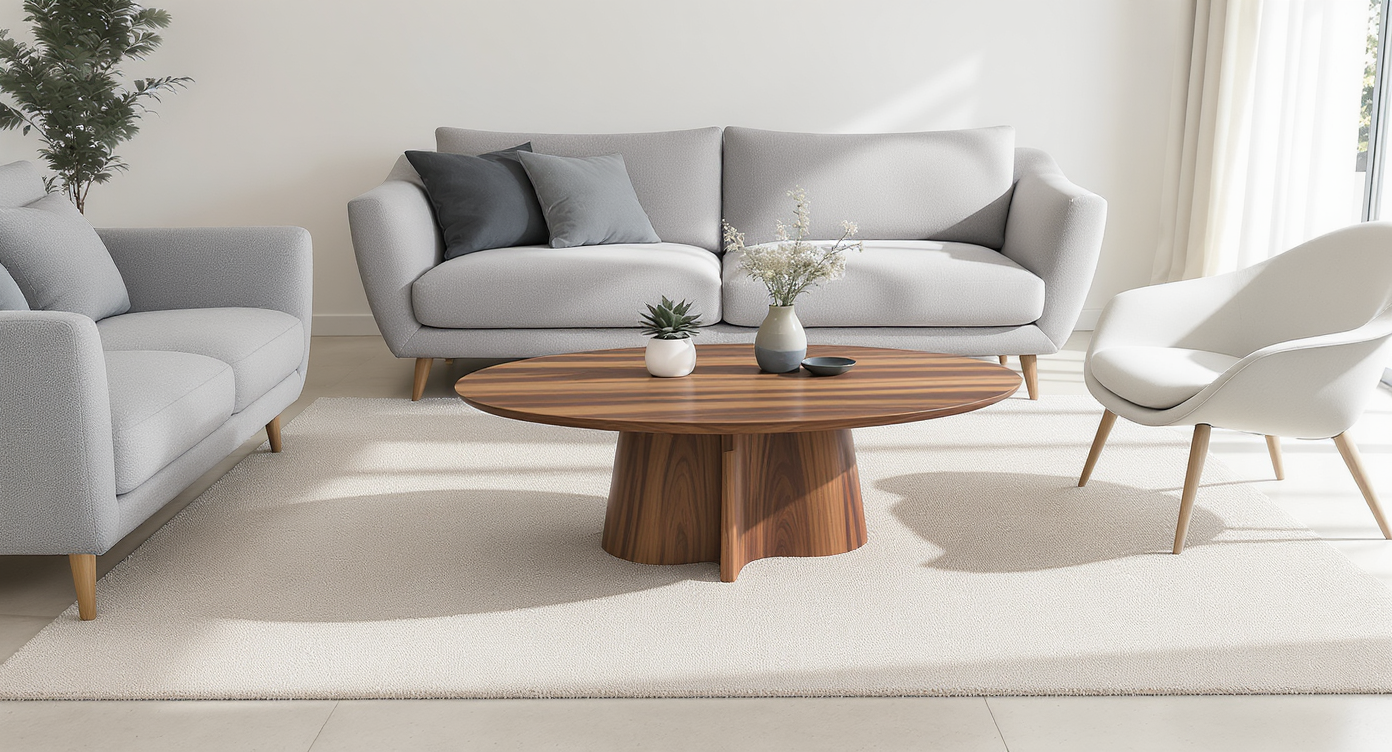
A central round wood coffee table grounds a clutter-free, minimalist living room and softens the layout for inviting conversation.
A central coffee table is often underestimated in layout styling, yet it serves as a visual and functional anchor for the main social space. Homeowners sometimes resist adding one to maintain open floor space, but a well-chosen table—ideally round or oval in smaller areas—softens lines, adds functionality, and encourages conversational flow. When selecting materials, balance out existing tones; for rooms heavy in grey or white, a wood or black finish adds grounding depth. Previewing different shapes and finishes virtually can streamline the decision, as seen with coffee table styling strategies.
-
3. Layer in Plants—Real or Faux—for Organic Warmth
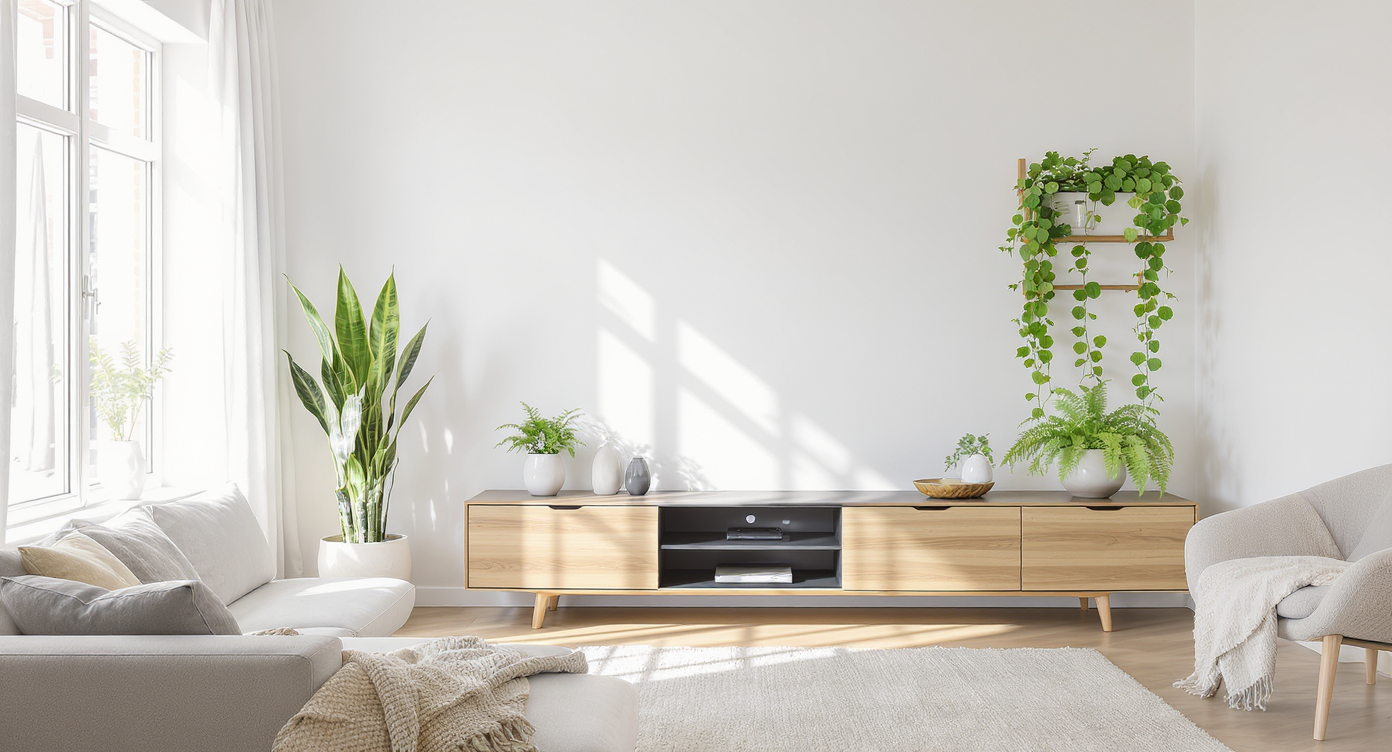
Strategically placed real and faux plants in a minimalist living room create warmth and texture without introducing visual clutter.
Plants instantly boost the mood and texture of a space, even for those hesitant about daily upkeep. Whether opting for easy-care varieties like pothos or snake plants, or high-quality faux foliage, the key is moderation and thoughtful placement. A tall floor plant in a bare corner, trailing greenery atop cabinets, or a compact plant on a media console brings dimension and softness to structured layouts. These small organic details avoid clutter while echoing designer advice for layering life into a room.
-
4. Edit and Upgrade Your Soft Furnishings
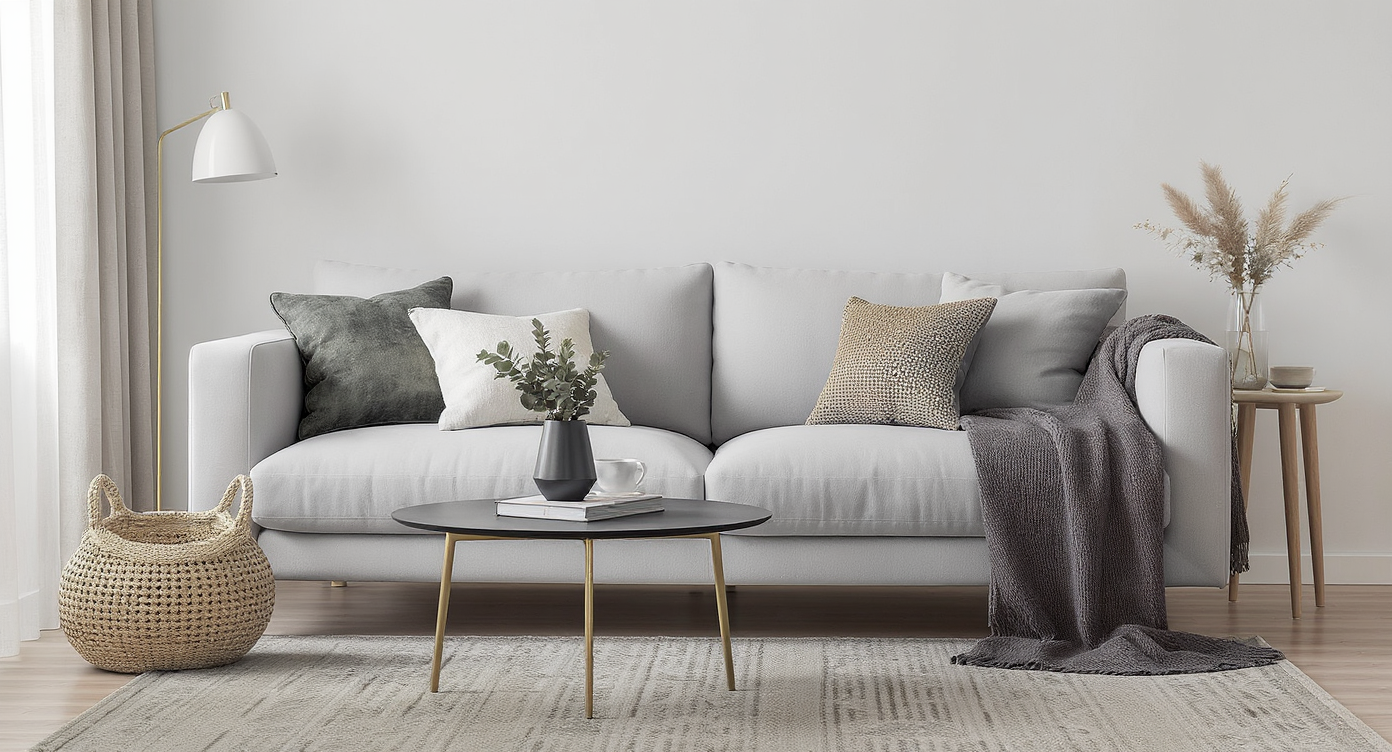
Varied textured and patterned soft furnishings—like throw pillows, rugs, and blankets—add visual interest and comfort to a minimalist living room.
Soft furnishings like throw pillows, blankets, and rugs remain some of the most flexible tools in color coordination and comfort. Swapping solid pillows for those with varied textures, patterns, or hues that complement existing artwork adds subtle complexity. Layering a patterned or warmer-tone rug can break up expanses of grey or white, while a draped, tactile blanket on the sofa increases visual interest without inviting mess. As explored in advice for cozy and cohesive living rooms small-scale changes in soft furnishings often yield outsized effect.
-
5. Unify With a Strategic Color Story
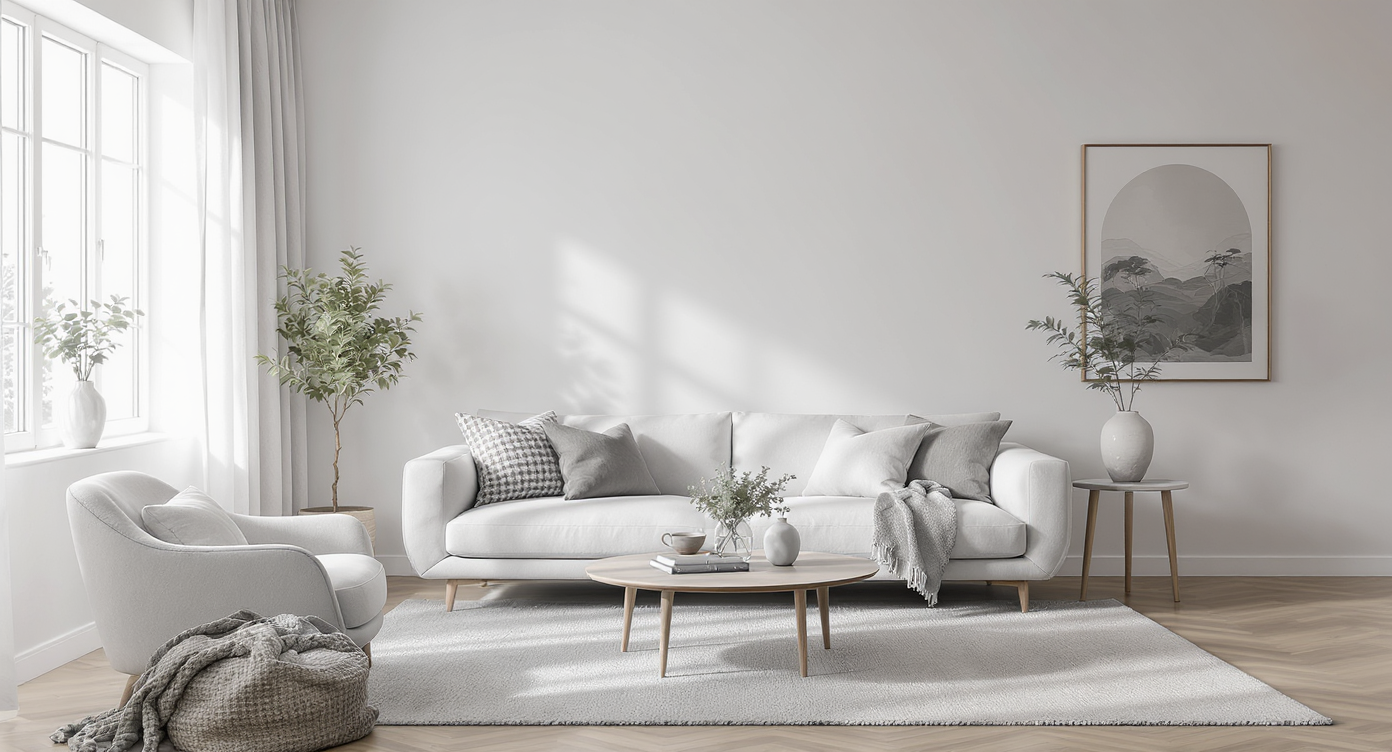
Repeating a single accent color from artwork—like teal in a throw, vase, and rug—unifies this minimalist living room without adding clutter.
Color coordination is most successful when it unifies elements across the main social space without overwhelming. A common pitfall is relying on only two or three colors in nearly identical shades, resulting in a flat or cold atmosphere. Instead, identify an accent color from an art piece or existing textile, and introduce it subtly—perhaps through a throw, decorative vessel, or rug. Designers often recommend repeating this accent three times throughout the room to reinforce cohesion. This approach quietly invigorates the palette and keeps things lively without veering into eclectic territory.
-
6. Update or Rehang Wall Art for Proportion and Character
Oversized or undersized art can affect the room’s sense of balance. Aim for larger pieces behind major furniture like sofas, or create clusters to fill in long, empty stretches of wall. Layering frames, adding sculptural objects, or choosing pieces with textured surfaces all contribute warmth and presence. Swapping a single central painting for a multi-panel arrangement or introducing a contemporary piece above the sofa refreshes the style context and signals intentional design choices.
-
7. Add Architectural Interest With Moldings or Feature Walls
Architectural upgrades such as crown molding or a subtle feature wall boost character, even in rental spaces. Molding frames and elevates the perimeter discreetly, while a painted or paneled accent wall provides depth and delineates function zones within open layouts. Removable wallpaper or painted geometric motifs offer renter-friendly solutions. For minimalist rooms, opt for thin, crisp trim in a matching or only slightly contrasting tone for a seamless effect.
-
8. Refine Lighting Layers
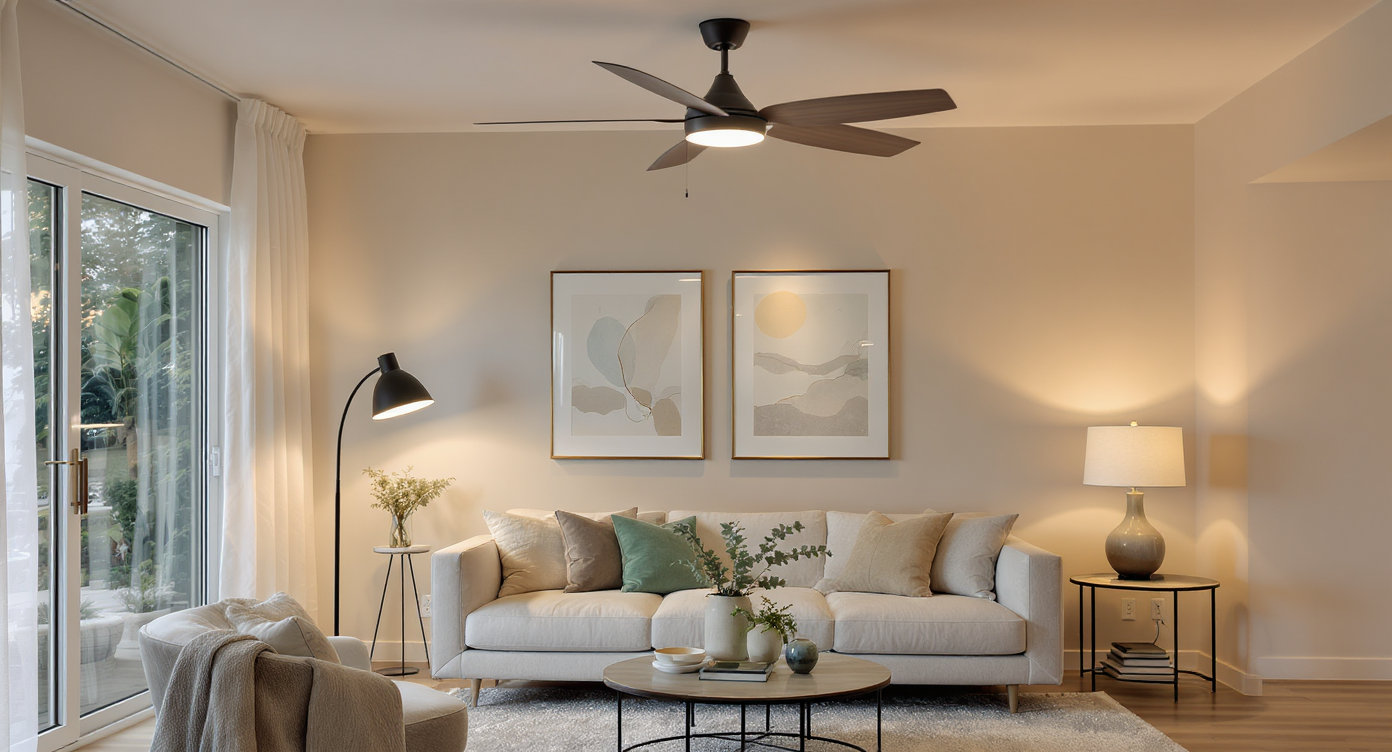
A contemporary living room exemplifies layered lighting with modern fixtures, picture lights, and a soft 2700K glow—all without visual clutter.
Lighting shapes ambiance as much as any furniture or textile. Replace outdated overhead fixtures with streamlined ceiling fans or contemporary pendants that echo your room’s color coordination. Layer in floor lamps, table lamps, and picture lights for adjustable mood and to highlight art or soft furnishings. Dimmer switches and bulbs in the 2700K range create natural warmth that welcomes at any hour. For tailored planning, platforms like REimagineHome.ai can visually test lighting setups in your own space before you install.
-
9. Elevate Storage and Styling With Cohesive Furniture Choices
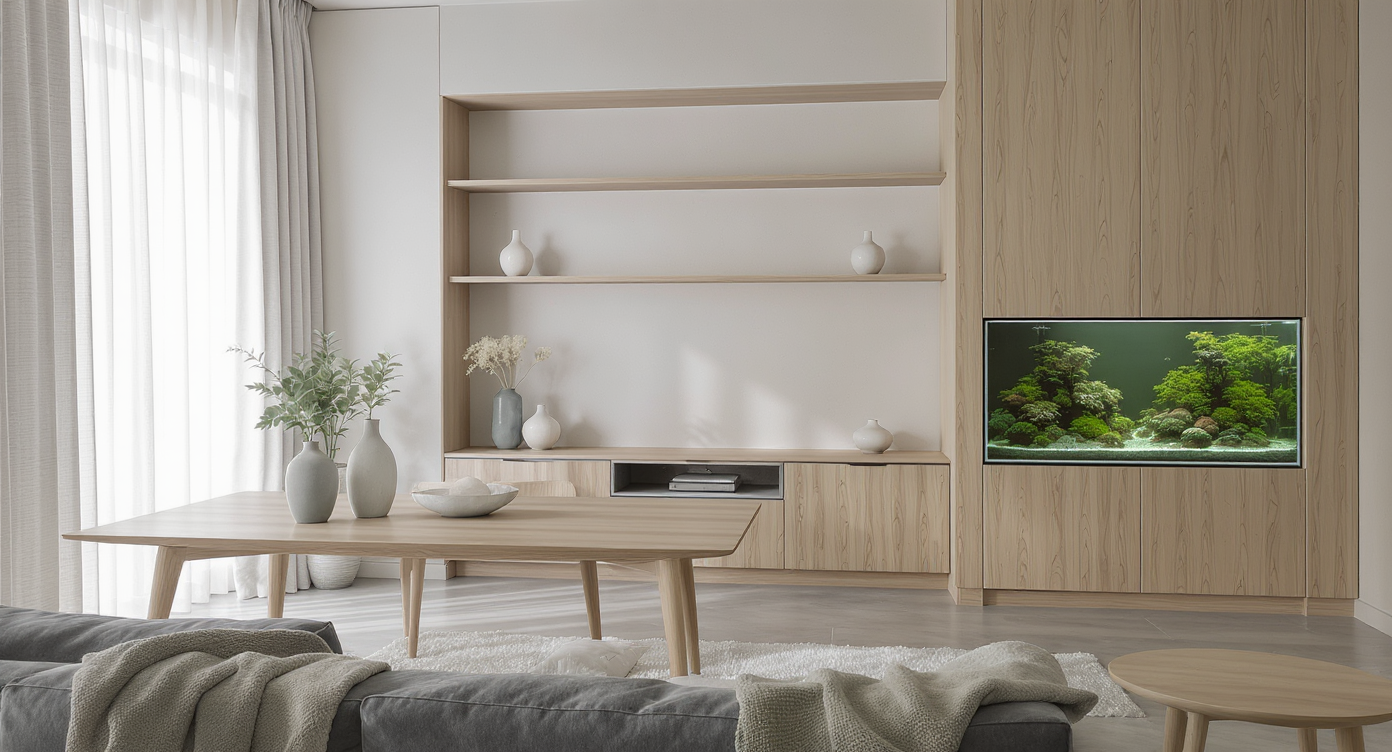
A modern social space features closed storage, matching wood finishes, and minimalist surface styling for an uncluttered, intentional look.
Open shelving, outdated bakers racks, or mismatched side tables often disrupt an otherwise calm aesthetic. Replace these with closed media units, updated credenzas, or minimalist shelving that echo your chosen palette or wood tone. Swapping out a utilitarian baker’s rack for a closed cabinet, hutch, or even a curated aquarium area can transform a dining nook and make display feel intentional instead of accidental. Aim for surface styling that is functional but minimal, favoring groupings of three and leaving negative space for visual relief.
-
10. Improve Layout Styling and Furniture Flow
A well-arranged main social space encourages connection while avoiding pathway blockages or awkward gaps. Float the sofa slightly off the wall, align rugs and tables strategically, and double-check that major walkways stay open for natural movement. Resist the temptation to cluster all furnishings against the perimeter, and use accent pieces only where they enhance, not clutter, the daily flow. As noted in tips for resolving spatial dilemmas tested layout options can be visualized in advance to avoid missteps.
-
11. Personalize With Meaningful Details
Final touches make a home memorable. Showcase a beloved dog’s bed in a sunny spot, integrate a favorite houseplant, or display a well-chosen book on your coffee table. Small, curated mementos or textiles that connect to your history add joy and character. Even minimalists benefit from intentional personalization that assures visitors this is a lived-in, cared-for space that honors both function and feeling.
Frequently Asked Questions
Opt for rugs that add either color, pattern, or texture. Avoid those that blend too closely with floors or seating. For more, explore this guide to cozy, cohesive rooms.
What is the benefit of hanging curtains higher?
Raising curtains draws the eye upward, increases light, and creates a grander sense of height and space. Consider pairing with matching panels across all windows for a finished look. For dining spaces, curtain upgrades can transform the vibe.
Are faux plants as effective as real ones for styling?
Quality faux plants provide the same visual relief and softness as live ones, especially when grouped thoughtfully. They are suitable for those without a green thumb or for pet safety.
How do I test layout or furnishing changes before committing?
Utilize digital visualization tools like REimagineHome.ai to see multiple options in your real room, minimizing regrets and surprising costs.
Key Takeaways for an Elevated Yet Relaxed Social Space
Implementing just a handful of these eleven upgrades will enhance any living room’s sense of comfort, cohesion, and personal style—without adding visual noise. Details like curtain placement, color coordination, layered lighting, soft furnishings, and meaningful accessories build warmth and order organically. For those wanting to see real-world options before committing, using tools from REimagineHome.ai can make experimentation stress-free. A few thoughtful decisions—rather than a top-to-bottom overhaul—often make the biggest difference.