11 Ways to Rearrange a Small Living Room Without Buying Anything New
TL;DR
You can transform a cramped or awkward small living room without spending a dime. By prioritizing flow, clarity, and the true purpose of your space, these 11 steps help you refresh your layout using only what you already own, immediately improving comfort and functionality.
-
1. Define the Room’s Main Purpose
Before you move a single chair, pinpoint what your small living room truly needs to do. Is it primarily for conversation, TV-watching, reading, or connecting to another area like a balcony or kitchen? Knowing the main function clarifies what should take center stage.
- Make a quick list of daily activities in the space.
- Choose one priority to guide your arrangement.
-
2. Prioritize the Main Walking Path
A cramped or awkward walkway is a top culprit for discomfort in small living rooms. Clear a natural path from the entrance to key destinations (doorways, windows, major seats). Don’t let the coffee table, ottoman, or chairs force an awkward detour, move these out of the way first.
- Aim for a 30–36-inch wide walkway where possible, but always customize for your needs.
- Walk through the room to spot blockages, then adjust furniture accordingly.
-
3. Start With the Largest Piece
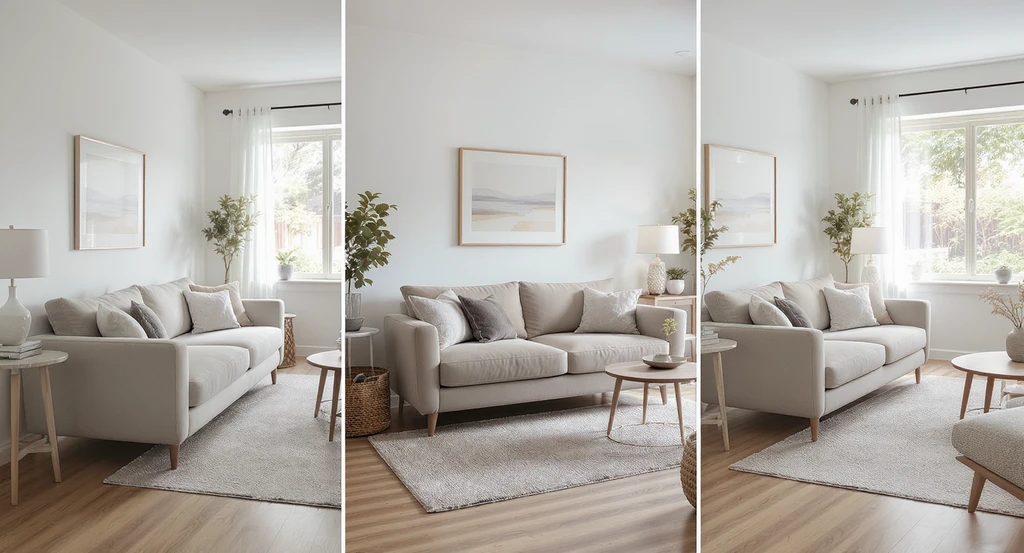
Explore how to rearrange a room with ai using practical small living room design ideas ai. See different sofa placements—against the wall, floating, and off the wall—to make a small room look bigger and use a rearrange furniture app for inspiration.
Your sofa or sectional is the biggest visual and functional anchor in the room. Move it first, since its placement determines where everything else will go. Try placing it against the longest wall (for narrow rooms), floating it to help define zones, or positioning it slightly off the wall for a more dynamic look.
- If you have a sectional, test different orientations to see which opens up the space best.
- If your room is open plan, use the sofa to subtly separate living from dining or entry areas.
-
4. Arrange Around a Single Focal Point
When furniture faces in several directions, a small room can feel chaotic. Pick one clear anchor, such as a TV, fireplace, window, or art, then group seating to relate to that focal point. This brings order and balance, reducing visual clutter and making the layout more cohesive.
- If you rarely use the TV, don’t default to making it the center of the room.
- Let the room’s natural strengths, like big windows or an architectural detail, shine as the visual anchor.
-
5. Rework Your Seating Connection
Instead of eliminating extra seats, rethink how they relate to each other. Angling a chair toward the sofa or moving chairs together can create a natural conversation zone.
- Move accent chairs away from walkways or doorways to tighten up the seating area.
- Test out placing a small table between seats to improve usability without crowding.
-
6. Reposition the Coffee Table
A poorly placed coffee table interrupts both circulation and comfort. Instead of sticking to the default, slide it closer or further from the sofa (generally, 16–18 inches is a good starting point). If walkways feel tight, angle or shift the table, or try the room without it for a day.
- Test multiple positions and observe how easy it is to both reach the table and move through the space.
-
7. Experiment With Your Existing Rug
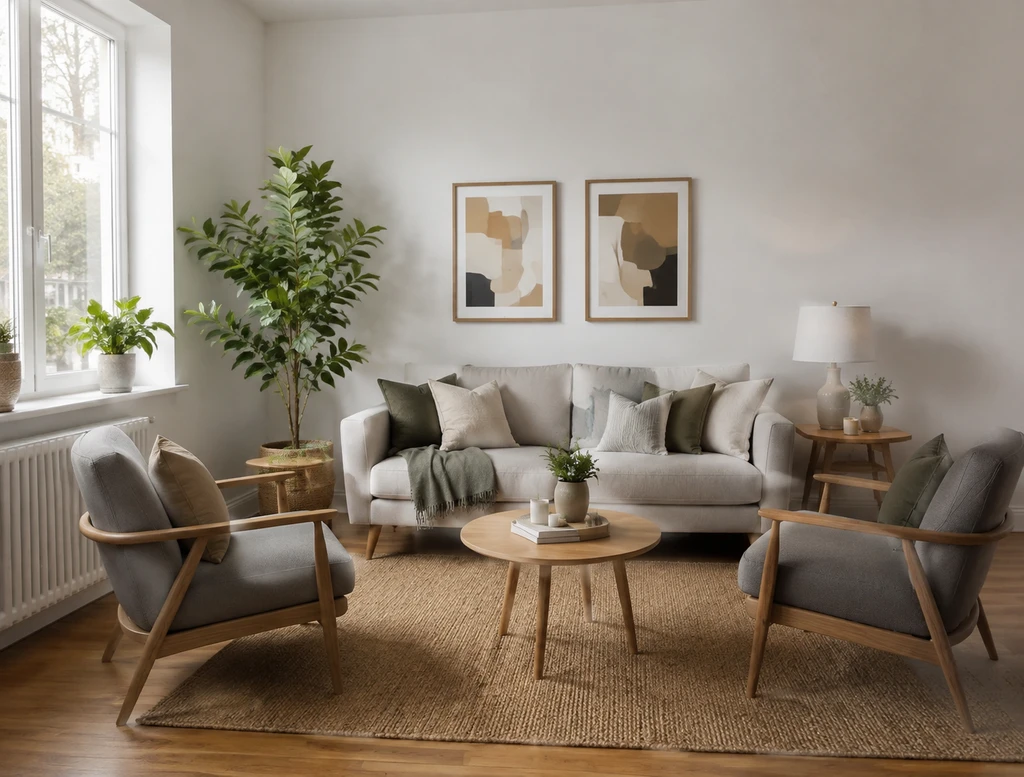
A thoughtfully arranged Scandinavian-style living room featuring soft neutral tones, natural textures, and a balanced furniture layout that creates a warm, inviting atmosphere.
Rather than buying a new rug, move or rotate the one you have. Even small changes in rug placement can unite the seating area, improve proportions, or subtly change how large the room feels.
- Line up the rug so that at least the front legs of seats rest on it to visually link the group.
- Try taking a photo before and after moving the rug to compare the difference.
-
8. Clear and Open Up Sightlines
Cluttered sightlines make even an uncluttered floor feel crowded. Stand at the entrance and check whether you can see the window, main seating, or most of the floor. If lamps, chairs, or accessories block the view, move them or temporarily remove them. This creates psychological spaciousness, not just physical space.
- Pare down tall décor and keep the center of the room visually lighter.
-
9. Edit, Don’t Overstyle, After Rearranging
Once the big pieces are set, edit your décor instead of adding more. Fewer objects grouped thoughtfully (on coffee tables, shelves, or mantels) make the room calmer and less busy.
- Try removing half the objects from surfaces and see if the space feels more open.
- Rearrange wall art for stronger single statements, not busy clusters.
-
10. Improve Lighting Placement
Instead of new fixtures, relocate existing lamps to support your new layout. A floor lamp by the sofa or a table lamp in a reading zone highlights new activity areas and adds dimension.
- Spend an evening in the room and adjust lighting for balance, avoid one overly bright area with the rest of the room in shadow.
-
11. Test and Compare Three Layouts
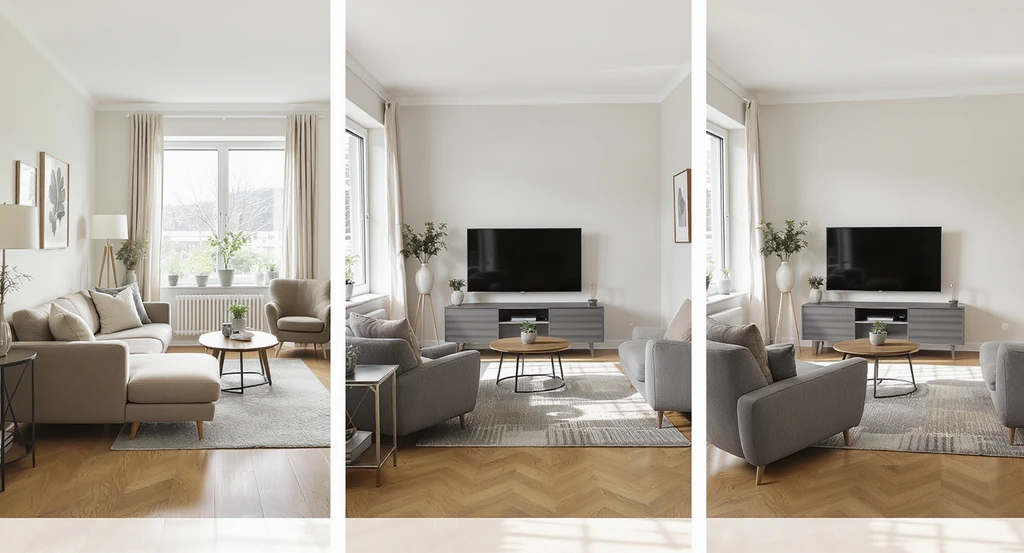
Explore how to rearrange a room with ai and try rearrange my room ai—see three realistic small living room design ideas that help make a small room look bigger using rearrange furniture app tools.
Don’t settle for the first arrangement. Snap a photo of each version, one focused on conversation, one oriented to the TV, and one geared for open movement. Then walk through each and ask: Which feels easiest to use? Which clears the entrance best? Visuals help, but your daily experience matters more.
- Compare arrangements by how they support your actual routine, not just aesthetics.
- If you want to experiment virtually, tools like ReimagineHome let you visualize room layouts before you move a thing.
Final Thoughts: Small Changes, Big Impact
You don’t need to buy your way to a better small living room. Changing your layout, step by intentional step, can dramatically improve flow, function, and comfort using only what you already own. Focus on circulation, purpose, and clarity before anything else.