9 Ways Listing Photos Create the Perfect First Impression
TL;DR
Listing photos directly influence a buyer’s first impression, speed up sales, and can increase final offer prices. Applying practical photo guidelines, such as maximizing natural light, diligent decluttering, and honest representation, translates to more interest and often higher sale outcomes. AI-powered tools and virtual staging offer practical solutions for empty or outdated spaces. Quality images aren’t just a marketing bonus, they shape buyer trust from the very first click.
Why Listing Photos Are the Deciding Factor
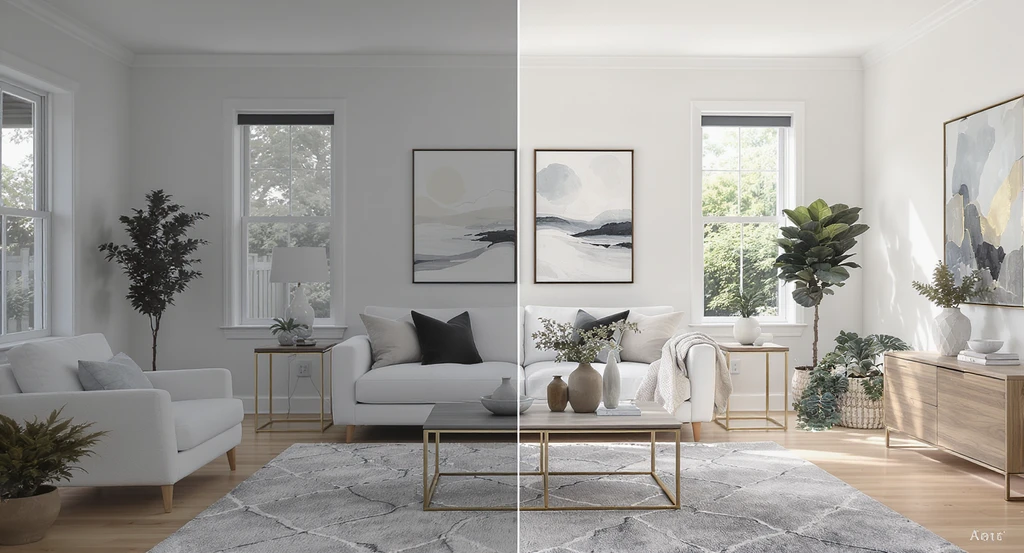
Comparing listing photos—untouched versus AI virtual staging—shows how AI home design tools improve listing photo quality, maximize property value, and impact home sales.
If you’re questioning whether listing photos truly affect home sales, the simple answer is yes, quality visuals matter at every stage. Today’s buyers form judgments within seconds, often skipping past homes with dark, cluttered, or poorly composed photos before they ever read the description or check the price.
According to our guide on avoiding common listing photo mistakes, photos are the single most important filter buyers use online. Investing care and attention into how a home is photographed is no longer optional if you want faster, stronger results.
-
01. Bad Lighting Reduces Interest
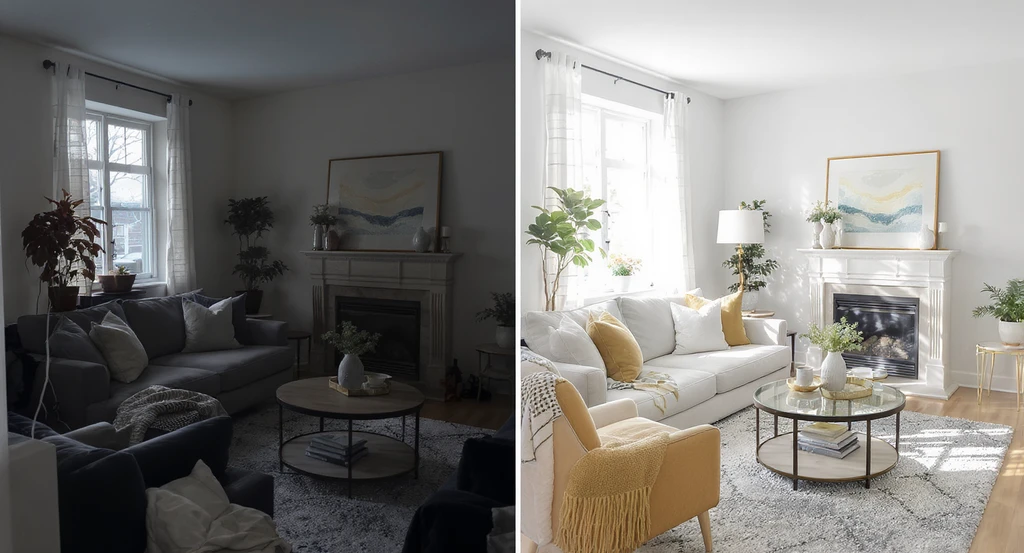
Balanced, natural daylight dramatically enhances listing photos compared to uneven overhead lighting, highlighting the benefits of AI-powered real estate photography and virtual staging best practices for realtors.
Photos shot in dim or uneven lighting make rooms appear smaller, colder, and less maintained. This often happens when photos are taken at the wrong time of day, or with only overhead fixtures. Correct this by shooting during midday hours and opening curtains to maximize natural daylight. Use the consistent lighting principle: ensure light is distributed evenly across the room, reducing heavy shadows or overly bright spots. This simple adjustment raises perceived value and comfort, as explored in our article on what buyers instantly notice in real estate images.
-
02. Excess Clutter Distracts Buyers
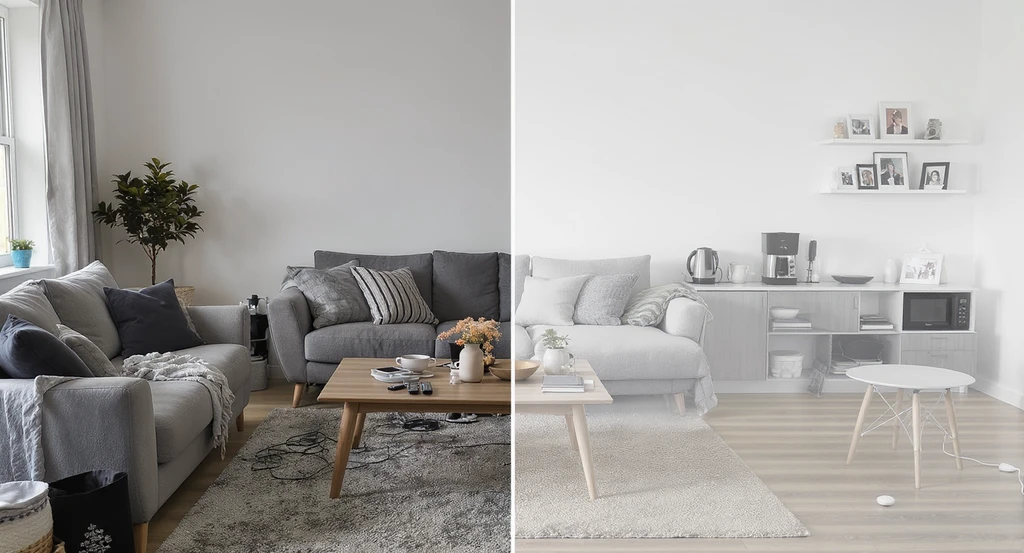
Removing clutter like remotes, personal photos, and cables from listing photos enhances perceived home value, illustrating how ai virtual staging tools and best real estate photography practices improve home sales by making spaces look more move-in ready.
Leaving everyday objects or personal items in frame creates visual noise that pulls focus from the home's features. This mistake is common when sellers underestimate how minor clutter affects a buyer’s focus. Correction involves a systematic decluttering checklist, remove remote controls, loose cables, personal photos, and countertop appliances from each room. The result is an environment that reads as spacious and move-in ready instead of overwhelming.
-
03. Improper Furniture Scale Confuses Room Size
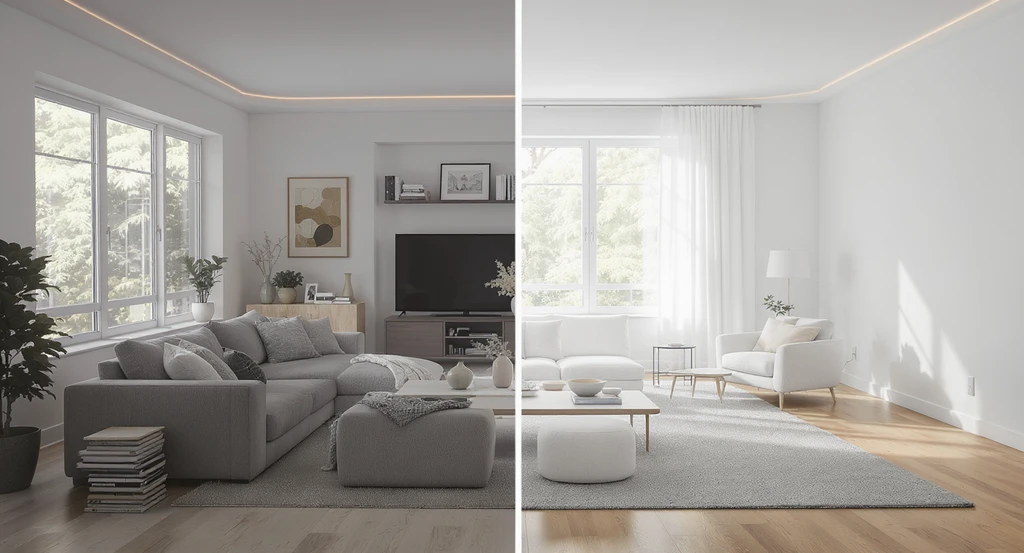
Balanced furniture scale in living rooms clearly demonstrates how ai virtual staging tools help realtors create impactful listing photos, enhancing buyer perception and property value.
Using furniture that’s too large or too small creates misleading impressions of usable space. Oversized sofas crowd living rooms, while tiny tables in large spaces falsely suggest emptiness. Always match furniture to the room's scale: leave a clear walkway of at least 36 inches, and anchor seating areas appropriately. Balanced layouts help buyers estimate proportions and visualize their own furnishings fitting comfortably.
-
04. Poor Photo Angles Confuse Buyers
Taking photos from awkward heights or unusual corners makes it hard for buyers to understand how spaces connect. This typically happens when photos are snapped without a plan. Instead, follow a logical photo sequence: shoot from doorway heights, use wide angles to show layout, and maintain a consistent eye level (about 5 feet from the floor) for all interiors. This helps buyers mentally walk through the property and match what they see online to real visits.
-
05. Messy Rooms Reduce Trust
Small oversights, like an unmade bed or open laundry basket, signal neglect even in otherwise clean homes. Such mistakes occur when last-minute prep is rushed or skipped. To correct, use a room staging checklist before each shoot, ensure all beds are made, towels are tidily folded, and surfaces are wiped clean. These touches reinforce that a home is cared for and photo-ready.
-
06. Too Few Photos Reduce Confidence
Listings with only a handful of photos create uncertainty and force buyers to guess about flow, room size, and features. This is often due to minimal effort or agents trying to hide flaws. Provide at least 15–20 images covering all living spaces, bedrooms, bathrooms, kitchen, and outdoor areas. Including multiple perspectives for key rooms further supports a sense of openness and honesty.
-
07. Lack of Staging Makes Spaces Feel Empty or Awkward
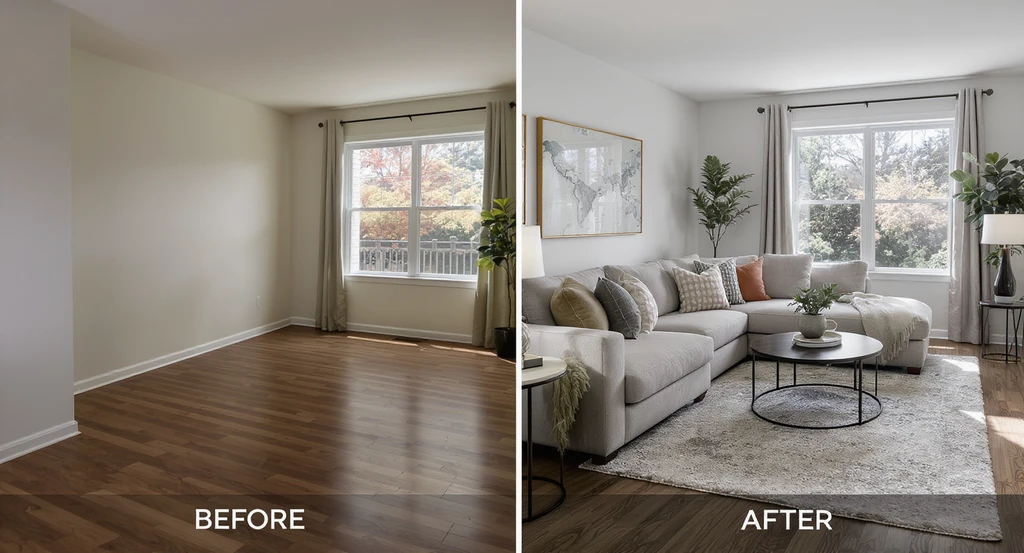
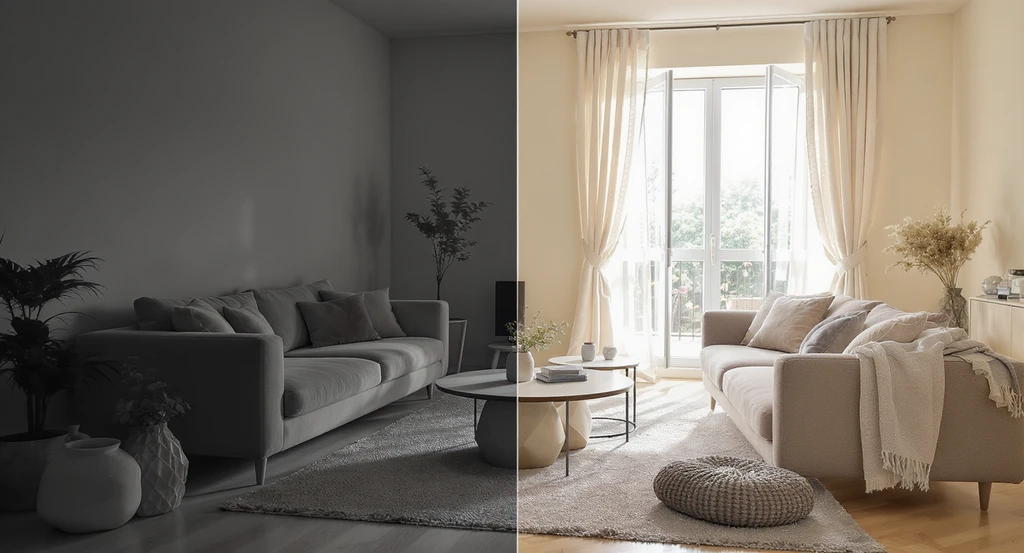
A photorealistic comparison demonstrates the impact of ai virtual staging on home sales, illustrating how ai home design tools improve listing photos and help buyers envision property potential.
Showing vacant rooms or outdated décor often fails to convey size and scale. Most buyers cannot visualize how their furniture would fit or what the space could feel like. This is where REimagineHome AI's virtual staging can realistically insert furnishings, update dated styles, and resolve layout uncertainties. Previewing multiple furniture arrangements lets buyers immediately grasp how to use each area, preventing wasted showings and disappointment upon visits.
-
08. Over-Editing Erodes Buyer Trust
Heavy filters, unrealistic colors, or digitally removed features make buyers suspect hidden flaws. This often happens when attempting to enhance images beyond what’s accurate. Instead, follow the honest representation principle: edit only for brightness, clarity, and straightening lines, not for covering up permanent issues. Disclose any alterations and offer true-to-life photos side-by-side if edits are significant. For further insight, see our breakdown of AI image enhancement in real estate.
-
09. Out-of-Sequence Photos Break Visual Flow
Randomly ordered images, like showing bedrooms before main living spaces, confuse buyers and can cause them to lose interest. Ensure the photo order follows a progressive walkthrough: start with the front exterior, then move logically through commons areas, bedrooms, bathrooms, and finally outdoor features. This simple structure helps buyers understand layout and keeps them engaged until the last image.
Frequently Asked Questions
- How many listing photos should I use?
- Include at least 15–20 photos, covering all key rooms and exterior spaces for a complete, trustworthy listing.
- Is it better to show empty rooms or use virtual staging?
- Virtual staging helps buyers understand potential layouts and scale, especially when rooms are unfurnished or outdated.
- Can poor photos actually lower my offer price?
- Yes, low-quality or unclear images reduce buyer interest and may lead to discounted offers or longer time on market.
- How do buyers judge listings so quickly?
- Buyers scan for cleanliness, lighting, spaciousness, and honest representation within seconds, forming first impressions immediately.
- What’s the role of AI in improving listing photos?
- AI tools can stage, declutter, and enhance images efficiently, ensuring photos look realistic and inviting without over-editing.
Final Thoughts: Quality Photos Drive Results
High-quality listing images don’t just look nice, they control how quickly a home sells and at what price. Logical layout, decluttering, balanced lighting, and honest editing together build buyer confidence and drive engagement. In markets where buyers don’t have time or patience for ambiguity, visuals must work as decision tools, not just decorations. Previewing options using AI staging and enhancement can avert common photographic errors, as reaffirmed in our look at top listing photo mistakes to avoid.